





















































Africa can be divided into five broad geographical zones: North Africa or the Maghreb, West Africa, Central Africa, East Africa and Southern Africa.

In addition to hip hop, R&B, rock, blues and jazz, which are found in all African countries, each of the five zones has one or more dominant musical genres and styles. The term ‘African music’ thus reveals a complex reality.
Structurally, African music is organised in a pattern called ostinato, which is a regular and uninterrupted repetition of rhythmic or melodic figures supported by an invariant periodicity.
Periodicity is expressed in two forms:
- The responsorial form: a series of sentences by a soloist to which a chorus answers (the response). This can be sung either in harmony or in parallel intervals of fourths or fifths.
- The antiphonal form: the chorus, in the antiphonal form, repeats the phrase spoken by the soloist.
The periodicity results in a strict division of time into segments of equal duration. Each segment can be subdivided into melodic and/or rhythmic units. The principle of melody development is less common in Africa but the variations can be complex, with some parts combining several ostinatos.
The principle of melody development is less common in Africa.
Music of the Maghreb
Music in this African region has roots in the music of the Arabian Peninsula, with Arab-Andalusian music comprising four main schools: Algerian, Moroccan, Tunisian and Libyan. The Maghreb region includes the following countries: Algeria, Libya, Morocco, Mauritania, Tunisia and
Western Sahara.
The two most famous music genres in this region are, from the oldest to the most recent, chaabi and raï. The latter is a modernised version of traditional and classical music. The main instrument used in these genres is the guembri, an ancient lute.
Music of West Africa
Countries in West Africa include Benin, Burkina Faso, Cape Verde, Côte d'Ivoire, Gambia, Ghana, Guinea, Guinea-Bissau, Liberia, Mali, Niger, Nigeria, Senegal, Sierra Leone and Togo.
This zone has three major musical influences: Nigerian Afrobeat, which is one of the most prominent genres today, and traditional-modern genres such as mbalax from Senegal as well as mandingo music and all its derivatives. Creole music from West Africa’s islands such as Cape Verde is found in the form of zouk, cabo and funana.
Music in Central Africa
This region includes the following countries: Cameroon, Gabon, Equatorial Guinea, Central African Republic, Democratic Republic of Congo, Republic of Congo, São Tomé and Príncipe, and Chad.
Here the major rhythms are Congolese rumba and its derivatives. Rumba music is a mix of traditional African sounds and Afro-Latin rhythms.
Music in East Africa
East Africa comprises Burundi, Djibouti, Eritrea, Ethiopia, Kenya, Rwanda, the Seychelles, Somalia, Rwanda, Uganda and Tanzania. In this region, several traditional rhythms have achieved international success such as the percussion of Burundi and menzuma, which is an ancient Islamic music style from Ethiopia.
Music in Southern Africa
This region includes South Africa, Angola, Botswana, the Comoros, Lesotho, Madagascar, Malawi, Mauritius, Mozambique, Namibia, Swaziland, Zambia and Zimbabwe.
The most famous type of music is Mozambican marrabenta and South African kwaito. Southern Africa has more musical disparities than other regions. This is mainly because of their landlocked position.
The importance of musical collaborations in Africa
Music collaborations offer opportunities for both established and young artists, who can explore different musical styles and reach larger audiences by tapping into each other’s fan bases.
Collaboration between artists have several purposes:
- Piggybacking: Using the popularity of an established artist to promote an emerging one. In this case, a well-known singer, in exchange of financial compensation, is featured on a song of a lesser-known artist.
- Mutual promotion: This allows artists with a similar status of fame operating in different regions on the continent to collaborate in order to reach a wider audience.
- Contractual requirements and common stables: Some labels boost the careers of new talent by way of collaboration with established artists from the label or catalogue.
- Charity: Artists often come together for humanitarian causes such as conflict, women’s rights and the prevention of diseases.
Overall, collaborations between African artists are progressing thanks to the development of the Internet and Internet-based platforms that allow musicians in different countries to work simultaneously on the same project. It is no longer necessary to be in the same studio or location to record a song or shoot a video.
The collaborative music economy also includes platforms such as YouTube channels and Massive Open Online Courses (MOOCs). These tools allow aspiring musicians to learn how to sing or play an instrument by watching instructional videos. Other music professionals, such as artist managers and sound engineers, can also access instructional content aimed at professionalising their areas of interest. This Internet is expected to one day become the main method of education. Even today, new websites, platforms and social networks dedicated to musicians are launched almost on a daily basis.
Regulating the music industry
The first attempt to regulate the music industry in general was with the help of the Berne Convention for the Protection of Literary and Artistic Works, which was signed on 9 September 1886 and updated on numerous occasions until 1979.
African countries have signed the Bern Convention on Copyright at different times. There are divided into three groups:
- The pioneering countries that signed the convention between in 1880 and 1930 are Morocco, Tunisia and South Africa. Tunisia is the only African country that signed the convention together with the first signers – Belgium, Spain, France, the UK and Switzerland – back in 1886.
- A second group of signees signed the convention post the African independence era (1960). These countries are Benin, Burkina Faso, Gabon, Côte d'Ivoire, Congo, DRC, Niger, Mali, Madagascar and Senegal.
- The third and fourth groups are the countries that signed the document between 1975 and 2016. These are Central African Republic, Egypt, Guinea, Libya, Mauritania, Chad, Togo, Algeria, Botswana, Burundi, Cape Verde, Equatorial Guinea, Kenya, Lesotho, Liberia, Malawi, Nigeria, Rwanda, Sudan, Tanzania and Zimbabwe.
In December 1996, the Berne Convention was attached to the World Intellectual Property Organisation Copyright Treaty, which deals with copyright in the digital environment. This period also marked a new era: the digitalisation of music production and distribution.
Branding and marketing
The dematerialisation of musical support has had several consequences that include the decline of physical album sales and production as well as an increase in singles. These can be attributed to the availability of music online, on such platforms as YouTube and SoundCloud. Digitisation in Africa, where purchasing power is low, has further complicated the music business in terms of physical album sales.
Artists have also had to turn themselves into brands and do more image marketing. In addition, digitalisation has resulted in an increase of the number of artists on the global music scene. In this saturated environment, it has become more difficult for artists to swim up in a sea of similarly sounding artist, although the same environment gives artists and opportunity to transcend borders and be heard across the globe. Digitisation in the production of music has seen hip hop in Africa growing, as it is often entirely electronic and does not require the use of instrumentalists or multi-member bands.
Furthermore, with many of Africa’s labels that operated in the pre-digitisation era now defunct, existing labels are faced with competition from big European stables that are signing some of the continent’s most popular acts. Universal Music Group, for example, signed Congolese artist Fally Ipupa in 2013 and DJ Arafat from Cote D’Ivoire in 2014. Legendary Cameroonian saxophonist Manu Dibango is also under contract with Mercury Records, a subsidiary of Universal.


There is also a recent trend of American artists signing African artists under their labels. Kanye West’s label, Good Music, signed Nigerian singer D'banj in 2011. He subsequently won two MTV Awards. Akon’s label, Konvict Muzik, signed Nigerian duo P-Square 2011, and Roc Nation Records, the label created by rap mogul Jay-Z, signed Nigerian star Tiwa Savage in 2016. Also form Nigeria, Davido singed with Sony Music Entertainment in 2016. Cameroonian bassist Richard Bona is also under contract with Sony.


Trends in music consumption
According to a report by the International Confederation of Societies of Authors and Composers (CISAC), about €9.2 billion ($10 billion) was collected worldwide in 2016. In Africa, CISAC has members in 31 countries and works with 36 collective management organisations (CMOs), yet only about €61m, or less than 1% of the total, was collected in Africa.
Africa represents about one-sixth of the world’s population. There are three inferences that can be made by looking at these numbers: African CMOs are not doing a good job at collecting royalties for musicians, piracy in Africa is rife, and Africa represents only a tiny part of the global music industry. The answer probably lies somewhere between the three.
Production methods
The method in the production of CDs, for example, has been greatly simplified. Old production techniques included a CD mastering process, which has been abandoned for the home studio. Previously, pressing a CD or a standard DVD format master version was cost-effective only beyond 3 000 copies.
After the popularity of the home studio, record labels and big studios had to diversify their activities by offering video production, event management and online publishing solutions to stay relevant. Senegalese musician Didier Awadi’s Studio Sankara is a good example of a multitasking operation that offers full packages to artists who are looking for maximum exposure on all platforms.
Distribution (offline and online)
Since 2014, Abidjan in Cote d’Ivoire has become the main hub of francophone music in Africa. Universal Music and Sony Music opened offices in the Ivorian capital in 2016. Their objective is to professionalise the African music sector and make it profitable. In Nigeria, telecoms companies are working with producers on new ways of music distribution. MTN is now the main distributor of music and the primary source of income for artists.
Several music monetisation initiatives have been launched or benefited from capital inflows. In DRC, the beta version of the Baziks Pulse platform was launched in September 2016. In Senegal, 50% of Muzik Bi’s shares were bought by the US-Senegalese rapper and producer Akon in July 2017.
References:
- SimhaArom – Polyphonies et polyrythmies instrumentales d’Afrique centrale (Vol 1)
- https://www.glossaire-international.com/pages/tous-les-termes/convention-de-berne.html
- http://www.wipo.int/treaties/fr/ShowResults.jsp?treaty_id=15
- http://www.wipo.int/wipolex/fr/details.jsp?id=12740
- http://www.enqueteplus.com/content/production-musicale-au-senegal-entre-retard-num%C3%A9rique-et-baisse-de-qualit%C3%A9v
- http://fr.cisac.org/Actus-Media/Communiques-de-presse/Droit-d-auteur-Montant-record-des-collectes-mondiales-a-8-6-milliards-d-euros
- https://studiosankara.com/
- http://www.rfi.fr/emission/20170525-industrie-musicale-ouest-africaine-est-plein-boom
This article was published in partnership with the African Music Development Programme


Most popular

Call for applications: ACCES 2026 Emerging Artist Spotlight Competition
01 Oct 2026

Top amapiano songs of 2026
16 Feb 2026

Top Naija songs of 2026
31 Mar 2026

Top Afrobeats songs of 2026
19 Mar 2026
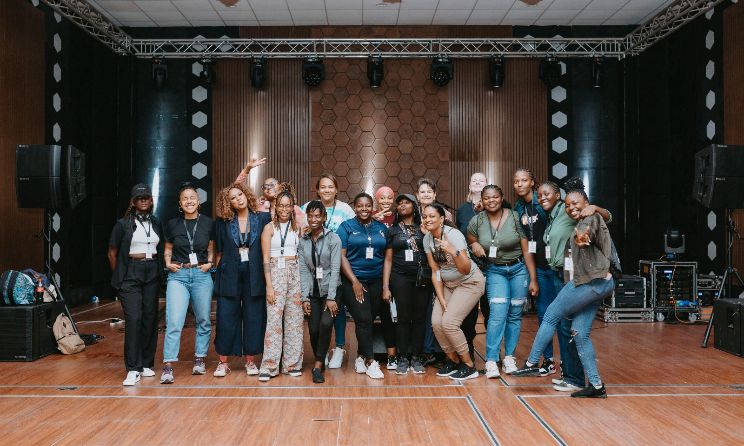
Open call: 2026 Gender@Work music industry training in Johannesburg
03 Oct 2026

AFRIMA 2026: All the winners
12 Jan 2026
Disclaimer: Music In Africa provides a platform for musicians and contributors to embed music and videos solely for promotional purposes. If any track or video embedded on this platform violates any copyrights please inform us immediately and we will take it down. Please read our Terms of Use for more.

Subscribe to our monthly Newsletter
Follow us on social media


Please log in to post a comment.