



























































Just after Independence in 1962, Tanzania established itself as the musical powerhouse of East Africa in a move that was driven by the country’s political and Cultural Revolution. This bond with the government served musicians well for two decades, but the bands struggled to survive the changes that began in the 1980s.
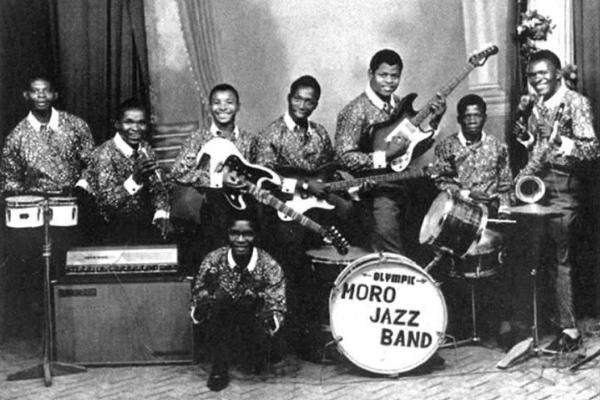
In the 1960s and 1970s, Tanzanian bands, beneficiaries of State patronage, dominated music beyond their own borders to encompass the east African region. At independence, the Tanzanian Government had introduced a policy of nationalization as part of a campaign to promote “Africanness” and music was to play a major part in this campaign.
During the reign of Tanzania’s first president, Julius Nyerere, musicians wrote songs that propagated the leader’s social and political policies, in other words, his ideology. State corporations bought instruments and organized practice and performance facilities. Indeed, the musicians were treated as employees of the government departments and paid a salary.
The only recording facility available on the mainland was at the state-run Radio Tanzania Dar Es Salaam (RTD). Once or twice a year, the bands came to the one-track studio for sessions at which they would record several songs at a time. In this way the station got music for its programs, which were heard on shortwave radio across East Africa and the bands gained fame and publicity for their live performances.
From the late 1960s RTD sponsored and exclusively featured Tanzanian bands on its programs, contributing to the development of a Tanzanian form of rumba known as dansi. The Tanzanian government, through its companies and departments, formed and supported bands partly to advertise their policies and partly to offer entertainment to their employees and the wider public.
The National Union of Tanzanian Workers formed NUTA Jazz Band while the youth league of the independence political party, the Tanganyika African National Union (TANU), started Vijana Jazz Band. Others were Urafiki Jazz Band (Urafiki Textile Department), UDA Jazz Band (Public Transportation Department) and the most popular dansi band of them all, DDC Mlimani Park Orchestra (Dar es Salaam Development Corporation).
The typical line up of the groups, variously referred to as jazz bands or orchestras, comprised anything up to thirty members, with several electric guitars and basses, synthesizers and a lead singer who usually doubled as a guitarist. This trend in East and Central Africa was modeled on the big Congolese rumba bands like TPOK. Jazz led by Luambo Luanzo Franco.
At their peak, more than 20 professional bands would play five nights a week to packed audiences in clubs and dancehalls across Dar es Salaam. The bands were typically huge; DDC Mlimani Park, for instance, at some point had up to 26 members. Other dansi bands included Dar es Salaam Jazz Band, Western Jazz and Orchestra Super Volcano led by the singer and guitarist Mbaraka Mwinshehe who became the most loved East African artist of the 1970s.
The relationship between the bands and RTD sometimes turned sour, as when DDC Mlimani Park Orchestra boycotted recording at the station because some of their recordings had been pirated and released in neighbouring Kenya, where Tanzanian music was in high demand. It turned out that almost all records by Tanzanian bands released over a long period in the 1970s were stolen or illegally copied from the library of RTD. No proper payments or contractual arrangements were made and the musicians were not able to track the sales of their music. Unscrupulous traders smuggled the tapes out of Tanzania and sold them to producers in Nairobi.
Right from the late 1960s, Tanzanian dansi bands like Vijana Jazz and Western Jazz were recording their music in Nairobi, especially at Polygram Records Kenya and A.I.T Records. Vijana Jazz, one of the most influential bands of the dansi (dance music) era, was formed in 1971 and the name Vijana (Swahili for ‘youth’) was a reference to the sponsorship by the youth wing of Tanzania’s ruling political party.
They were one of the first bands to take advantage of a concession offered by the Tanzanian government in 1978 to allow bands to import musical instruments. It was a decision which marked a significant change in Tanzanian music that had been under the onslaught of the dominant Congolese bands based in Dar es Salaam.
In Tanzania, the bands created dance styles called mtindo in Swahili. Vijana Jazz was synonymous with kamata sukuma (grab and push) while Orchestra Maquis called their style ogelea piga mbizi (dive and swim). The mtindo was the trademark of any band and played a major part in the rivalry that existed between the big bands in Tanzania. DDC Mlimani Park, then the most powerful force in Tanzanian music, popularized a style called Sikinde.
The group first played at a club run by the Tanzania Transport and Taxi Service and then changed the name when the sponsorship was taken up by the Dar es Salaam Development Corporation (DDC), a wing of the city council.
One of the first Tanzanian groups to migrate to Kenya was Arusha Jazz, the predecessor of the mighty Simba Wanyika (Lion of the Savanna). Founded by Wilson Peter Kinyonga and his brothers George and William, the group began performing in the coastal town of Mombasa in 1971. Over the next 20 years, Simba Wanyika rose to become the dominant group in Nairobi’s recording and club scene, even though the original group split several times.
The dansi era effectively petered out in the mid-1980s when the Tanzanian brand of socialism known as Ujamaa collapsed and the subsequent downturn in the country’s economy. The government could not afford to pay musicians anymore.
By the 1990s, the Government had opened up the airwaves to private broadcasters and Radio Tanzania lost the status that it had enjoyed as the country’s only radio station since 1951. Mlimani Park was one of the few bands to survive the transformation from state sponsorship to private ownership, as many of the other groups long used to government largesse could not sustain themselves and collapsed. There was a generational change as musicians abandoned the cultural ideals of the Nyerere years and embraced American-style hip-hop and other global influences, from reggae to zouk.
Access to new studios opened up opportunities for musicians who gained access to private recording facilities, after years of RTD production monopoly. The heritage of the Kiswahili language as a national identity was an advantage for the kizazi kipya (new generation) of Tanzanian musicians. While their contemporaries in neighboring Kenya and Uganda initially chose to rap in English, Tanzanian artists developed the popular bongo flava ('bongo' a slang word for Dar es Salaam) – modern dance music that incorporated elements of rumba combined with rap, R&B and dancehall, and is performed in Kiswahili.
In time, other East African artists localized their music using the Tanzanian template and gained the confidence to express themselves in a hybrid of local languages. During the era of the dansi bands, Tanzanian musicians enjoyed state patronage to compose music that rallied the people to support national policies; today’s artists produce songs about romance and party life and promote themselves on social media. The transformation of the music scene in the country could not have been more dramatic.
Originally published on 7 December 2015 in This Is Africa


Most popular
Gambia: Suntou Susso announce UK tour for ‘The Path of a Griot’
09 Oct 2026

Top amapiano songs of 2026
16 Feb 2026

Top Afrobeats songs of 2026
19 Mar 2026
Open call: 2026 Gender@Work music industry training in Johannesburg
09 Oct 2026

Top Naija songs of 2026
31 Mar 2026
Open call: National Arts Festival artistic director in SA
15 Oct 2026
Disclaimer: Music In Africa provides a platform for musicians and contributors to embed music and videos solely for promotional purposes. If any track or video embedded on this platform violates any copyrights please inform us immediately and we will take it down. Please read our Terms of Use for more.

Subscribe to our monthly Newsletter
Follow us on social media


Please log in to post a comment.