




























































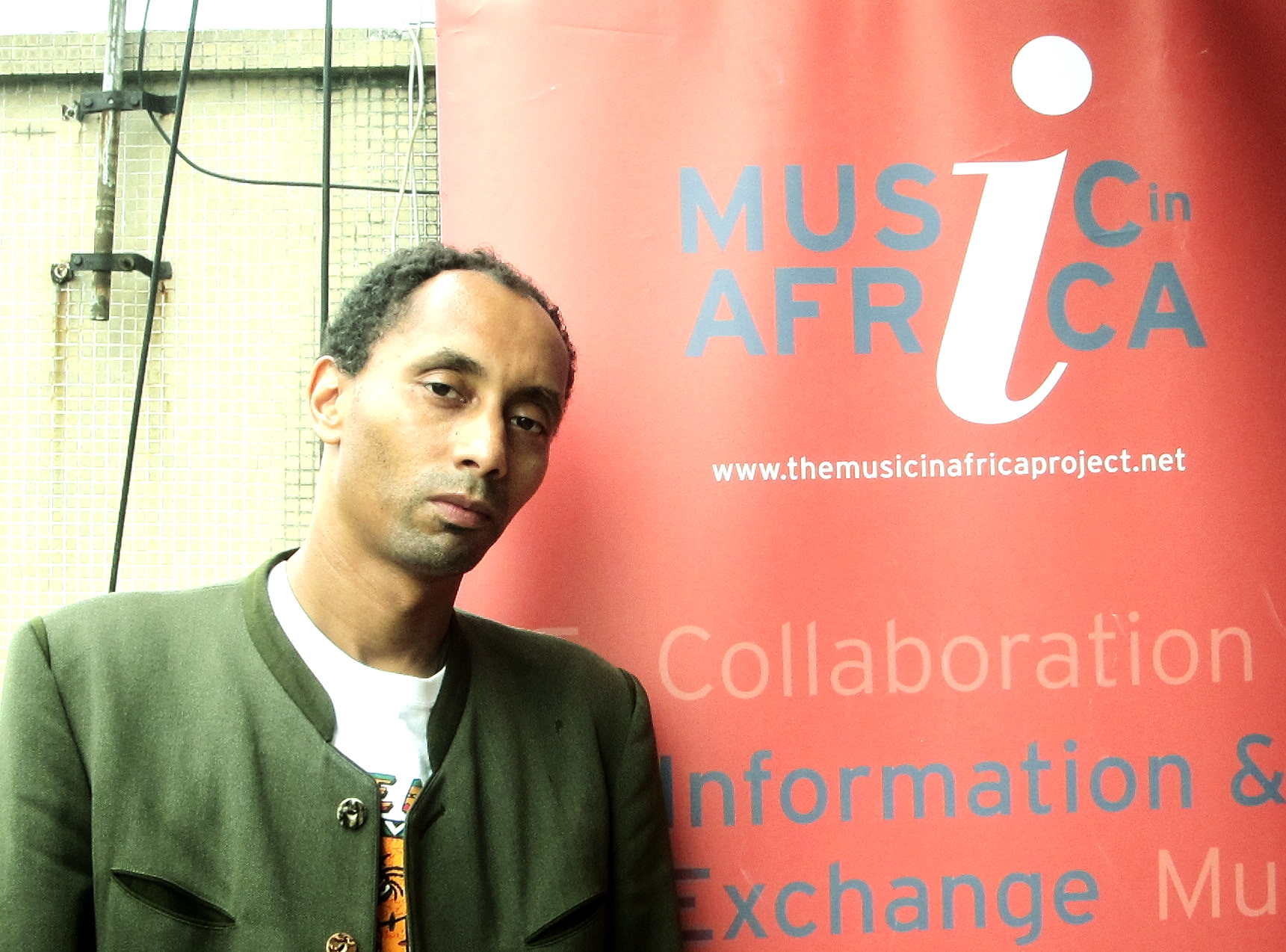
A short biography of Nigerian Master Kora-player, Cellist and Composer, Tunde Jegede. Tracing his journey to mastering two distinctly different and complex musical Instruments and forms.
Bansang, Gambia 1980. The people of the small town of Bansang, in the Gambia, had after a week, gotten used to the now common sight of the young, slim, mixed race boy, who had landed a week before and was residing in the home of the distinguished Traditional Musician, Historian and Poet- Amadu Bansang Jobarteh. Jobarteh was a Kora Master, the Kora being the several centuries old Harp of the Dinka ethnic group. The young boy had come to learn the Kora, under the apprenticeship of the great Jobarteh. This was not strange as many over the years, had come to drink from his fountain of knowledge. However not many of those had been young boys aged eight years old and born in London. Also they were fairly certain that none of his earlier students had ever been indigenes of Ekiti, in Nigeria. The young man was Tunde Jegede, who had willingly been pulled away from the comforts of London, to live in a Gambian village with the Kora Master Jobarteh and who would one day become a Kora Master himself, as well as the strange admixture of becoming Nigeria’s greatest Classical Cellist’s and one of the UK’s most respected and most versatile Classical Composers.
Tunde Jegede was born in London in 1972 his father was the Artist- Emmanuel Taiwo Jegede, an indigene of Ekiti and his mother was Galina Chester, a Painter and Film-maker of Irish descent. Tunde had grown up in the surreal, exciting surroundings of the Keskidee Centre, said to be Britain’s first Black Arts Centre and where his father was artist-in-residence. The young Jegede grew up surrounded by an eclectic mix of visitors to the centre, such as Bob Marley, Historian Walter Rodney, Poet and Literary academic Edward Brathwaite, Political activist and writer Angela Davis, Poet Linton Kwesi Johnson and many more. It was in this environment that his artistic influences and philosophy were first nurtured.
He was first drawn to Classical Music, by his Grandfather, who was a Church Organist and began to take an Interest in the genre. His mother was extremely supportive, enrolling him into the Purcell School of Music, London in 1980, where he was to spend eighteen years learning the rudiments of Classical Music.
He was first exposed to the Kora at the age of six and fell in love with the Instrument, when he first saw it being played at a performance. A brief word about this Instrument being that it is one of the oldest African string Instruments, dating back to the 13th century, during the reign of Sundiata the great of the Mali Empire. Jegede’s love for this Instrument was further nurtured, when in 1982, he witnessed an old Gambian virtuoso of the Instrument- Amadu Bansang Jobarteh, performing in the UK on a tour at the time. When Jobarteh saw the young boy’s burning desire to learn the instrument, he invited him to the Gambia, for a short apprenticeship. The young boy, encouraged by his mother, excitedly jumped at the chance of learning from one of the great Masters of the Instrument. In the summer of 1982, his dream became a reality when he travelled to Bansang in the Gambia to begin his apprenticeship. It was a rude culture shock for the young man, being in a semi-rural town, with no running water or electricity. However if he was perturbed by this, he did not show it, Jegede soaked up the sage knowledge Jobarteh offered him and formal began his journey of eventual mastery of the ancient Instrument.
He eventually returned to the United Kingdom and continued his Classical Music studies at the Purcell School of Music, specialising in the Cello. The Purcell School was established in 1962, as a specialist training school for young Classical Musicians aged between 9 and 18. Some of Jegede’s teachers at the Purcell School, included Alfia Bekova, Elma de Bruyne, Joan Dickson and Raphael Wallfisch- some of the most accomplished teachers in the world. He later attended the Guildhall School of Music and Drama, regarded as one of the world’s best Music and Drama Conservatories.
The young Jegede showed his genius early, by co-authoring a book with his mother in 1987, titled, 'Silenced Voice: Hidden Music of the Kora'. This was both a history of the Kora and an analysis of its exploitation by the Western music establishment. It was an immense work of scholarship, but highly controversial in that it tackled themes that many other commentators were afraid- or constrained from voicing out. It is important to note that he was barely 15 years old then.
On the music front Jegede developed an Interest in experimentation with Jazz Music and in 1988 began performing and recording with prominent Jazz Musicians, such as Cleveland Watkiss. He then formed a group called the Jazz Griots, further experimenting across the genres of African and African diasporic music, trying to show the shared origins of both. His considered theory was that African Classical Music, of which the music of the Kora was one example, was at par with European Classical Music in quality and content. He further cited the entitlement of African Classical music to be called such to the ancient harmony structures, which instruments like the Kora permit, and which are dated to at least 750 years, as compared to European Classical Music, which has had a time span of a little over 500 years. To this end, he formed the African Classical Music ensemble in 1991, which toured the United Kingdom in the same year, performing many of Jegede’s original compositions.
At this same time, he was building up a solid reputation as a Classical composer, such that he was appointed the Innovations Composer for the Eastern Orchestral Board. In this capacity, he worked with high quality Orchestras such as the Royal Philharmonic Orchestra, The Philharmonia, Britten Sinfonia, Viva Sinfonia, the London Mozart Players and the Bournemouth Symphony Orchestra. All of these orchestra’s performed Jegede’s compositions. He was also commissioned to write a number of compositions, for the world-famous Brodsky Quartet, the City of Milton Keynes and many more.
His emergence as a significant cultural force was reinforced when the BBC commissioned a documentary titled 'Africa I Remember in 1995', based on Jegede’s music and featuring his orchestral work. Jegede continued through the years to develop his art, especially in the area of African Classical Music, building up a body of compositions that easily propelled him into the position of becoming one of Africa’s greatest living Classical composers and certainly one of Africa’s greatest ever Cellists. These already significant credentials, when combined with his pre-eminent status as a Kora Master, place him among the world’s finest Classical Music minds. He also answers quite rightly to the description of the world’s first post-modern Kora player. In simple terms, all these superlative descriptions are based on his mastery of two ancient and complex Instruments and genre, separated by a Geographical distance of over 3000 miles. This mastery was based on over 30 years of dedication, hard-work and sacrifice.
Jegede aside from his classical compositions, commissioned by diverse insttutions like the Royal Philharmonic, National Symphony of Belgium, Royal Opera House and many more, has built an intimidating portfolio of work including publications, apart from his first work referred to above, the most prominent being African Classical Music: The Griot Tradition, published in 1994 and widely used in Musical curricula around the word. Song-writing and collaborations with a dazzling array of artistes such as Oumou Sangare, Damon Albarn , Caron Wheeler, Cleveland Watkiss, Paul Reid, Des'ree, Noel Mckoy, Martin Okasili, Jackie Dankworth, Eska Mtungwazi, Kasse Mady , Misty Oldland, Gweneth Ann-Jeffers to name a few. He composed scores for TV and Theatre productions, such as Othello (in 1986) for the Arts Theatre, whilst just aged 14, “Ouaga” a Channel 4 production (2000) which he performed with his sister Sona Jobarteh, another Kora Virtuoso, who was aged just 4 at the time. The Prophet (2002) in which he composed music for the stage adaptation of Khalil Gibran’s work, and many more.
Jegede has also maintained a busy schedule of lecturing spanning across the globe, in Institutions such as the University of Pittsburgh, Trinity College, Dublin, Churchill College, Cambridge, Birkbeck College, University of London, St. Augustine College, Trinidad, Goldsmiths College and many others.
Jegede continues his tireless creative pursuits to explore and bridge the divide between African and European Classical Music, composing and touring with the African Classical Ensemble and another group called the Nomadic Mystics. He has also lately been active in the Gambia, building a database of African Classical Music, in the Gambia, featuring the music of his late teacher Amadu Bansang Jobarteh, amongst other Masters. He was however to fulfil a long-awaited home-coming when he returned to Nigeria to compose and conduct the Abuja Philharmonic Orchestra in 2012. He was to return once again in 2014, to assume office as Artistic Director of the Musical Society of Nigeria (MUSON) Festival 2014. Jegede proudly cited this as part of his desire to engage with his own heritage and origins
The Tunde Jegede story has been one of phenomenal achievement and dedication to his craft, one which has transcended geographical barriers whilst maintaining allegiance to his roots. His journey is summed up finally in his own words: “Living between worlds allowed me to form my identity, embrace my path of a nomad.” A path that he thankfully has many miles ahead to travel.


Most popular

Top Naija songs of 2026
31 Mar 2026

Top Afrobeats songs of 2026
19 Mar 2026

Ghana: Mr Eazi and MOLIY’s ‘Comfort’ earns Urban Music Awards nomination
21 Oct 2026

Top amapiano songs of 2026
16 Feb 2026
Open call: CANEX Music Business Lab and Songwriting Camp
15 Oct 2026
Nigeria: CANEX WKND unveils 2026 programme
21 Oct 2026
Disclaimer: Music In Africa provides a platform for musicians and contributors to embed music and videos solely for promotional purposes. If any track or video embedded on this platform violates any copyrights please inform us immediately and we will take it down. Please read our Terms of Use for more.

Subscribe to our monthly Newsletter
Follow us on social media


Please log in to post a comment.