





















































Freshlyground's Zolani Mahola is hands down one of South Africa's best-known female singers whose lyrics are known by millions in the country. Mahola is credited for placing the eclectic band on the map through powerful musical compositions and thousands of memorable performances at home and abroad.
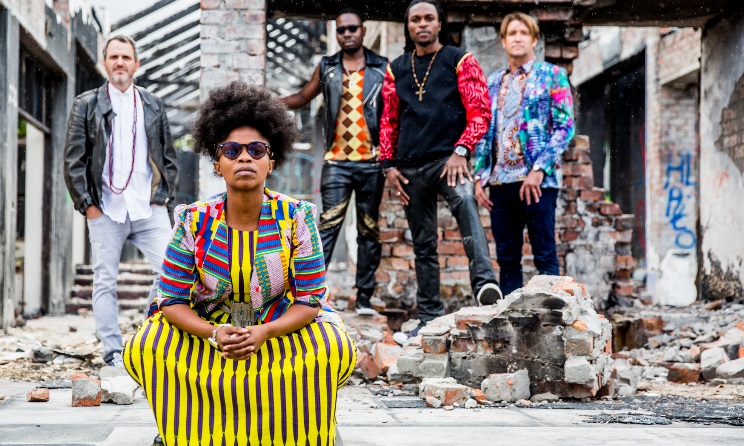
Freshlyground – which comprises musicians from South Africa, Mozambique and Zimbabwe – has taken the music industry by storm with the band's unique mix of the blues, kwela, jazz, indie rock and African folk music. Big hits such as the catchy ‘Doo Be Doo’, ‘Buttercup’, ‘Shake It’ and ‘I’d Like’ are the reason Freshlyground are loved by fans and musicians alike.
The group gained global recognition when it was featured on Shakira’s 2010 FIFA World Cup anthem ‘Waka Waka (This Time for Africa)'. Written, composed and produced by John Hill and the Colombian singer, the song received more than 1.7 billion YouTube views during the World Cup and in the process introduced the beloved South African band to a worldwide audience.
Since the band's inception in 2002, Freshlyground has won five awards at the South African Music Awards, as well as one award each at the MTV Europe Music Awards and Channel O Music Video Awards.
With Mahola leading Freshlyground's image, the band has performed at the Harare International Festival of the Arts (Zimbabwe), Villa Celimontana Festival (Italy), North Sea Jazz Festival (SA) and Robben Island African Festival (SA). The group has also performed in the US, Canada and China.
Freshlyground takes to the Lyric Theatre stage in Johannesburg on Saturday alongside a capella masters The Soil. The two acts are expected to launch and perform their new collaborative single ‘Mna Nalamagenge’, which was released in early September.
Music In Africa caught up with Mahola ahead of the Lyric Theatre show.
MUSIC IN AFRICA: What inspired the band’s name?
ZOLANI MAHOLA: We wanted to find something that was definitely linked to the continent, so like 'grounded', meaning we are grounded here in Africa. 'Freshly' is about a blend. It’s a fresh mixture of different styles of music such as pop, rock and many others. The kind of music that we make is not specific to one genre.
Your band members are from different countries. How have their backgrounds influenced your music?
You can hear echoes of different music in the sounds of the guitars and the instruments that we choose such as the mbira from Zimbabwe. You can definitely hear that this music is from Africa and I think if you listen carefully you can hear echoes of marrabenta from Mozambique and all sorts of musical elements from different parts of Africa.
What’s the songwriting process like with Freshlyground?
We basically have a jam session and then if we like something, we will start building on that idea. Everyone is involved in the process.
You are the bandleader. Do you make the final decisions?
No. It’s very democratic. It’s really, really very democratic.
Leading such a big band must be tiring and a big task to handle. How do you manage this?
[Laughs]. The only place that I lead is on the stage, otherwise we all have our roles to play in the business and rehearsals. I have an acting background, I love to perform, so it’s easier for me to lead the band onstage. The stage is like my office, it’s the place where I really shine.
You are now the only female member of Freshlyground since the departure of violinist Kyla-Rose Smith. What is it like giving instructions during a performance?
Well, it feels normal [laughs]. I think that this thing of men being the leaders and women having to follow is going to go away. In many parts of the world, it’s the rule of law that men and women should take the lead even though it’s very difficult in societies to find it that way. But in our band, we see each other as equals and my role in the band is my role in the band, so one can’t argue about that simply because I am a woman.
How do you respond to a mistake from a band member during a performance?
[Laughs] Oh no! We usually laugh, you know. After 16 years together, we can’t get angry at each other for making a mistake. I also make mistakes onstage, so you just laugh and carry on.
What is it like working as a group?
You know, people always have some beef with each other, sometimes you misunderstand each other. But I think after all this time we're getting better at problem-solving, we're getting better at being cool with each other.
What are your musical influences?
My idols are Ella Fitzgerald, Steve Wonder, Thomas Mapfumo, Brenda Fassie, Miriam Makeba and Hugh Masekela. There are still many and we are very lucky as a band that in our next album we would be collaborating with one of our favourite artists, Oliver Mtukudzi. It’s a dream come true.
Do you have any concerns regarding the South African arts industry?
My most serious concern in South Africa is that there is so little attention paid to the arts in schools. There is a small percentage of arts in public schools such as music, drama and visual arts. I know of public schools in South Africa that offer no arts and that is a tragedy because we know that as Africans we are gifted. So it’s very sad when we don’t give our children the chance to have a good start. It’s something that needs to change.
What would you change if you were appointed as a member of the National Arts Council?
I would encourage a strong artist union. We have one but it’s not really effective or backed. I would empower the union and I would make sure that an artist is recognised like any other professional. I would make sure that artists are well taken care of when they retire. I would make sure artists have medical aid. The education aspect is very important. I can’t stress that point enough and I would introduce the arts in schools. Arts are very important, especially here in South Africa. We have so many wounds due to apartheid and the arts can be used as a healing tool. That would be my main focus.
Any new music or collaborations?
Oh yes! The Lyric Theatre show is a collaborative gig between Freshlyground and The Soil. We recorded a song called ‘Mna Nalamagenge’, which features on our latest album [Can't Stop]. The Soil will do their set and we will do ours. We will do one last set together, so that’s the whole point of this concert. We have been friends with The Soil for a long time. When we were recording the album, we were thinking about who we should collaborate with and one of the groups that came to mind was The Soil. We will use this gig as a platform to showcase our collaboration with them.
What should fans expect from the show?
They should expect to hear many of their favourite songs. Events like this, where two groups collaborate and where fans of different artists converge at one show, don’t happen so often. I know that The Soil, just like us, use a lot of energy when they perform. So people should feel uplifted.
Any advice to aspiring musician?
The advice I can give them is to find art that makes them unique. We are all different and the most successful artists are those who come up with something unique. They should learn how to play an instrument and go for vocal coaching.
Tickets to Saturday's Lyric Theatre concert are available via Computicket.


Most popular

Top Naija songs of 2026
31 Mar 2026
Ghana: Mr Eazi and MOLIY’s ‘Comfort’ earns Urban Music Awards nomination
21 Oct 2026

Top Afrobeats songs of 2026
19 Mar 2026

Top amapiano songs of 2026
16 Feb 2026
Open call: CANEX Music Business Lab and Songwriting Camp
15 Oct 2026
Nigeria: CANEX WKND unveils 2026 programme
21 Oct 2026
Disclaimer: Music In Africa provides a platform for musicians and contributors to embed music and videos solely for promotional purposes. If any track or video embedded on this platform violates any copyrights please inform us immediately and we will take it down. Please read our Terms of Use for more.

Subscribe to our monthly Newsletter
Follow us on social media


Please log in to post a comment.