




































NEFCISA
NEFCISA

The Music In Africa Foundation (MIAF) is proud of its partnership with the Industrial Development Corporation (IDC) as a Strategic Implementing Partner (SIP) for its Social Employment Fund (SEF). Through this collaboration, MIAF is running a national programme that is creating jobs, addressing skills gaps, and strengthening South Africa's creative industries — in line with the SEF's overarching goal to generate work for the common good and build community value through employment, social contribution, and inclusive economic participation. Operating under the banner NEFCISA (National Employment Facility for Creative Industries in South Africa), the initiative is recruiting and training participants, matching them with host organisations, and has already placed 1 500 workers across the country — surpassing its original target of 1 000. NEFCISA is delivered through a network of 20 host organisations spanning five provinces, who are actively hosting participants and contributing to work for the common good across South Africa's creative and cultural industries. Key Objectives: Support employment and entrepreneurship in the creative industries. Offer skills development and training programmes. Foster partnerships between public and private creative sectors. Promote South African creativity at both provincial and national levels Foster community development through social contribution.

ACCES
ACCES

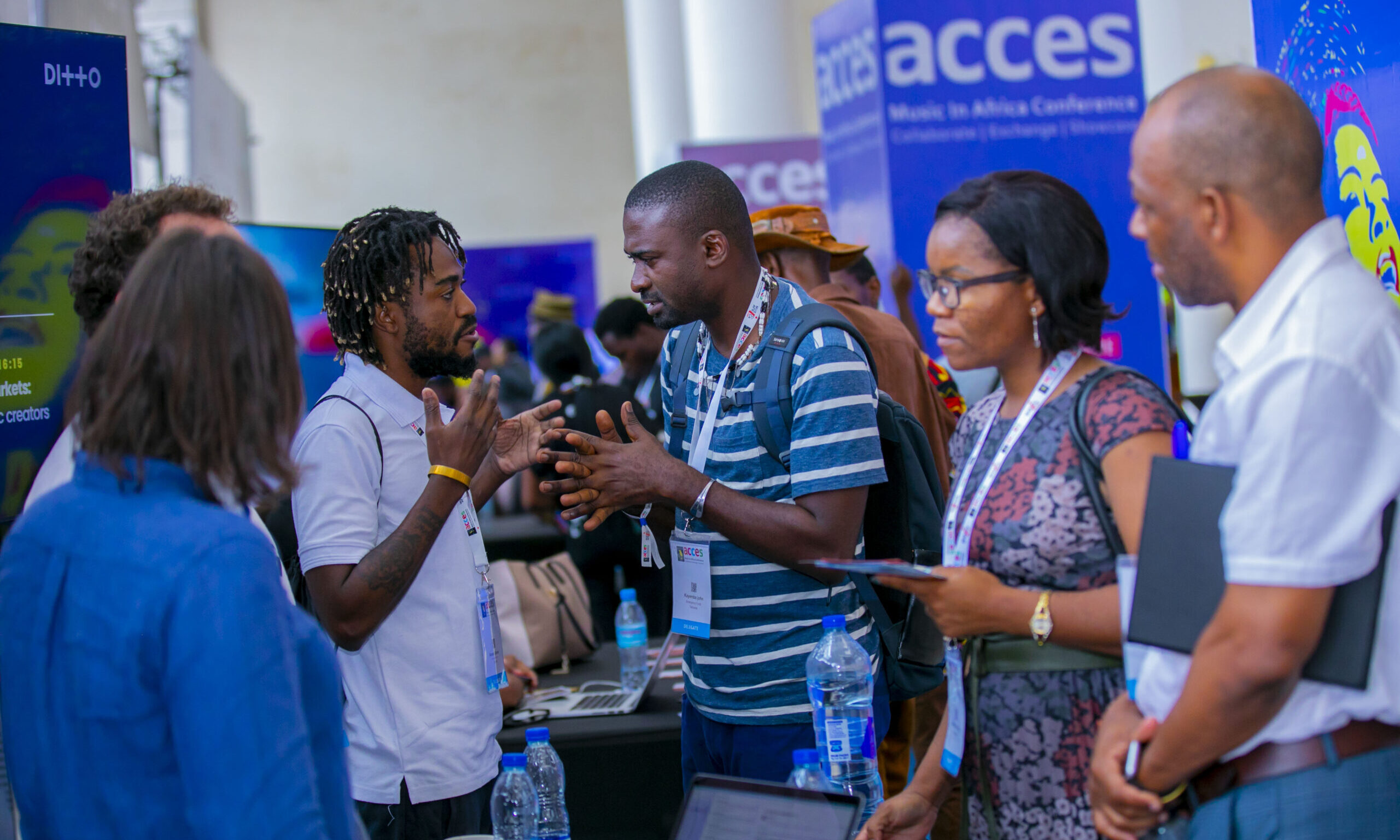
ACCES Conference and Showcase Festival is Africa's leading music industry gathering, bringing together the people shaping the future of the continent's music business. Artists, entrepreneurs, executives, investors, policymakers and cultural leaders from across Africa and around the world come to ACCES to build partnerships, exchange ideas, discover talent and create new business opportunities. Since its launch in 2017, ACCES has become the continent's premier platform for professional exchange and music market development. Combining a high-level conference with a curated showcase festival, networking, exhibitions and industry programmes, ACCES offers a unique space where creativity meets business and where African music connects with the global industry.

Gender@Work
Gender@Work

Music In Africa Gender @ Work is a three-year training programme aimed at upskilling and increasing the participation of female professionals in the African music sector. Launched by the Music In Africa Foundation (MIAF) in April 2019, the programme is connected to the MIAF’s ACCES music conference – a pan-African event held in a different African country every year. This connection enables the programme to reach new participants in a different African country every year. The programme marks the beginning of a more concerted effort by the Foundation to support the participation and inclusion of women in all facets of its programmes and the music sector in Africa as a whole. Over the three years, the programme will aim to address gender imbalances in the sector through training, lobbying, facilitating knowledge exchange and dialogues that foster the interest of women. The broader objectives of the programme are to: Provide industry training for women on critical music industry skills, focusing on: Stage management Electronic music production and recording Music business management Technical knowledge Provide an opportunity for both professional and aspiring women to benefit from the Music In Africa network and its broad range of activities in 2019, 2020 and 2021. Provide a solution-based platform in the form of a round table at ACCES with a view to identify challenges, discuss opportunities and lobby for the interests of female practitioners. Offer participants the opportunity to benefit from programmes offered by MIAF’s partners. Increase access to educational materials. Integrate participants in the broader ACCES programme to maximise experience and exposure to the industry. Record and present training materials on the www.musicinafrica.net, including but not limited to tutorials, templates and other best-practice materials. Communicate women-based themes that support the initiatives and messages of the programme. MAIN TRAINING ACTIVITIES Training in first country (Ghana): In the first year, participants will be trained on all aspects of stage management by a team of experienced stage managers from 10 to 17 November 2019. The programme will offer robust classroom training as well as practical, hands-on training in which participants will also be given the opportunity to manage various aspects of the ACCES performance programme. Training in second country: The second training iteration will take place at ACCES 2020 when the programme will diversify its course to include music production lessons and training on other music business topics. A round-table platform will also be introduced to coincide with the ACCES programme. Training in third country: The third training iteration will take place at ACCES 2021 in a different country, offering an advanced course. HOW DO YOU GET INVOLVED?  As a participant, facilitator or trainer: The programme enrolls up to 12 trainees every year. All opportunities are advertised publicly on this website, and will be added to this page. Please keep checking this page for new calls (below under UPDATES & CURRENT OPPORTUNITIES). As a partner Please contact Claire Metais at [email protected]. APPLY The call for applications for 2020 will be announced soon. The Music In Africa Gender @ Work programme is made possible with the support of the Prince Claus Fund, Siemens Stiftung and Goethe-Institut.

Sound Connects Fund
Sound Connects Fund

For cultural and creative practitioners and organisations operating in southern Africa, access to funding remains a major challenge. The COVID-19 pandemic has also had a massive impact on government policy, spending and the economy in general, and has seen spending on culture being moved further down the list of priorities. Further, the cultural and creative industries repeatedly cite four main areas where investment is needed for growth, which are increased visibility, mobility including access to new markets, finance and support structures.

Instrument Building And Repair Project

Experience the Vibrations African Instruments Exhibition online in 3D

banner image

US lawmakers approve bill pushing for sell of TikTok

Home/Non classé/US lawmakers approve bill pushing for sell of TikTok

Titled Protecting Americans from Foreign Adversary Controlled Applications Act, the legislation was presented to the House Energy and Commerce Committee during a mark-up meeting on 7 March where it sailed through and will head to a floor vote this week.

The bill aims to prohibit TikTok from US app stores unless the social media platform delinks itself from its parent company, ByteDance.

It could also lead to a nationwide ban against TikTok on all electronic devices, renewing lawmakers’ challenge to one of the world’s most popular social media apps, used by roughly 170 million Americans, over fears that it’s being used as a spying tool by the Chinese government.

According to CNN, if enacted, the bill would give ByteDance 165 days to sell TikTok. If not divested by that date, it would be illegal for app store operators such as Apple and Google to make it available for download. The bill also contemplates similar prohibitions for other apps “controlled by foreign adversary companies.”

Washington’s 5th congressional district representative Cathy McMorris Rodgers, who chairs the House Energy and Commerce Committee, has been critical of TikTok, writing 5 March on X: “At our hearing last year with the CEO of TikTok, we saw a company that was repeatedly caught lying about its relationship with ByteDance and the Chinese Communist Party.

“It confirmed our worst fears – that applications controlled by foreign adversaries, like TikTok, are exploiting and weaponising American’s data and pose a clear national security threat to the United States.

“I look forward to the House Energy and Commerce Committee’s hearing and mark-up to discuss bipartisan legislation that takes decisive action to protect Americans and prevent foreign adversaries, such as China, from surveilling and manipulating the American people through online applications like TikTok.”

The 12-page bill defines TikTok as “a foreign adversary controlled application.”

According to Digital Music News, TikTok has admitted to storing user data in China, where the Communist Party allegedly possesses backdoor access to the sensitive information.

“The act says adversary-controlled apps would effectively be outlawed at the app-store and web-hosting levels alike in the US, with massive per-user penalties in place for related violations,” Digital Music News said. “The legislation calls for the parent companies of affected apps to hand over all the available data to users who request the information during a pre-ban window.

“Impacted businesses, especially the Beijing-headquartered ByteDance, would have until this window’s conclusion to execute a ‘qualified divestiture’ – thereby avoiding the far-reaching penalties described in the Protecting Americans from Foreign Adversary Controlled Applications Act.

The bill represents one of many pieces of legislation targeting TikTok via a divestment requirement and/or a compelled cessation of operations, including an EU investigation over its impact on minors.

TikTok is already banned on government devices and networks in a number of countries, states and cities.

Many industry experts believe TikTok’s many regulatory troubles do not bode well for many African musicians.

According to the latest TikTok Music Impact Report, users have a propensity for discovering and sharing new music content on the app than other similar platforms.

The report adds that in the US, TikTok users are twice likely to discover music on the platform compared to the average user of similar apps, making it a primary marketing tool for African genres like Afrobeats and amapiano that are gaining traction in North America.

On 31 January, Universal Music Group’s (UMG) pulled down its catalogue from the platform, marking the end of a global licensing deal that began three years ago. The removal included about 3 million recorded music tracks and approximately 4 million songs represented by UMG in publishing rights.

Music In Africa editor Gabriel Myers Hansen believes that if TikTok’s woes persist it would pose a threat to the growth and exposure of African artists, potentially limiting revenue streams in a music royalty system that generally only functions effectively in the digital space. There’s also the looming disruption of a vital channel for music promotion and the shackling of future hits within TikTok’s unique ecosystem.

newsletter banner

Subscribe to our monthly Newsletter

Follow us on social media