
















































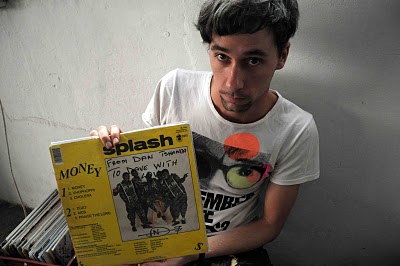


In 2008, the mother of slain American rapper Tupac Shakur announced plans to scatter her son’s ashes in Soweto to mark Tupac's 36th birthday on 16 June, also Soweto’s most famous day. Afeni Shakur never did make it to South Africa (before her passing on 2 May 2016), but the media storm her proposal generated spoke of the gravity that Soweto commands in the international popular consciousness.
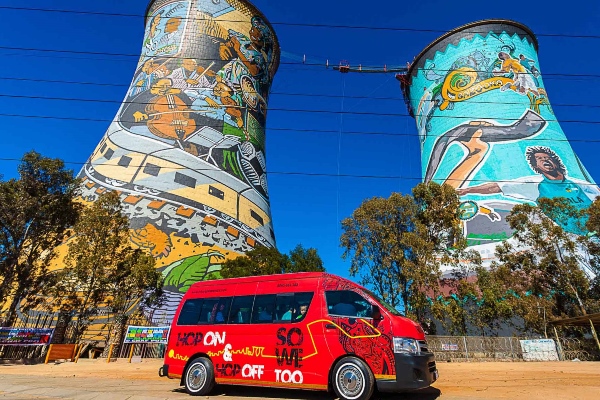
It goes back a long way. Fela may have told us about Africa being the centre of the world, but if one ever wanted to find a centre of Africa, at least in the eyes of the international media or “political” musicians, that place would surely be Soweto in the south of Johannesburg.
Over the course of time, the name Soweto has grown to mean many different things. As a symbol for Africa’s journey to independence, a token of solidarity between Africa and the West, and a common denominator in understanding resistance to oppression, it has also become a powerful and popular trope in international music, with numerous songs alluding to Soweto written by an interesting array of artists from around the world, both legendary and obscure. Here are some for those artists and songs…
During apartheid, Soweto’s international image was inexorably linked to the events of June 16, 1976. In 1978, Nigerian singer Sonny Okosun released the international reggae hit 'Fire in Soweto', in which he decries violence throughout Southern Africa, at a time when the region was still fighting for independence (Mozambique and Angola has just become independent, but protracted civil wars were just beginning), long after Uhuru had come to the rest of the continent. Interestingly, although singing of Zimbabwe, Mozambique, Angola and Namibia, Okosun never mentions the words “South Africa”, instead using “Soweto” to represents our entire country.
In the UK, the punk movement was reaching its apex. 1979 saw the release of The Clash’s London Calling, One of the songs that didn’t quite make it onto that album was entitled 'Where You Gonna Go (Soweto)'. It was finally released, 25 years later, on the anniversary edition of that seminal album.
Along came the 1980s, The world took wary notice of SA poised on the brink of civil war, an end to apartheid still nowhere in sight. Punk poser and former manager of the Sex Pistols, Malcolm Maclaren surprised many in 1983 with his album Duck Rock, recognized today as the album that first popularized hip hop in the UK. The biggest hit off the album was the mbaqanga-fuelled 'Double Dutch', a rehash of 'Puleng' by the Boyoyo Boys. Another track off the album was titled – you guessed it – 'Soweto'.
Days before the tenth anniversary of June 16, a State of Emergency was called. It was also the year that American R&B singer Jeffrey Osborne urged the world to “Send a message to Soweto, send a message now!”:
Elsewhere, in classical circles, pianist Adrienne Torf released 'Song for Soweto' that year, on her album Brooklyn from the Roof (re-issued in 2003).
Maybe the most famous reference to Soweto came from 80s reggae icon Eddy Grant, with his 1988 hit 'Gimme Hope Jo'anna'. The line "While every black mother in Soweto fears the killing of another son," shows that the memory of '76 was still alive both at home and abroad.
Less widely known was 'Chile Your Waters Run Red Through Soweto' by British punk poet Billy Bragg off his 1988 album, ironically titled Help Save The Youth Of America - Live & Dubious.
In 1990, Santana recorded a song called 'Soweto (Africa Libre)' for their album Spirits Dancing in the Flesh. Around the same time, fellow Mexicans Tijuana No!, a ska/punk band, recorded the song 'Soweto' for their debut album No. Funk legends Earth, Wind & Fire’s 1990 album Heritage contains short tracks called 'Soweto (Reprise)' and 'Interlude: Soweto'.
As the 90s unfolded, apartheid began to atrophy. Still, it wasn’t too late for Sweden’s number one rudeboy Dr. Alban, who took a stand against police brutality on 'Free Up Soweto' on his 1994 album Look Who's Talking.
As democracy took root in Azania, Soweto began to be signify triumph rather than struggle. To mention Soweto in song now had a different, more ambiguous connotation. American smooth jazz fiends Bob James and Kirk Whalum released an instrumental track called “Soweto” for their album Joined at the Hip (1996). Just what the song had to do with Soweto is anyone’s guess (how most instrumentals are named remains a mystery). In 2000, tenor sax legend Pharaoh Sanders co-wrote a song called 'Morning in Soweto' for his album Spirits.
Meanwhile, African artists continued to look to Soweto for inspiration. From Senegal, percussionist Aiyb Dieng penned 'Soweto Funk' for his album Rhythmagick. featuring American bassist Bootsy Collins, in 1997, the same year Omar Pene, singer of the legendary Super Diamono put out a song simply titled 'Soweto' on the album Direct from Dakar. Their compatriot Wasis Diop wrote 'Soweto Daal' the following year for his album Toxu.
More confusingly, Nottingham, England-based “alternative metal” quintet Earthtone 9 put out a song called 'The Soweto Shuffle' in 2003.
And back to hip-hop, where American act Hieroglyphics rapped about a changing social order in their song 'Soweto' from 2002’s One Big Trip, calling for the “gems” or black youth to express themselves. In 2007, acclaimed UK duo Mattafix, wrote a song called 'Memories Of Soweto' for their album Rhythm & Hymns, again underlining Soweto’s international standing: “From London to Soweto / A street soul in the ghetto.”
Soweto of course also lent its name to the famous international compilation serious of SA music. The first Indestructible beat of Soweto was released in 1985 on the Earthworks label, put together by Trevor Herman and Jumbo Vanrenen, two SA ex-pats in England. Top American rock critic Robert Christgau has put it in his top 5 albums of all time, while eMusic critics have called it “the most influential collection of South African pop ever assembled.”
Looking back on all this, then, it’s not hard to see why Tupac’s mother once wanted to lay her son to rest in Soweto. For those who decry SA’s youth being overinfluenced by American culture at the expense of our own African heritage, it’s reassuring to know that this cultural influence flows in the other direction too. More often than not, that flow comes straight outta Soweto.
Originally published on 15 June 2011 in Mahala.


Most popular

Top Afrobeats songs of 2026
19 Mar 2026

Top Naija songs of 2026
31 Mar 2026

Top amapiano songs of 2026
16 Feb 2026
AFRIMA 2026: All the winners
12 Jan 2026

Visa appoints Fally Ipupa as face of Visa Pay in Democratic Republic of Congo
23 Sep 2026
NAAK and Vumaala to take SA electronic sounds to Amsterdam
02 Oct 2026
Disclaimer: Music In Africa provides a platform for musicians and contributors to embed music and videos solely for promotional purposes. If any track or video embedded on this platform violates any copyrights please inform us immediately and we will take it down. Please read our Terms of Use for more.

Subscribe to our monthly Newsletter
Follow us on social media


Please log in to post a comment.