

















































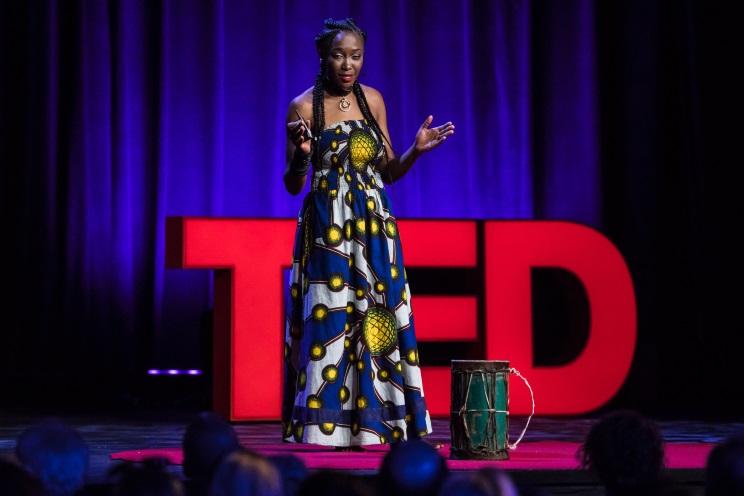
By the time Kasiva Mutua realised it was taboo for girls to play drums she was already marching to her own beat. The passionate percussionist is a treat to watch. With her rhythmic touch and fadeless smile she stands out even in a multi-member ensemble. Mutua’s infectious beats have given her many opportunities and the strength to defy the odds.
According to female empowerment group SoundGirls, just 5% of sound engineers in the UK are women. The Music Producers Guild estimates that only 6% of its members are women. Of the 370 gigs listed for 12 October on Ents24.com, 69% (255) of the acts are made up entirely of men, while just 9% (33) are female. Half of these are solo artists. Of the 82 mixed-gender groups, fewer than three-quarters contain no more than one woman. Ents24 says this pattern is consistent: 74% of tickets sold via the site in 2017 were for all-male acts.
With the aforementioned stats is a sore reality, female instrumentalists are a real novelty, especially if they come from Africa. Last year, Burundian President Pierre Nkurunziza banned women from drumming. The law was informed by Burundian traditional culture that considers drumming an all-male affair. Numerous other African cultures prevent women from drumming or even expressing themselves artistically.
Mutua’s passion for the drums put her at loggerheads with proponents of traditionalism and made her an unlikely crusader for women’s liberation. Mutua is a part of the Nile Project, a TED fellow and one of Kenya's top percussionists.
MUSIC IN AFRICA: You play with so much passion. Where does that love for music come from?
KASIVA MUTUA: Every time I see a drum I feel like it is a part of me and I have to play it. I always play like it’s my last time. I was given a gift and I don’t know how to ration it. Drumming is the joy and the essence of my life. I want to inspire my audience and share with them the joy that I feel when I’m drumming.
Of all the instruments you could choose from, why the drums?
My band members always tease me with that question, especially when I ask them to help me carry my drums. They joke that I should have picked a lighter instrument. I didn’t choose the drums – the drums choose me. When I was young my grandmother made me a keen listener of the environment because of how she told me stories. She needed a way to make her stories last a little longer so she devised little interludes. In the middle of her narration she would me make me listen to crickets, frogs, the rain and just about anything. With time I started to create drumbeats from the rhythm of life.
When did you first pick up a drum, and when did you know you wanted to do this?
I started drumming on random household items when I was six years old. I would drum with cooking pots, spoons, hairbrushes and just about anything I could get my hands on. My love for drums made me a weird kid in school because I preferred music shows with traditional dances, like Kenya Rhythm, while the other kids watched cartoons. To date I still use unconventional instruments in my set. I have a suitcase called ‘Pinky’ where I store my gear and you would be shocked at what’s in there. I even have a packet of toothpicks.
Is it difficult for female percussionist In Kenya?
Yes it is. Growing up I always felt guilty for drumming and I couldn’t figure out why. Every time I passed my exams I was excited to tell my dad, but I would never tell him when I found a new beat or rhythm. However, it wasn’t until high school when I participated in the Secondary School Music Festival that it all began to dawn on me. I was standing in line to perform and this boy rudely asked me if I was lost. He proceeded to tell me, in a very dismissive tone, that there was no way he would be beaten by a ‘skirt’. It was the first time I noticed that I was the only girl who drums. That year I went on to become the best drummer in the country, and I went back to gloat to the guy who had taunted me.
Why are there so few female instrumentalists?
The music scene is dangerous for women. There is a lot of alcohol, drugs, sex, money and politics. When I got into the industry I went through hell and I couldn’t understand why. It finally dawned on me that it was because I was a woman, and since I couldn’t change my sex or give up on my drums, I decided to fight. You have to understand how the game is played and keep your head in the game. As a woman you have to be at your best and fight for every inch you get.
What are some of the weirdest experiences you've had as a female percussionist?
The real war started when I went to campus in Uganda to pursue a degree in journalism. I would play by the Nile, just for fun, but after a while I started getting gigs in Jinja. Soon after that I broke into the Nairobi live band scene but the male percussionist felt really threatened by my presence because I was popular. For a few years, before I joined Kidum’s band, I had to fight for my place in the industry. One time someone actually intentionally destroyed my drums just to frustrate me. I had left them at a public practice studio, as did other percussionists who used the facility, but they only destroyed mine. From that point I had to hire drums to do gigs. The male percussionists would give each other drums for free but overcharge me when I would rent drums from them.
You’ve had a very successful career. What's your biggest highlight?
Every time I play is a highlight, whether it’s in practice, at a big gig or a small one – every time it’s special. I can’t really pick one. My drums have made me tour the world and meet great people, but now it’s my story that is inspiring the next generation of female instrumentalist. I really didn’t realise how much I have been through until I did a Ted Talk and they made me write down my life story.
What's your advice to upcoming female instrumentalists?
Let nobody tell you that this is a man’s instrument. If you feel that you are connected to an instrument, run with it.


Most popular

Top Naija songs of 2026
31 Mar 2026

Top amapiano songs of 2026
16 Feb 2026

Top Afrobeats songs of 2026
19 Mar 2026
AFRIMA 2026: All the winners
12 Jan 2026

Call for applications: ACCES 2026 Emerging Artist Spotlight Competition
01 Oct 2026
CAPASSO backs global principles for fair generative AI music licensing
06 Oct 2026
Disclaimer: Music In Africa provides a platform for musicians and contributors to embed music and videos solely for promotional purposes. If any track or video embedded on this platform violates any copyrights please inform us immediately and we will take it down. Please read our Terms of Use for more.

Subscribe to our monthly Newsletter
Follow us on social media


Please log in to post a comment.