






















































Iconic SA composer’s music recorded for the first time
05 Apr 2018 - 12:38


By Stephanus Muller
From the outside, it looks like a barn. But on entering, you step into a spacious hall with a Model D Steinway piano and small recording studio. Potton Hall on the UK’s Suffolk coast is located in Benjamin Britten country. To the north, it’s half an hour from Lowestoft where the composer was born in 1913; to the south, 20 minutes from Aldeburgh where he died in 1976.
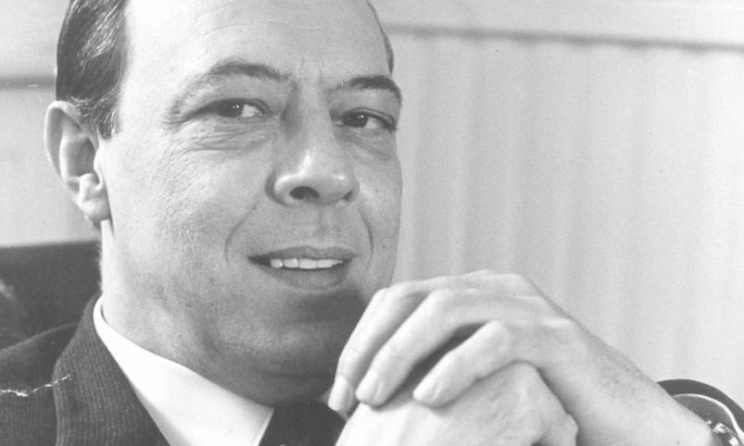
It was here, on 15 and 16 February, where Daniel-Ben Pienaar sat down to record, for the first time ever, the complete solo piano music of pioneering South African composer Arnold van Wyk. Pienaar’s work has been critically acclaimed in Gramophone Magazine (Editor’s Choice), BBC Music Magazine (Instrumental Recording of the Month), Britain’s Sunday Times (Top 5 Recordings of 2011), Diapason and Der Spiegel. Van Wyk was part of the beginnings of Western composition in South Africa in the early decades of the twentieth century. He contributed major works to the local classical music canon.
Van Wyk was Britten’s contemporary. He was born in the small South African town of Calvinia in 1916 and died in Bellville, near Cape Town in 1983. Although he displays influences of Britten in some of his works, he was never part of Britten’s circle. Van Wyk encountered other important British composers and musicians while studying at the Royal Academy of Music. Most significant of these to Van Wyk was composer and editor Howard Ferguson, who became a life-long friend that supported Van Wyk emotionally and financially. Ferguson also edited and published some of Van Wyk’s work after his death.
Pienaar, who was born in South Africa, has been a member of the Royal Academy of Music’s teaching faculty since 2005. As he explains on his website, he views the canonic classical repertoire as, “Radically ‘late’ – both with respect to the works themselves, and to the performance traditions and great recorded performances that surround them – demanding an active intervention from the performer.”
This approach, of which Glenn Gould is perhaps the most famous historical pianistic reference point, situates Pienaar outside conventional notions of “interpretation” that depend on the normative authority of the composer and score. Instead, Pienaar embraces performances, and especially recordings, as radical acts of text creation.
Against pianism
Pienaar has recorded extensively, including all of Beethoven's 32 Piano Sonatas, the Bach Well-Tempered Clavier Books 1 and 2 and the complete Mozart Piano Sonatas. He is the first South African to have done this.
Visiting the Royal Academy of Music in 2014 I was struck by how, during a public lecture, he traversed an expansive piano repertoire without any reference to style or tradition. Instead, he was concerned with light and heavy notes, and the effect the performer’s choices in this regard had on the logic and creative possibilities of the music.
He expounded on these ideas In a series of lectures in Stellenbosch in 2017. They represented, to my mind, a fundamental challenge to the 19th century construct of concert pianism, a practice born from the crucible of virtuosity, composer geniuses and the development of a concert hall tradition.
[video:https://vimeo.com/200782845 width:744 height:446 autoplay:0]
The Potton Hall recordings
Van Wyk’s mature solo piano music comprises five works: Pastorale e Capriccio (1948, revised 1955), Night Music (1945-1958), Four Piano Pieces (1965), Tristia (1968-1978) and Ricordanza (1973-1979). Of these, Night Music is the major work. Pienaar’s recording of the solo piano music became the first project of the Arnold van Wyk Centenary Fund which was established by the Africa Open Institute in 2016.
Pienaar explained to me that he wanted to approach the Van Wyk piano music “on the wilder side of control”, much like Van Wyk himself played the piano. Agreeing with recording engineer Philip Hobbs that they would emulate the sound of the Chopin recording they had produced the previous year in the same hall with the same instrument, Pienaar started the recording session with the Four Piano Pieces.
The Potton Hall Steinway is not an instrument with a transparent, projecting brilliance. It requires hard work to achieve the effortless floating of cantabile (songlike) lines. That makes it difficult to discard some of the weight of attack required for the fast music.
And it was Van Wyk’s fast music that saw the most perceptible reinvention of Van Wyk in Pienaar’s readings. His tempi were furiously fast, exceeding any of the extant recordings of these pieces by a wide margin.
It was the choice of these tempi that allowed Pienaar to test pianistic control against the energy and rhythmic definition imparted by speed. Whereas Van Wyk’s own technically limited pianism often sacrificed “correct” playing for characterful sculpting of sound, Pienaar’s much superior technique could only approach this pervading sense of musical fragility by exceeding the speed limit, as it were.
In the slower music Pienaar took care to differentiate various characters of slowness: the ruminative parlando (music to be performed as though speaking) of Tristia, for example, versus the nostalgic lines of Ricordanza or the ethereally distant qualities of the coda of Night Music.
Repository of 'lateness'
In a correspondence preceding the historical recording of Van Wyk’s solo piano music, Pienaar wrote to me that he felt a similarity of approach to performing Van Wyk as he did to performing Beethoven or Bach. Even though the solo piano music had never been recorded as a whole, he felt that, as a performer, he was coming late to Van Wyk. He was engaging the music at a contemporary point in time as if it had proliferated in meanings and interpretive possibilities. In imagining the realisation of these possibilities in Van Wyk’s music (with single exceptions in lieu of a powerful recorded tradition), he rejected certain fictional readings and embraced others. Ricordanza could therefore become a study in musical line (rather than sonority), and the ‘Scherzino’ from Four Piano Pieces an ironic rather than pedagogic study.
It’s an approach that might serve, when the recordings are released and become known, to draw Van Wyk closer to Britten than to the English pastoralism with which he has been associated. It is also an illustration that goes beyond the naive and gauche notions of interpretation or entertainment associated with pianism. It’s therefore set to give full expression to the performer as creative artist.
Stephanus Muller is professor of musicology at Stellenbosch University and director of the Africa Open Institute. This article was first published on The Conversation.


Most popular

Top Afrobeats songs of 2026
19 Mar 2026

Top Naija songs of 2026
31 Mar 2026

Top amapiano songs of 2026
16 Feb 2026

AFRIMA 2026: All the winners
12 Jan 2026

Visa appoints Fally Ipupa as face of Visa Pay in Democratic Republic of Congo
23 Sep 2026
Open call: 2026 Gender@Work music industry training in Johannesburg
03 Oct 2026
Disclaimer: Music In Africa provides a platform for musicians and contributors to embed music and videos solely for promotional purposes. If any track or video embedded on this platform violates any copyrights please inform us immediately and we will take it down. Please read our Terms of Use for more.

Subscribe to our monthly Newsletter
Follow us on social media


Please log in to post a comment.