



































NEFCISA
NEFCISA

The Music In Africa Foundation (MIAF) is proud of its partnership with the Industrial Development Corporation (IDC) as a Strategic Implementing Partner (SIP) for its Social Employment Fund (SEF). Through this collaboration, MIAF is running a national programme that is creating jobs, addressing skills gaps, and strengthening South Africa's creative industries — in line with the SEF's overarching goal to generate work for the common good and build community value through employment, social contribution, and inclusive economic participation. Operating under the banner NEFCISA (National Employment Facility for Creative Industries in South Africa), the initiative is recruiting and training participants, matching them with host organisations, and has already placed 1 500 workers across the country — surpassing its original target of 1 000. NEFCISA is delivered through a network of 20 host organisations spanning five provinces, who are actively hosting participants and contributing to work for the common good across South Africa's creative and cultural industries. Key Objectives: Support employment and entrepreneurship in the creative industries. Offer skills development and training programmes. Foster partnerships between public and private creative sectors. Promote South African creativity at both provincial and national levels Foster community development through social contribution.

ACCES
ACCES

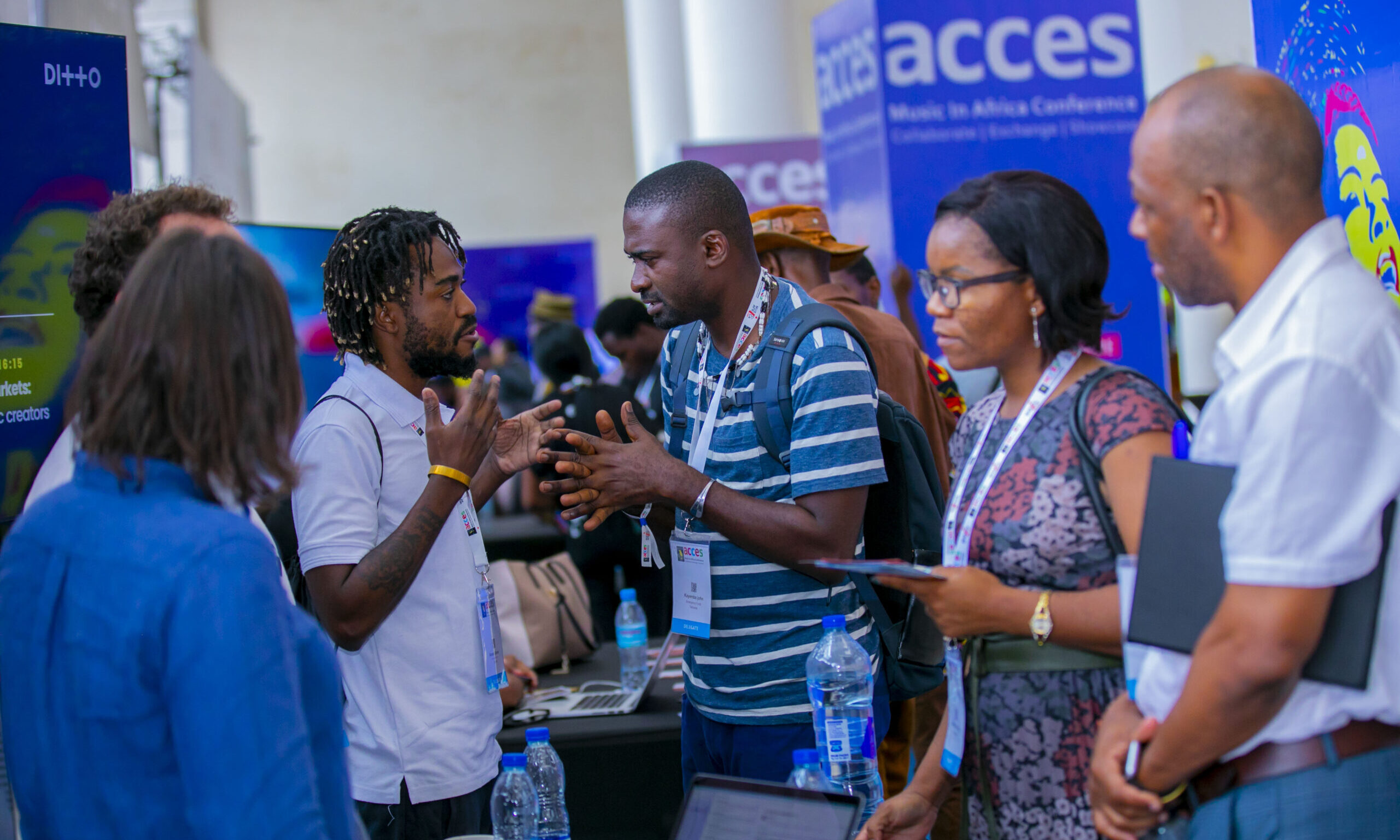
ACCES Conference and Showcase Festival is Africa's leading music industry gathering, bringing together the people shaping the future of the continent's music business. Artists, entrepreneurs, executives, investors, policymakers and cultural leaders from across Africa and around the world come to ACCES to build partnerships, exchange ideas, discover talent and create new business opportunities. Since its launch in 2017, ACCES has become the continent's premier platform for professional exchange and music market development. Combining a high-level conference with a curated showcase festival, networking, exhibitions and industry programmes, ACCES offers a unique space where creativity meets business and where African music connects with the global industry.

Gender@Work
Gender@Work

Music In Africa Gender @ Work is a three-year training programme aimed at upskilling and increasing the participation of female professionals in the African music sector. Launched by the Music In Africa Foundation (MIAF) in April 2019, the programme is connected to the MIAF’s ACCES music conference – a pan-African event held in a different African country every year. This connection enables the programme to reach new participants in a different African country every year. The programme marks the beginning of a more concerted effort by the Foundation to support the participation and inclusion of women in all facets of its programmes and the music sector in Africa as a whole. Over the three years, the programme will aim to address gender imbalances in the sector through training, lobbying, facilitating knowledge exchange and dialogues that foster the interest of women. The broader objectives of the programme are to: Provide industry training for women on critical music industry skills, focusing on: Stage management Electronic music production and recording Music business management Technical knowledge Provide an opportunity for both professional and aspiring women to benefit from the Music In Africa network and its broad range of activities in 2019, 2020 and 2021. Provide a solution-based platform in the form of a round table at ACCES with a view to identify challenges, discuss opportunities and lobby for the interests of female practitioners. Offer participants the opportunity to benefit from programmes offered by MIAF’s partners. Increase access to educational materials. Integrate participants in the broader ACCES programme to maximise experience and exposure to the industry. Record and present training materials on the www.musicinafrica.net, including but not limited to tutorials, templates and other best-practice materials. Communicate women-based themes that support the initiatives and messages of the programme. MAIN TRAINING ACTIVITIES Training in first country (Ghana): In the first year, participants will be trained on all aspects of stage management by a team of experienced stage managers from 10 to 17 November 2019. The programme will offer robust classroom training as well as practical, hands-on training in which participants will also be given the opportunity to manage various aspects of the ACCES performance programme. Training in second country: The second training iteration will take place at ACCES 2020 when the programme will diversify its course to include music production lessons and training on other music business topics. A round-table platform will also be introduced to coincide with the ACCES programme. Training in third country: The third training iteration will take place at ACCES 2021 in a different country, offering an advanced course. HOW DO YOU GET INVOLVED?  As a participant, facilitator or trainer: The programme enrolls up to 12 trainees every year. All opportunities are advertised publicly on this website, and will be added to this page. Please keep checking this page for new calls (below under UPDATES & CURRENT OPPORTUNITIES). As a partner Please contact Claire Metais at [email protected]. APPLY The call for applications for 2020 will be announced soon. The Music In Africa Gender @ Work programme is made possible with the support of the Prince Claus Fund, Siemens Stiftung and Goethe-Institut.

Sound Connects Fund
Sound Connects Fund

For cultural and creative practitioners and organisations operating in southern Africa, access to funding remains a major challenge. The COVID-19 pandemic has also had a massive impact on government policy, spending and the economy in general, and has seen spending on culture being moved further down the list of priorities. Further, the cultural and creative industries repeatedly cite four main areas where investment is needed for growth, which are increased visibility, mobility including access to new markets, finance and support structures.

Instrument Building And Repair Project

Experience the Vibrations African Instruments Exhibition online in 3D

Features

Costa Titch: The rising white South African rap star who embraced black hip hop culture
13 Mar 2023 - 13:21

cc-img flag-img

By Sanya Osha

Rising 28-year-old South African dancer and rapper Costa Titch (born Costa Tsobanoglou) died after collapsing on stage on 11 March while performing in Johannesburg.
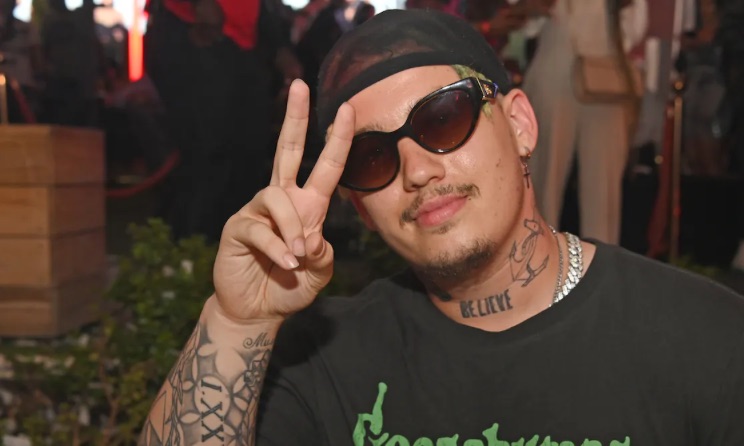
The late Costa Titch. Photo: Oupa Bopape/Gallo Images via Getty Images

Costa Titch entered the entertainment world as a dancer with Cassper Nyovest, another South African hip hop mega star, before trying his luck as a rapper, often dabbling in the country’s amapiano dance music genre. He had a huge hit with his track ‘Big Flexa’ and was destined to shine bright on the country’s music scene.

Being white, Nelspruit-born Costa Titch brought new colour and a distinctive flavour to the music scene with his use of African languages, earnest experiments in cultural subversion and elaborate urban dance routines that challenged the “white men can’t dance” myth.

There are other reasons why Costa Titch’s role in the country’s music scene can be viewed as either polarising or unifying – depending on one’s point of view.

As a white man embracing African hip hop culture, Costa Titch was a symbol of South Africa’s rainbow nation aspirations – a term coined by the late Archbishop Desmond Tutu to describe different ethnic groups living and working together and moving on from apartheid’s brutal past.

Senegalese-American mega-star Akon believed that Costa Titch was destined for bigger things and could be a game-changing artist. The young singer had recently signed with Akon’s label, Konvict Kulture. His death is another blow to a scene reeling after several high-profile deaths. The most recent was AKA (Kiernan Forbes), the hip-hop star with whom he collaborated several times.

Hip hop deaths

High profile deaths within the hip hop community over the past few years have included HHP, Prokid, Flabba, Riky Rick, DJ Dimplez, DJ Citi Lyts, and most recently AKA. Some, like HHP and Riky Rick, took their own lives. Others were murdered – and, though these kinds of homicides haven’t reached the gory levels of the US rap scene, they are becoming a disturbing trend.

The South African hip hop scene achieved mainstream acceptance only a few years ago. It’s still relatively small compared with the country’s other dominant music genres like gospel, house or Maskandi. As such, the loss of several respected artists is bound to have significant reverberations.

That’s because their successes gave hope to young South Africans mired in poverty, violence and uncertainty. The country’s townships (low-cost housing projects) created by apartheid spatial planning and informal settlements are plagued by drug and alcohol abuse, unemployment and crime. The rise of figures like HHP and Riky Rick suggested that hip-hop could be a way out for young people.

Rainbow rap

Costa Titch personified an altogether different kind of hope. Unlike many historically ill-equipped youth of his generation, he embodied the kind of promise Nelson Mandela would have liked South African youth to embrace. Here was a white rapper who was fluent in African languages, dressed like an urban hood dweller, danced like the son of a pantsula (a township street dance characterised by incredible physical flexibility) expert and shot most of his videos drawing heavily on ghetto scenes.

Music preferences, as with most other things in South Africa, have been defined by race. White audiences typically prefer different kinds of rock and folk music. And black audiences patronise everything from house and maskandi to rap and soul. But there are artists who defy this rigid rule – as we have seen in countries, such as the US.

In this way he falls within the bracket of white South Africans who enthusiastically embrace local cultural norms in forging their artistic identities. Others include the late Johnny Clegg, PJ “Thandeka” Powers, Claire Johnston the lead vocalist of the band Mango Groove, and David “Qadasi” Jenkins, a Maskandi musician.

In traversing these apparently rigid racial and cultural divides, these artists are able to hold aloft the flame and promise of a “rainbow nation” and its accompanying multiculturalism. This creed brings much optimism in times of national despair and despondency. This is evident in Costa Titch’s adoption of the urban township lifestyle and the ebullience that radiates from his ghetto-themed videos.

Costa Titch had all the opportunities to remain sequestrated within the comforts provided by white power and privilege. Instead he chose to embrace South Africa’s diversity in unambiguous racial, socio-economic and cultural terms. He seemed at home in multiple settings and didn’t appear apologetic about this oddity. Now his promising future will never be realised.

Sanya Osha is a senior research fellow at the University of Cape Town’s Institute for Humanities in Africa. The article first appeared on The Conversation.

Please log in to post a comment.

Most popular

Disclaimer: Music In Africa provides a platform for musicians and contributors to embed music and videos solely for promotional purposes. If any track or video embedded on this platform violates any copyrights please inform us immediately and we will take it down. Please read our Terms of Use for more.

newsletter banner

Subscribe to our monthly Newsletter

Follow us on social media