












































Breaking barriers: Katherine McVicker on women’s empowerment in music
11 Mar 2025 - 10:39

By Derrick Amoako
The music and cultural industries are undergoing a transformative shift towards greater inclusion and equity. While progress has been made, women in these sectors, particularly in Africa, continue to face significant challenges in accessing opportunities, resources, and leadership roles.
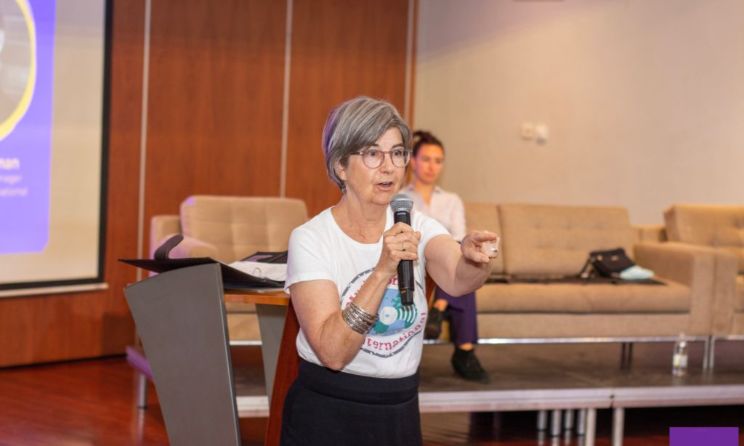
Katherine McVicker, founder and CEO of Music Works International (MWI) and board director of Arts Connect Africa (ACA), has been at the forefront of efforts to dismantle these barriers. Her advocacy for gender equity and empowerment has had a profound impact on shaping a more inclusive industry.
In this interview, McVicker shares insights from her journey, discussing the structural and societal obstacles women encounter and the tangible progress that has been made. From her early experiences as a female agent in a male-dominated industry to her current work supporting women entrepreneurs in Africa’s music and cultural sectors, she offers a compelling perspective on why diversity, equity, and inclusion must become the standard.
DERRICK AMOAKO: What inspired your commitment to breaking down barriers for women in the music and culture industries, particularly in Africa?
KATHERINE MCVICKER: Women are half the population. When they are not included in discussions about business of any kind, it is a tragic loss of human capital. Women bring a unique point of view to any discussion about music and culture. In their traditional societal roles as caregivers, many women are the keepers of cultural traditions and practices, which they pass on to their children—the next generation.
Katherine, can you share what sparked your passion for advocating gender equity in the creative industries and how your journey began?
Prior to my work as an agent, I was a band leader who also managed and booked my band. I experienced first-hand the sexism that female singers experience as performers. When I started as an agent in the larger music industry, I didn't know any other female agents. Most of the promoters were male and I was assumed to be the Agency Director’s secretary, or worse, his girlfriend. I had to find my own way to be treated as an equal in the male dominated ecosystem. I had to work harder, be more professional and keep my reactions to disrespectful comments under control so I would be taken seriously. The industry has changed now with many more women involved in key roles in the industry. I like to think agents like me led the way for the current female leaders in the various parts of the industry.
How does empowering women in music contribute to broader community development and economic growth across the African continent?
My observation is that due to our socialisation as caregivers, women tend to be more collaborative, more apt to build consensus, to forge alliances and to negotiate conflict differently than men. In an environment where good ideas are considered based on merit without regard to whether a man or woman suggested it, the outcome can be better since the best ideas are the ones that are adopted.
Could you elaborate on the tangible impacts you’ve witnessed when women are given more opportunities in the music and cultural sectors?
When women feel empowered to give their opinions and the power dynamic is level with men, you find more growth in various sectors. The number of women in positions of power in the record industry is an indication of impact. Recently, at a conference in the UK that I attended for many years, a female promoter won the Best Promoter or the Year award . That would not have happened 10 year ago. In fact the number of women starting festivals, running major concert venues and running agencies has really grown exponentially in the past years. Diversity in the industry is key.
What are some of the key challenges women entrepreneurs face in the African music and culture industries today?
Opportunity, respect and recognition.
From your experience, what are the major structural or societal barriers still holding women back from equal participation?
Work/life balance. Raising children and maintaining a stable home is still predominantly relegated to women. As a single parent myself from the time my kids were ages 5 and 7, I turned down many opportunities for career advancement because of my responsibility as the principal parent.
In what ways can the creative industries, especially music, serve as a powerful platform for driving diversity, equity, and inclusion across Africa?
Culture unites us all and transcends borders. Our cultural expressions give us pride in our country of origin and can be a way to build connections across the globe. People can disagree about many things but every society celebrates music and great art.
What role does mentorship and capacity building play in fostering the next generation of women entrepreneurs in the entertainment and cultural industries?
Mentors bring their wisdom and experience forward so the next generation can build on what has already been established or learned through doing. As the cultural arts industry expands to include more women into positions of authority, more women have opportunities to make an impact in the cultural ecosystem. We must support the next generation of female entrepreneurs to create job opportunities and to build their local economies through cultural activities.
How does your global innovative model offer a unique approach to supporting women entrepreneurs in Africa's music and culture industries?
Our model has education at its core. We want to help women help themselves. By understanding the business of culture, women can have a seat at the table with men and have their ideas and opinions respected on merit. We are also working on building infrastructure that will ensure initiatives in culture have models that can be replicated again and again.
Could you explain how blending global insights with local knowledge helps drive sustainable impact?
The best way to answer this has already been said - Think globally, act locally. One can wish for a vibrant, economically stable economy where artists can provide for their families, but unless you make a plan with steps to achieve realisable goals you will only have a dream.... Sharing information with like-minded individuals in a neighbouring city or with the country next door can expand the way we look at our own issues and spark innovation at home based on the success of others.
Looking ahead, what actionable steps can be taken to ensure diversity, equity, and inclusion become the standard in Africa’s creative industries?
Communication with colleagues in the creative industries. Cultural exchange between countries, Education in cultural arts administration, Attendance and engagement at conferences. Online research of successful institutions that have built capacity and created successful programs. Professionalism of the cultural ecosystem with best practices. Internship programs that give hand on experience in the creative industries
What policies, partnerships, or industry shifts are needed to create a more equitable future for women in music and culture?
If I had the answer to this question or the magic solution to creating more equity for women, I would be a genius. Change happens incrementally. This is why I always advocate making a goal, then creating the realistic steps to attain that goal. It takes concerted effort, the will of institutions to want to change and the power of society to accept a change. When I was in primary school, most women did not work. The norm was for married women with families to be housewives.


Most popular

Top Naija songs of 2026
31 Mar 2026

Top amapiano songs of 2026
16 Feb 2026

Top Afrobeats songs of 2026
19 Mar 2026
Call for applications: ACCES 2026 Emerging Artist Spotlight Competition
01 Oct 2026
AFRIMA 2026: All the winners
12 Jan 2026
CAPASSO backs global principles for fair generative AI music licensing
06 Oct 2026
Disclaimer: Music In Africa provides a platform for musicians and contributors to embed music and videos solely for promotional purposes. If any track or video embedded on this platform violates any copyrights please inform us immediately and we will take it down. Please read our Terms of Use for more.

Subscribe to our monthly Newsletter
Follow us on social media


Please log in to post a comment.