





































NEFCISA
NEFCISA

The Music In Africa Foundation (MIAF) is proud of its partnership with the Industrial Development Corporation (IDC) as a Strategic Implementing Partner (SIP) for its Social Employment Fund (SEF). Through this collaboration, MIAF is running a national programme that is creating jobs, addressing skills gaps, and strengthening South Africa's creative industries — in line with the SEF's overarching goal to generate work for the common good and build community value through employment, social contribution, and inclusive economic participation. Operating under the banner NEFCISA (National Employment Facility for Creative Industries in South Africa), the initiative is recruiting and training participants, matching them with host organisations, and has already placed 1 500 workers across the country — surpassing its original target of 1 000. NEFCISA is delivered through a network of 20 host organisations spanning five provinces, who are actively hosting participants and contributing to work for the common good across South Africa's creative and cultural industries. Key Objectives: Support employment and entrepreneurship in the creative industries. Offer skills development and training programmes. Foster partnerships between public and private creative sectors. Promote South African creativity at both provincial and national levels Foster community development through social contribution.

ACCES
ACCES

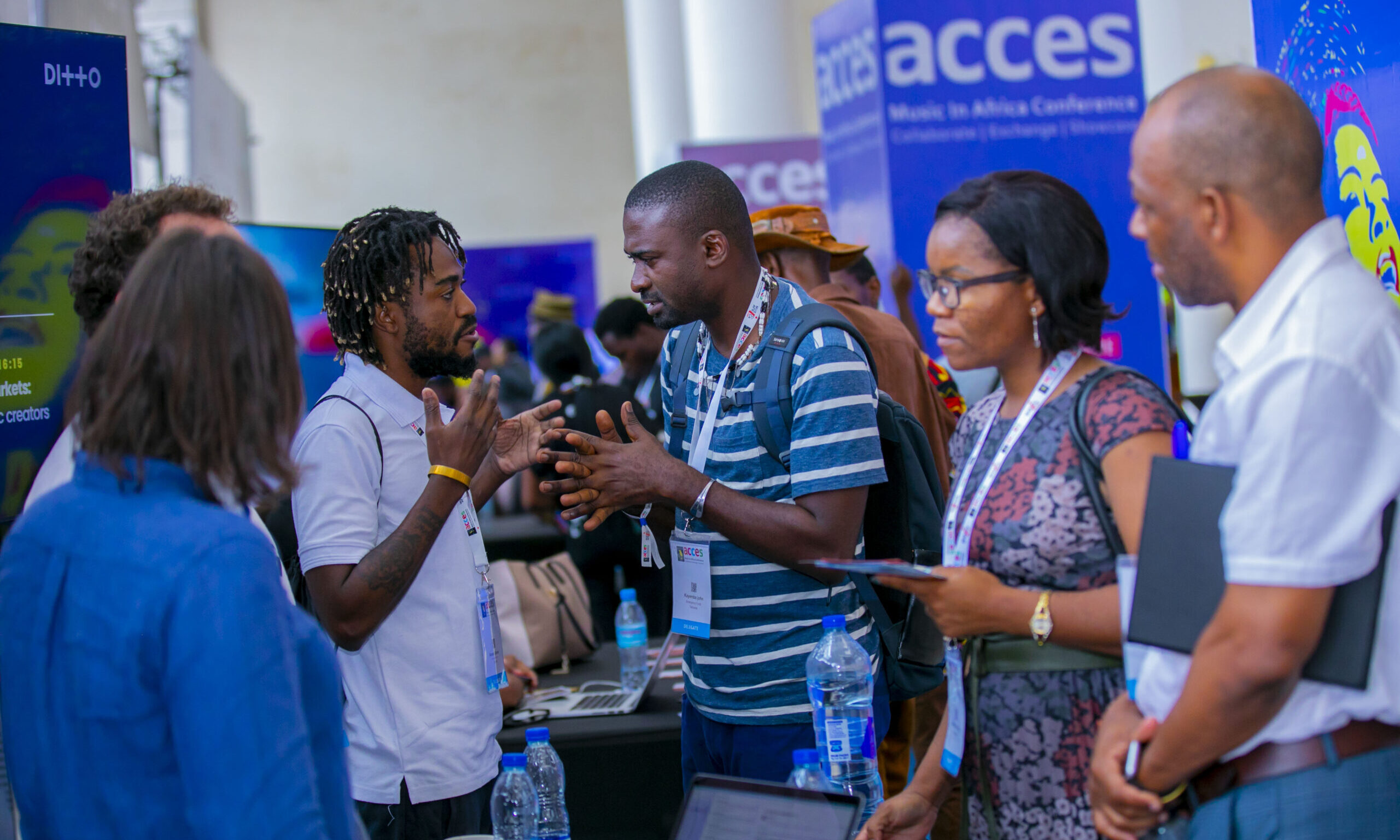
ACCES Conference and Showcase Festival is Africa's leading music industry gathering, bringing together the people shaping the future of the continent's music business. Artists, entrepreneurs, executives, investors, policymakers and cultural leaders from across Africa and around the world come to ACCES to build partnerships, exchange ideas, discover talent and create new business opportunities. Since its launch in 2017, ACCES has become the continent's premier platform for professional exchange and music market development. Combining a high-level conference with a curated showcase festival, networking, exhibitions and industry programmes, ACCES offers a unique space where creativity meets business and where African music connects with the global industry.

Gender@Work
Gender@Work

Music In Africa Gender @ Work is a three-year training programme aimed at upskilling and increasing the participation of female professionals in the African music sector. Launched by the Music In Africa Foundation (MIAF) in April 2019, the programme is connected to the MIAF’s ACCES music conference – a pan-African event held in a different African country every year. This connection enables the programme to reach new participants in a different African country every year. The programme marks the beginning of a more concerted effort by the Foundation to support the participation and inclusion of women in all facets of its programmes and the music sector in Africa as a whole. Over the three years, the programme will aim to address gender imbalances in the sector through training, lobbying, facilitating knowledge exchange and dialogues that foster the interest of women. The broader objectives of the programme are to: Provide industry training for women on critical music industry skills, focusing on: Stage management Electronic music production and recording Music business management Technical knowledge Provide an opportunity for both professional and aspiring women to benefit from the Music In Africa network and its broad range of activities in 2019, 2020 and 2021. Provide a solution-based platform in the form of a round table at ACCES with a view to identify challenges, discuss opportunities and lobby for the interests of female practitioners. Offer participants the opportunity to benefit from programmes offered by MIAF’s partners. Increase access to educational materials. Integrate participants in the broader ACCES programme to maximise experience and exposure to the industry. Record and present training materials on the www.musicinafrica.net, including but not limited to tutorials, templates and other best-practice materials. Communicate women-based themes that support the initiatives and messages of the programme. MAIN TRAINING ACTIVITIES Training in first country (Ghana): In the first year, participants will be trained on all aspects of stage management by a team of experienced stage managers from 10 to 17 November 2019. The programme will offer robust classroom training as well as practical, hands-on training in which participants will also be given the opportunity to manage various aspects of the ACCES performance programme. Training in second country: The second training iteration will take place at ACCES 2020 when the programme will diversify its course to include music production lessons and training on other music business topics. A round-table platform will also be introduced to coincide with the ACCES programme. Training in third country: The third training iteration will take place at ACCES 2021 in a different country, offering an advanced course. HOW DO YOU GET INVOLVED?  As a participant, facilitator or trainer: The programme enrolls up to 12 trainees every year. All opportunities are advertised publicly on this website, and will be added to this page. Please keep checking this page for new calls (below under UPDATES & CURRENT OPPORTUNITIES). As a partner Please contact Claire Metais at [email protected]. APPLY The call for applications for 2020 will be announced soon. The Music In Africa Gender @ Work programme is made possible with the support of the Prince Claus Fund, Siemens Stiftung and Goethe-Institut.

Sound Connects Fund
Sound Connects Fund

For cultural and creative practitioners and organisations operating in southern Africa, access to funding remains a major challenge. The COVID-19 pandemic has also had a massive impact on government policy, spending and the economy in general, and has seen spending on culture being moved further down the list of priorities. Further, the cultural and creative industries repeatedly cite four main areas where investment is needed for growth, which are increased visibility, mobility including access to new markets, finance and support structures.

Instrument Building And Repair Project

Experience the Vibrations African Instruments Exhibition online in 3D

Features

Vusi Khoza: An independent voice shaped by storytelling, experience
13 Feb 2026 - 07:42

cc-img flag-img

By Tshifhiwa Mungoni and Sibongile Kobo

Born in Mpumalanga and now based in Katlehong, Vusi Khoza is an independent South African musician whose work centres on emotion, storytelling and lived experience. His path reflects both the structural challenges facing emerging artists and the persistence required to sustain a career without major industry backing.

Vusi Khoza.

Khoza began making music in 2017 but committed to it professionally in 2022. Since then, he has relied largely on small live performances while navigating the realities of working independently. Securing bookings and building visibility remain ongoing challenges. “The struggle is in getting gigs and being popular in the industry,” he says, noting the difficulty of marketing himself effectively without a dedicated team.

Although he manages most aspects of his career independently, collaboration plays a role in his creative process. He has worked with fellow singer Sane Matla on several tracks and partners with producers on beat production, while retaining control over his artistic direction. He also values mentorship, citing his mentor–mentee relationship with Yonela Nana on the song ‘Injabulo’ as an important part of his development.

Writing about home, love and distance

Khoza’s music is characterised by reflective songwriting and emotional depth. One of his notable tracks, ‘Emakhaya’, draws on the experience of being away from home. Originally from Mpumalanga, he has not returned in two years. “So on that song, ‘Emakhaya’, it’s that thing of missing home,” he explains.

While not strictly autobiographical, the song reflects broader social realities. Khoza references the common South African experience of people leaving their families behind to seek work elsewhere. “It’s not really that I have someone back home, but rather I know a lot of people who do,” he says.

Love is a recurring theme in his work, particularly within his R&B-influenced sound. He describes it as a universal subject that resonates widely. His songwriting combines personal reflection with observation of the experiences of others. “I look at my personal situation and also at what other people are going through,” he says.

Khoza’s musical foundation is rooted in classical training. He began as an opera singer and choir member, identifying as a bass while aspiring to sing in a higher register. He cites the late Luther Vandross as an early influence. “My favourite artist was the late Luther Vandross. I always wanted to sing in his range,” he says.

Over time, his sound has incorporated R&B and neo-soul elements, with artists such as Giveon influencing his vocal style. More recently, he has drawn inspiration from local genres including Amapiano and 3-Step, blending international and South African influences. “I gained more technique from singing Giveon’s songs, and from listening to amapiano and 3-Step from here at home,” he says.

He maintains a disciplined approach to vocal practice, describing singing as a daily routine necessary to preserve range and technique.

Themes of relationships and motivation

Khoza views music not only as self-expression but also as a means of encouragement. His songs address relationship challenges such as infidelity, conflict and emotional strain, aiming to offer reflection rather than judgement. “I want people to feel motivated,” he says. “To know that even if the situation is bad, it can get better.”

Describing himself as an introvert, he says his writing process is shaped by observation. “I survive day by day. I’m always indoors, but I look at situations happening outside so that I can get motivated to write.”

Currently completing an internship towards his Music Performance degree, Khoza is working on new material. His forthcoming projects include an amapiano EP and a separate 3-Step EP, alongside collaborative releases. “A lot of people are approaching me to work with them,” he says. “If someone comes with a proposal, I’m in.”

He writes when inspired rather than to a fixed schedule. “I don’t want to force it. If there’s a situation, I write about what I saw and research it so my fans can also understand it,” he explains. As an independent artist, he takes steps to protect his work, documenting recording sessions and formalising agreements with collaborators where possible.

Reflecting on his career, Khoza identifies focus as the lesson he would share with his younger self. “If I had started earlier and focused the way I do now, I would have been far,” he says. “So focus.”

As he continues to develop his craft, Khoza remains committed to building a body of work grounded in storytelling, reflection and personal experience.

Please log in to post a comment.

Most popular

Disclaimer: Music In Africa provides a platform for musicians and contributors to embed music and videos solely for promotional purposes. If any track or video embedded on this platform violates any copyrights please inform us immediately and we will take it down. Please read our Terms of Use for more.

newsletter banner

Subscribe to our monthly Newsletter

Follow us on social media