
















































Oris Aigbokhaevbolo
Which cities in Africa are known for cutting-edge live music and production, and which of those are responsible for defining the sounds of tomorrow?
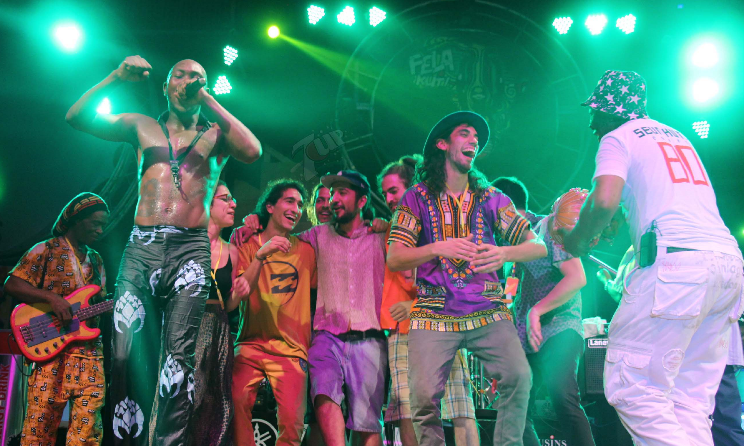
We have identified some of Africa’s most important music hubs where great strides are made consistently to improve the state of music on the continent – hubs where musicians are thriving in terms of creativity, productivity and the exchange of musical knowledge to redefine music though an urban lens of modern African identity that is now being closely watched and followed by the rest of the world.
Below are our top five picks of cities that are leaders in the creation and dissemination of African music.
Lagos
Freedom Park
Formerly a prison, Freedom Park has become a culture hub drawing a wide array of artists in the city to its Lagos Island location. Until recently, it was the venue for the popular Afropolitan Vibes concert series. It remains one of several locations where the annual celebration of Afrobeat maestro Fela Kuti’s Felabration takes place.
Designed by the architect Theo Lawson, Freedom Park also gives folk musicians and a selection of live acts a platform to hone and display their musical gifts. Its regular artists include reggae act Captain Blazee and the folk musicians Aduke and Edaoto.
Although the Lagos State government has allowed Freedom Park to flourish as a venue for live music and other cultural events, Nigeria’s music industry, as with other cultural industries in the country, has developed largely without the government’s interference. This is despite the existence of a cultural policy formulated decades ago. “Gaping loopholes exist which hinder the promotion of culture as documented in the cultural policy,” states a paper discussing the inadequate implementation of Nigeria’s cultural policy.
Nairobi
The GoDown Gig
A former car repair warehouse was converted to a spot for young artists in Kenya’s capital. It hosts several events, ranging from festivals to visual arts exhibitions. For the music enthusiast, The GoDown Gig gives opportunities to unestablished acts.
With the times changing, The GoDown Gig has been said to cater to acts with some existing following. But the venue remains important to artists seeking an audience. Other culture/music hubs include Alliance Francaise and the Thursday Night Live event.
While Nairobi has a number of live music venues, artists in Kenya have complained about the preferential treatment given to foreign music and musicians. According to a 2012 document by the Ministry of State for National and Cultural Development “a lack of an explicit coherent and codified music policy has led to music being marginalised in the national development agenda”.
In 2015, several Kenyan artists protested the dominance of foreign music on Kenyan radio. In the same year, a revised draft of the 2012 document was met with displeasure by some stakeholders. Criticising a proposal by the government concerning event fees, Nairobi-based firm Talent Management Agency said: “You cannot ‘fix’ gate fees for a music event organiser. An event is an experiential product. A music event organiser is a taxpayer to the government of Kenya, already subjected to various government and rights association levies related to public music events.”
Dakar
Just 4 U
This bar and restaurant hosts regular live events in Senegal’s capital city. It is a place where once visitors can get a mouthful and an earful of Senegalese culture. Music played at Just 4 U is in a variety of genres, including reggae, traditional music, hip hop and jazz.
Senegal’s first president, Leopold Senghor, shaped his country’s cultural policy to enhance the drive to nationhood. Senghor’s two-decade reign saw the creation of Senegal’s Traditional Instrumental Ensemble as part of the National Theatre. The ideology behind Senghor’s cultural policy may have survived: Senegalese artists are among a group of musicians from smaller African countries who do not complain about foreign music’s pre-eminence in their country.
Accra
+233 Jazz and Grill
The popular restaurant is home to some of the best live acts in Ghana. There is a live band playing most nights, and the venue attracts residents as well as foreigners.
Located in North Ridge, Accra, the venue is likely to host established acts like the singer Efya and the veteran Gyedu-Blay Ambolley. It also hosts up-and-coming artists looking to make their mark in a country known for pioneering a large portion of West African music and beats that are being employed around the world, especially in the US.
Although there are claims of non-implementation, the cultural policy of Ghana from 2004 devotes a section to Ghanaian music. “The practice, creation and promotion of all forms of Ghanaian Music shall be encouraged by the state,” it says. “Production of musical instruments shall be encouraged, so that all schools and communities can own their own instruments. The state shall encourage private entrepreneurs to establish production plants and support activities to document, preserve, protect, publish and promote Ghanaian Music.”
Johannesburg
Maboneng Precinct
After Nelson Mandela’s victory in the 1994 elections, South Africa experienced a transformation of its business and social landscape. A no-go area during the apartheid era, Maboneng became a den for criminal activity, a situation which caused flight of businesses from the area.
Today, property developer Jonathan Liebmann’s work on the urban decay of Maboneng has led to the rediscovery of the area. The Adidas-run Area3 is just one of a series of spots that frequently runs cultural activities including gigs.
Although it is a trending spot, Maboneng doesn’t hold a monopoly of concert venues. The wider Jo’burg has one of the more iconic venues for listening to live music in The Orbit Jazz Club and Bistro. Hosting a number of jazz events lends The Orbit a connection to Johannesburg’s jazz history, which boasts such notable figures as Hugh Masekela and Miriam Makeba. Nevertheless, The Orbit is as likely to feature an act playing South African indigenous music as it is to feature a band playing Afrobeat. Other spots include Newtown Music Factory (former Bassline), Rumours Rock City, Radium Beerhall, King Kong, Kitcheners, Good Luck Bar and the Bohemian, among others.
If jazz has found a home in Jo’burg, Cape Town could well be Africa’s capital of electronic music. The Mother City is also in constant competition with Johannesburg when it comes to providing live music. Some of its renowned venues are Zula Sound Bar, Mercury Live and The Assembly.
To ensure the existence and spread of music made by its own citizens, the government of South Africa has instated a number cultural policy directives over the years. As such, the South African Broadcasting Corporation (SABC) in 2016 put into force a 90% local music quota, which is an ongoing topic of discussion due to the adverse effect it’s had on advertising revenue. There are rumours that the quota will be revoked in the near future.
The South African government also provides mobility, recording and education funding to artists through a number of structures adopted to improve the state of the music industry in the country, although many musicians have cried foul over the processes employed to award funding to various artists, who they say are sometimes politically connected.
This article was published in partnership with the African Music Development Programme


Most popular

Top Naija songs of 2026
31 Mar 2026

Top Afrobeats songs of 2026
19 Mar 2026
Ghana: Mr Eazi and MOLIY’s ‘Comfort’ earns Urban Music Awards nomination
21 Oct 2026

Top amapiano songs of 2026
16 Feb 2026
Open call: CANEX Music Business Lab and Songwriting Camp
15 Oct 2026
Nigeria: CANEX WKND unveils 2026 programme
21 Oct 2026
Disclaimer: Music In Africa provides a platform for musicians and contributors to embed music and videos solely for promotional purposes. If any track or video embedded on this platform violates any copyrights please inform us immediately and we will take it down. Please read our Terms of Use for more.

Subscribe to our monthly Newsletter
Follow us on social media


Please log in to post a comment.