





















































Abdullah Ibrahim: South Africa’s master pianist who was still touring the world at 90
10 Jul 2026 - 13:27


Abdullah Ibrahim, South Africa’s most distinguished pianist, passed away on 15 June 2026 at the age of 91. He was born on 9 October 1934 in Cape Town. For his 90th birthday he embarked on a final world tour.
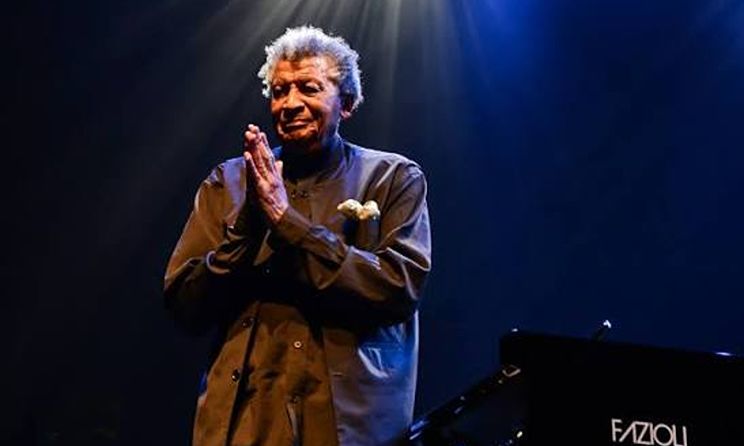
Abdullah Ibrahim. Photo: Andy Sheppard/Redferns
Christine Lucia has studied Ibrahim’s work and published research articles about him. We asked her why he was so important, especially in the sunset of his career.
Who was Abdullah Ibrahim and what shaped him?
Abdullah Ibrahim was the finest jazz pianist-composer that South Africa had ever produced – even in such a jazz-rich country. He was the country’s equivalent of the US jazz star Duke Ellington, because his legacy lay not only in his live performances or multiple recordings but also in his large number of compositions.
He was brought up going by the name Dollar Brand and was shaped personally by his mixed-race parentage and by growing up in the mixed-race area of central Cape Town formerly known as District Six. The area was demolished during the 1970s by the white minority apartheid regime and 60,000 people were forced to live far outside Cape Town on the Cape Flats.
He was shaped by this violent political landscape of racism and oppression. As a young man he was also shaped by his conversion to Islam in 1968, which is when he took the name Abdullah Ibrahim, and by his practice of martial arts and Zen (a form of Buddhism).
Musically he was shaped by the variety of different musics he heard in Cape Town. These include jazz, the Cape carnival troupes known as klopse and the music of people who practised the Sufi branch of Islam in the Cape and whose chanting, drumming and dancing he witnessed.
He was influenced by the Christian hymns played by his mother and other music he heard at the African Methodist Episcopal Church, which included gospel and African-American spirituals. He was shaped by jazz and dance band music and by African traditional music from Lesotho, the country of his father; even by Indian classical music and western art music.
What distinguished his work?
His work as a composer was distinguished by its pianism and its international flavour with a strong dose of South Africa. He also played flute, cello and soprano sax – which gave him insights into ensemble playing – but he was above all a brilliant pianist.
He wrote many great tunes but it is his harmonies, textures, colours, rhythms, phrasing and pianistic flow that made his compositions outstanding. His recordings were distinguished by the huge development of jazz style and treatment within them over 70 years.
His music of the 1960s contains some really avant-garde (experimental) sounds; his music from the 1970s and 1980s is full of references to Africa in the titles of pieces and within the music itself. In the 1990s, with the fall of apartheid, Ibrahim’s music took on a more sentimental mood. In later life he became more interested in arrangements, in orchestrating his music.
Another thing that distinguishes his career is that while he always wrote new pieces, he also constantly reinvented and reimagined old ones, mainly through his own playing and often in his solo playing. It is as if he was remembering through his hands.
Memory plays a key role in all his music: he was always looking back, and sometimes he found something there that helped us face the future. This doesn’t just apply to pieces, it applies to the way he played. He could always be quite sparse, but in the past 10 years the pared-down simplicity of his playing, its clean lines, was more introspective, more philosophical.
In the 1970s and 1980s he was the darling of the anti-apartheid movement because of the promise of freedom in his music and his going into exile. The same music speaks now to scattered hopes, which makes it almost unbearably poignant.
You can hear this in his rendition of Wedding on his 2021 album Solotude. Listening to this, people of my generation remember those fierce solo performances he gave when this song first appeared in the 1970s, those huge build-ups on the keyboard that ended very loud, both hands playing rapid repeated chords (his trademark tremolo). It sounded like a hymn to freedom. At 90, when playing this same piece his hands traced notes sporadically and gently on the keyboard, like a ghost, with the tune in his right hand occasionally ahead of the change of chords in the left. Minimal.
What were his career highlights?
The album Jazz Epistle – Verse 1, made in 1960 with Dollar Brand, Mackay Davashe, Hugh Masekela, Jonas Gwangwa and Kippie Moeketsi, a quintet of the foremost jazz musicians of the day, was among the first black jazz recordings in South Africa. It was also a milestone in the careers of all participants, several of whom went into exile.
Dollar Brand and his wife Sathima Bea Benjamin went into exile in 1962, at first in Zurich. While he was there, US composer and pianist Duke Ellington heard him play in 1963 and immediately produced the album Duke Ellington presents The Dollar Brand Trio.
In 1965 the couple moved to New York, which was their home for many years with only occasional trips back to South Africa. They founded their own record label in 1981, Ekapa (The Cape), although he continued to record with the Enja label. Ekapa also became the name of the septet he formed in 1983. He composed music for the award-winnning film Chocolat in 1988.
In 1990 he gave triumphant “homecoming” concerts when Nelson Mandela and other anti-apartheid activists were released from prison. In the 1990s, now spending part of his time abroad and part at home, Ibrahim began expanding his sound world into orchestral arrangements of his music, performing his African Symphony in Munich in 2001. In 1994 he performed, memorably, at Mandela’s presidential inauguration. There were many other memorable moments, concerts and awards in his later career, including the release of a final double album in 2024. His “home concert” online during the COVID-19 pandemic revealed his more intimate side.
Is it common to be performing at 90? What was his secret?
In some professions, like conducting, yes. But it’s rare. Great pianists of the past played on into their 90s but made more and more mistakes playing the same music the same way. Abdullah Ibrahim pared down his playing as he grew older, distilled it. Like well-matured brandy, you only need a sip and everything is there.
Of course, he could also be minimal in his youth, but in his final years it was for a different reason, because he was in a very different space. He became more and more Zen. I imagined him as very disciplined, which I am sure helped him maintain his health and strength as an artist. His 2024 tour saw concerts in Italy, South Africa, Germany and the US. He ended it in Bavaria, where the final concerts were scheduled to be given immediately after he turned 90.
This article was written by Christine Lucia, an extraordinary professor at Stellenbosch University. It first appeared on The Conversation.


Most popular

Top Naija songs of 2026
31 Mar 2026

Ghana: Mr Eazi and MOLIY’s ‘Comfort’ earns Urban Music Awards nomination
21 Oct 2026

Top Afrobeats songs of 2026
19 Mar 2026

Top amapiano songs of 2026
16 Feb 2026
Open call: CANEX Music Business Lab and Songwriting Camp
15 Oct 2026
Nigeria: CANEX WKND unveils 2026 programme
21 Oct 2026
Disclaimer: Music In Africa provides a platform for musicians and contributors to embed music and videos solely for promotional purposes. If any track or video embedded on this platform violates any copyrights please inform us immediately and we will take it down. Please read our Terms of Use for more.

Subscribe to our monthly Newsletter
Follow us on social media


Please log in to post a comment.