


























































As has been the case over its past few editions, the Grammys have again left controversy in their wake. The dominant strain of debate this year is that not enough black artists won Grammys from the ceremony’s main categories such as Record of the Year, Album of the Year and Song of the Year. But perhaps this isn’t a problem limited to American artists.
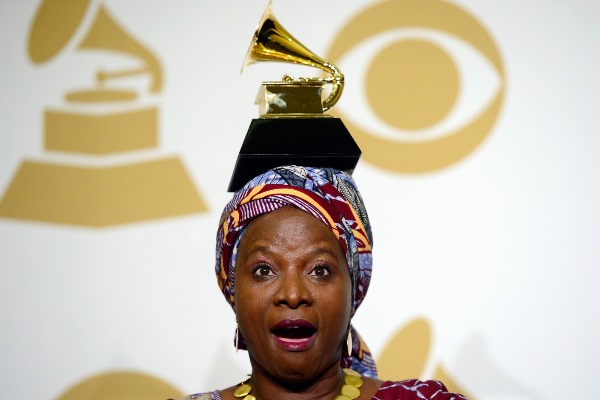
African musicians are typically relegated to the World Music category – the concession category, you might say – and so far, they have done the best they can. At least South Africa’s Ladysmith Black Mambazo has been impressive for the past three decades. While the favoured choral group has stayed true to its colours throughout the years, the category tailored for African artists has gone through a number of changes.
Changes in categories
The Grammy Awards were established in 1958 by the National Academy of Recording Arts and Sciences (now called the Recording Academy) – primarily as a response to the film and TV industries’ Oscars and Emmys. The first ceremony took place the following year but it wasn’t until 1992 that the first Best World Music Album accolade was awarded. Although Americans have won it, the category was specifically created to honour music from “non-European, indigenous traditions”.
In 2004, the category was split in two: Best Traditional World Music Album and Best Contemporary World Music Album. From 2004 to 2011, African artists dominated the Traditional World category, South Africa (through Ladysmith and the Soweto Gospel Choir) and Mali (through Ali Farka Touré, Toumani Diabaté and Mamadou Diabaté) sharing the honours. Then in 2012, the categories were combined again.
Before and after the shuffling of category names, such artists as Majek Fashek, King Sunny Ade, Fela Kuti and Brenda Fassie have hardly been represented at the Grammys. Indeed, it took Paul Simon’s 1986 album Graceland to bring Ladysmith, whose career began in the 1960s, to the attention of the Recording Academy. Two years later, they scored a Grammy for Best Traditional Folk Recording, a category no longer in existence.
Winning patterns
Two patterns from that win have been replicated in recent times. First, the Grammys appear to be awarding lifetime achievements to African artists arguably past their peak. Senegalese great Youssou N’Dour won his first Grammy in 2005. He formed his first band in 1979. South African flautist Wouter Kellerman won a Grammy in 2014. He was in his 50s. Malian group Tinariwen was formed in the late 1970s but the group won its first Grammy a few years ago.
Part of the problem is an obvious one: It takes years for African artists to break into the global music stage. This, it is hoped, is a problem alleviated by the internet and the incursion of such big players as Sony and Universal Music into the continent.
The second pattern is African artists’ reliance on a Western entity to get the attention of the Grammys. Mali’s Ali Farka Touré won his first of two Grammys in 1994 for a collaboration with American producer Ry Cooder. The 2017 edition saw Nigerian pop act Wizkid sneak into the list of nominees for his work on Views, the 2016 album by Drake. His compatriot Kah-Lo was also nominated for her part on ‘Rinse and Repeat’ by DJ Riton from the UK. It may be worth considering British singer of Nigerian parents Cynthia Erivo. Along with Jennifer Hudson, Erivo received the Best Theatre Album Grammy this year for her role as Celie in the Broadway adaptation of the American novel, 'The Color Purple'.
Perhaps the most pattern-defying of Grammy wins by African artists was when the Soweto Gospel Choir bagged the Traditional World Music category back to back in 2007 and 2008. The individual singers may have had longer careers but at the time of its first win, the choir was only five years old. One advantage the choir has over its African colleagues is that its first album, Voices of Heaven, was released in the US and weeks later topped the Billboard World Music Chart.
Is a Grammy award necessary?
Talking about the Grammys is talking politics, and invariably the question from non-enthusiasts of the awards is whether Africa needs the Grammys. It doesn’t. But it wants it. Several artists, especially rappers, have mentioned winning it in their songs. Many others do so in interviews. This, if for no other reason, is why the discussion comes up.
It matters to fans as well. There is a faction of music lovers who can’t believe Fela never won, those who think Hugh Masekela deserves a trophy, those who root for Salif Keita. Last year an interview with Lekan Babalola, who hasn’t won but has worked on two Grammy winning albums with Cassandra Wilson and Ali Farka Touré, caused a great deal of excitement across Nigerian media.
So while it’s necessary that African countries develop their own credible award systems, it must be said that the desire for a Grammy as expressed by African artists is a legitimate one. The assumption is that African acts are seeking Western validation, but this is wrong. African acts are after global inclusion and recognition. Although essentially American, the Grammys are at the visible centre of the world’s music industry, and African artists, like artists everywhere else, want to be seen. This is as much a human need as it is a professional one.
Again, one artist’s success on such a stage raises the game for others. During a conversation with reggae artist Rocky Dawuni at the recent Sauti za Busara festival in Zanzibar, Tanzania, the 2016 Grammy nominee said, “The best thing about my Grammy nomination is that it is symbolic. Because of that nomination, many artists in Ghana are working hard. They now believe they can do it.”
African artists are looking outwards. And while the Grammys are American awards, they are of great interest to the rest of the world. Perhaps in the case of some categories, the Grammys, too, can be urged to look outwards to defy outdated patterns.


Most popular

Top Naija songs of 2026
31 Mar 2026

Top Afrobeats songs of 2026
19 Mar 2026
Ghana: Mr Eazi and MOLIY’s ‘Comfort’ earns Urban Music Awards nomination
21 Oct 2026

Top amapiano songs of 2026
16 Feb 2026
Open call: CANEX Music Business Lab and Songwriting Camp
15 Oct 2026
Nigeria: CANEX WKND unveils 2026 programme
21 Oct 2026
Disclaimer: Music In Africa provides a platform for musicians and contributors to embed music and videos solely for promotional purposes. If any track or video embedded on this platform violates any copyrights please inform us immediately and we will take it down. Please read our Terms of Use for more.

Subscribe to our monthly Newsletter
Follow us on social media


Please log in to post a comment.