









































NEFCISA
NEFCISA

The Music In Africa Foundation (MIAF) is proud of its partnership with the Industrial Development Corporation (IDC) as a Strategic Implementing Partner (SIP) for its Social Employment Fund (SEF). Through this collaboration, MIAF is running a national programme that is creating jobs, addressing skills gaps, and strengthening South Africa's creative industries — in line with the SEF's overarching goal to generate work for the common good and build community value through employment, social contribution, and inclusive economic participation. Operating under the banner NEFCISA (National Employment Facility for Creative Industries in South Africa), the initiative is recruiting and training participants, matching them with host organisations, and has already placed 1 500 workers across the country — surpassing its original target of 1 000. NEFCISA is delivered through a network of 20 host organisations spanning five provinces, who are actively hosting participants and contributing to work for the common good across South Africa's creative and cultural industries. Key Objectives: Support employment and entrepreneurship in the creative industries. Offer skills development and training programmes. Foster partnerships between public and private creative sectors. Promote South African creativity at both provincial and national levels Foster community development through social contribution.

ACCES
ACCES

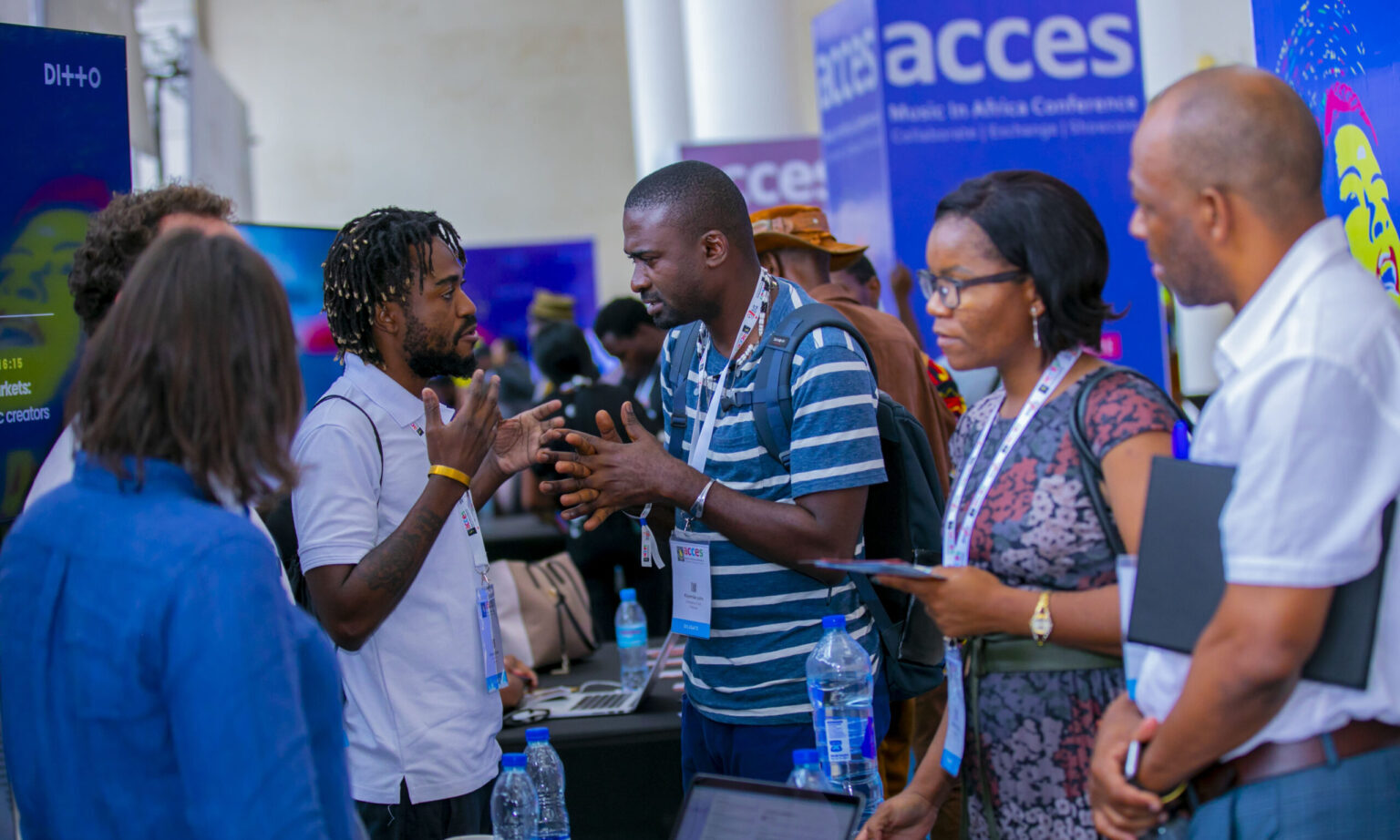
ACCES Conference and Showcase Festival is Africa's leading music industry gathering, bringing together the people shaping the future of the continent's music business. Artists, entrepreneurs, executives, investors, policymakers and cultural leaders from across Africa and around the world come to ACCES to build partnerships, exchange ideas, discover talent and create new business opportunities. Since its launch in 2017, ACCES has become the continent's premier platform for professional exchange and music market development. Combining a high-level conference with a curated showcase festival, networking, exhibitions and industry programmes, ACCES offers a unique space where creativity meets business and where African music connects with the global industry.

Gender@Work
Gender@Work

Music In Africa Gender @ Work is a three-year training programme aimed at upskilling and increasing the participation of female professionals in the African music sector. Launched by the Music In Africa Foundation (MIAF) in April 2019, the programme is connected to the MIAF’s ACCES music conference – a pan-African event held in a different African country every year. This connection enables the programme to reach new participants in a different African country every year. The programme marks the beginning of a more concerted effort by the Foundation to support the participation and inclusion of women in all facets of its programmes and the music sector in Africa as a whole. Over the three years, the programme will aim to address gender imbalances in the sector through training, lobbying, facilitating knowledge exchange and dialogues that foster the interest of women. The broader objectives of the programme are to: Provide industry training for women on critical music industry skills, focusing on: Stage management Electronic music production and recording Music business management Technical knowledge Provide an opportunity for both professional and aspiring women to benefit from the Music In Africa network and its broad range of activities in 2019, 2020 and 2021. Provide a solution-based platform in the form of a round table at ACCES with a view to identify challenges, discuss opportunities and lobby for the interests of female practitioners. Offer participants the opportunity to benefit from programmes offered by MIAF’s partners. Increase access to educational materials. Integrate participants in the broader ACCES programme to maximise experience and exposure to the industry. Record and present training materials on the www.musicinafrica.net, including but not limited to tutorials, templates and other best-practice materials. Communicate women-based themes that support the initiatives and messages of the programme. MAIN TRAINING ACTIVITIES Training in first country (Ghana): In the first year, participants will be trained on all aspects of stage management by a team of experienced stage managers from 10 to 17 November 2019. The programme will offer robust classroom training as well as practical, hands-on training in which participants will also be given the opportunity to manage various aspects of the ACCES performance programme. Training in second country: The second training iteration will take place at ACCES 2020 when the programme will diversify its course to include music production lessons and training on other music business topics. A round-table platform will also be introduced to coincide with the ACCES programme. Training in third country: The third training iteration will take place at ACCES 2021 in a different country, offering an advanced course. HOW DO YOU GET INVOLVED?  As a participant, facilitator or trainer: The programme enrolls up to 12 trainees every year. All opportunities are advertised publicly on this website, and will be added to this page. Please keep checking this page for new calls (below under UPDATES & CURRENT OPPORTUNITIES). As a partner Please contact Claire Metais at [email protected]. APPLY The call for applications for 2020 will be announced soon. The Music In Africa Gender @ Work programme is made possible with the support of the Prince Claus Fund, Siemens Stiftung and Goethe-Institut.

Sound Connects Fund
Sound Connects Fund

For cultural and creative practitioners and organisations operating in southern Africa, access to funding remains a major challenge. The COVID-19 pandemic has also had a massive impact on government policy, spending and the economy in general, and has seen spending on culture being moved further down the list of priorities. Further, the cultural and creative industries repeatedly cite four main areas where investment is needed for growth, which are increased visibility, mobility including access to new markets, finance and support structures.

Instrument Building And Repair Project

Experience the Vibrations African Instruments Exhibition online in 3D

Reviews

Asake upkeeps tradition on Lungu Boy

16 Aug 2024 - 06:31

cc-img flag-img

All albums are a gamble, but by the time an artist reaches his third, he is in a particularly delicate spot. We are familiar with his sound and message; we may even be growing accustomed to – or weary of – it. However, the real challenge lies in maintaining creative autonomy while avoiding monotony and risking alienating core fans. For Nigerian fuji-pop apostle Asake, the solution is in subtle reinvention.

Asake.

On his recently released Lungu Boy album (YBNL Nation/ EMPIRE), Asake demonstrates conviction that the point of becoming a global superstar is to gain the licence to take risks. After all, isn’t that what fans and critics alike have been asking for – a break from the melodic sameness that has plagued Afrobeats in recent years? Having entrenched himself in Afrobeats’ top tier, Asake can afford to experiment – though not as radically as ‘Calm Down’ star Rema with his sophomore LP HEIS, which blends frantic traditional music with dark ritualistic elements – but risks nonetheless.

Conceptually, Lungu Boy continues the stories Asake has been telling since his debut Mr Money With the Vibe: tales of hustle, love, and the pursuit of success. But here, they are delivered with a depth indicative of an artist who is growing not just in fame, but in an understanding of himself and what surrounds him.

The project shines on balance; expanding his spectrum while retaining the unmistakable sonic integrity that made him a pop staple. It draws directly from its author’s humble beginnings, its title rooted in local street slang for “ghetto.” This gritty, streetwise outlook has long fuelled big dreams.

Asake has never been confined by genre. His sound, defined by native pulses – specifically fuji music – has habitually been folded into Afropop and amapiano, Yoruba being his primary linguistic vehicle. Yet, Lungu Boy presents a more liberal approach. Fuji meets everything from hip hop to festival music of all varieties: samba, dancehall, electro…The project also features more guest appearances than its predecessors, which have never exceeded two. Lungu Boy boasts five, including fellow Nigerian popstar Wizkid (‘MMS’), British rappers Central Cee (‘Wave’) and Stormzy (‘Suru’), US act Travis Scott (‘Active’), and Brazilian singer Ludmila (‘Whine’).

Every superstar has a lungu story. ‘MMS’, which opens the project and provides its thematic backbone, entails a contemplative exchange between two of Nigeria’s biggest stars – one a veteran of more than 10 years and the other a fresh titan. Muted trumpets and delicate guitar picking underscore their musings on the importance of gratitude, and the need to take things slow. It’s a subdued start, but hardly surprising about an Asake album, whose draw depends first on raw emotion and relatable storytelling before much else. Among anthems that solidified Wizkid’s legitimacy is ‘Ojuelegba’, which honours Surulere, the Lagos district that witnessed his coming of age. Surulere surfaces on Lungu Boy in ‘Suru’, where Stormzy’s baritone anchors a blend of amapiano log drums and rap swagger.

‘Worldwide’ acknowledges his growing global impact, or bold steps toward achieving that, while ‘Wave’, fusing Afropop with grime, permits Central Cee’s gritty London flow alongside Asake’s folk-inspired harmonies. Meanwhile, ‘Active’ delves into, and then reinterprets boom-bap-influenced elements that dominate American hip hop, while ‘Whine’ oozes dancehall syncopation.

African pop is not a monolith, and Asake, a Grammy nominee who now commands tens of thousands at his shows worldwide, is keen on trumpeting that. He’s due to return to London’s O2 Arena – a venue he sold out in 2022 – in the coming weeks. There, Lungu Boy’s closing track ‘Fuji Vibe’, drum-heavy and boasting a call-and-response template that also demands dance, will feature heavily.

A notable prophetic reading about Asake when he first broke out in 2020 was that he was a disruptor and buoyant new force. These days, that initial frenzy attending the discovery of a fresh pop phenom has all but faded (a hype now enjoyed by a Gen Z brigade led by Shallipopi). Nonetheless, Lungu Boy remains true to Asake’s boundary-pushing spirit – only less conspicuously.

Artist: Asake
Album: Lungu Boy
Label: YBNL Nation/ EMPIRE
Year: 2024

Please log in to post a comment.

Most popular

Disclaimer: Music In Africa provides a platform for musicians and contributors to embed music and videos solely for promotional purposes. If any track or video embedded on this platform violates any copyrights please inform us immediately and we will take it down. Please read our Terms of Use for more.

newsletter banner

Subscribe to our monthly Newsletter

Follow us on social media