
NEFCISA
NEFCISA

The Music In Africa Foundation (MIAF) is proud of its partnership with the Industrial Development Corporation (IDC) as a Strategic Implementing Partner (SIP) for its Social Employment Fund (SEF). Through this collaboration, MIAF is running a national programme that is creating jobs, addressing skills gaps, and strengthening South Africa's creative industries — in line with the SEF's overarching goal to generate work for the common good and build community value through employment, social contribution, and inclusive economic participation. Operating under the banner NEFCISA (National Employment Facility for Creative Industries in South Africa), the initiative is recruiting and training participants, matching them with host organisations, and has already placed 1 500 workers across the country — surpassing its original target of 1 000. NEFCISA is delivered through a network of 20 host organisations spanning five provinces, who are actively hosting participants and contributing to work for the common good across South Africa's creative and cultural industries. Key Objectives: Support employment and entrepreneurship in the creative industries. Offer skills development and training programmes. Foster partnerships between public and private creative sectors. Promote South African creativity at both provincial and national levels Foster community development through social contribution.

ACCES
ACCES

ACCES Conference and Showcase Festival is Africa's leading music industry gathering, bringing together the people shaping the future of the continent's music business. Artists, entrepreneurs, executives, investors, policymakers and cultural leaders from across Africa and around the world come to ACCES to build partnerships, exchange ideas, discover talent and create new business opportunities. Since its launch in 2017, ACCES has become the continent's premier platform for professional exchange and music market development. Combining a high-level conference with a curated showcase festival, networking, exhibitions and industry programmes, ACCES offers a unique space where creativity meets business and where African music connects with the global industry.

Gender@Work
Gender@Work

Music In Africa Gender @ Work is a three-year training programme aimed at upskilling and increasing the participation of female professionals in the African music sector. Launched by the Music In Africa Foundation (MIAF) in April 2019, the programme is connected to the MIAF’s ACCES music conference – a pan-African event held in a different African country every year. This connection enables the programme to reach new participants in a different African country every year. The programme marks the beginning of a more concerted effort by the Foundation to support the participation and inclusion of women in all facets of its programmes and the music sector in Africa as a whole. Over the three years, the programme will aim to address gender imbalances in the sector through training, lobbying, facilitating knowledge exchange and dialogues that foster the interest of women. The broader objectives of the programme are to: Provide industry training for women on critical music industry skills, focusing on: Stage management Electronic music production and recording Music business management Technical knowledge Provide an opportunity for both professional and aspiring women to benefit from the Music In Africa network and its broad range of activities in 2019, 2020 and 2021. Provide a solution-based platform in the form of a round table at ACCES with a view to identify challenges, discuss opportunities and lobby for the interests of female practitioners. Offer participants the opportunity to benefit from programmes offered by MIAF’s partners. Increase access to educational materials. Integrate participants in the broader ACCES programme to maximise experience and exposure to the industry. Record and present training materials on the www.musicinafrica.net, including but not limited to tutorials, templates and other best-practice materials. Communicate women-based themes that support the initiatives and messages of the programme. MAIN TRAINING ACTIVITIES Training in first country (Ghana): In the first year, participants will be trained on all aspects of stage management by a team of experienced stage managers from 10 to 17 November 2019. The programme will offer robust classroom training as well as practical, hands-on training in which participants will also be given the opportunity to manage various aspects of the ACCES performance programme. Training in second country: The second training iteration will take place at ACCES 2020 when the programme will diversify its course to include music production lessons and training on other music business topics. A round-table platform will also be introduced to coincide with the ACCES programme. Training in third country: The third training iteration will take place at ACCES 2021 in a different country, offering an advanced course. HOW DO YOU GET INVOLVED?  As a participant, facilitator or trainer: The programme enrolls up to 12 trainees every year. All opportunities are advertised publicly on this website, and will be added to this page. Please keep checking this page for new calls (below under UPDATES & CURRENT OPPORTUNITIES). As a partner Please contact Claire Metais at [email protected]. APPLY The call for applications for 2020 will be announced soon. The Music In Africa Gender @ Work programme is made possible with the support of the Prince Claus Fund, Siemens Stiftung and Goethe-Institut.

Sound Connects Fund
Sound Connects Fund

For cultural and creative practitioners and organisations operating in southern Africa, access to funding remains a major challenge. The COVID-19 pandemic has also had a massive impact on government policy, spending and the economy in general, and has seen spending on culture being moved further down the list of priorities. Further, the cultural and creative industries repeatedly cite four main areas where investment is needed for growth, which are increased visibility, mobility including access to new markets, finance and support structures.

Instrument Building And Repair Project

Experience the Vibrations African Instruments Exhibition online in 3D

Features

On the centrality of jazz in Africa

22 May 2019 - 14:57

cc-img flag-img

The centrality of jazz in Africa cannot be understated. It is a genre that has over the years inspired and challenged as it grows to levels no one ever imagined. Jazz has shaped not only the social and cultural contexts of Africa but also the political movements that shaped our continent.
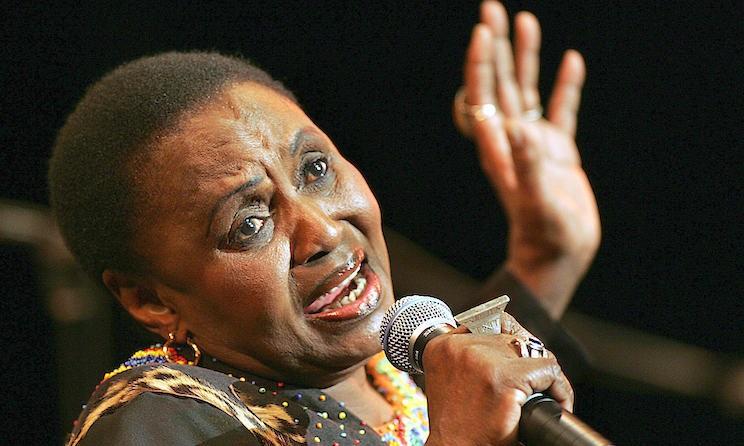
Miriam Makeba was a powerful voice of the apartheid struggle.

Last month, the world celebrated International Jazz Day. It is declared by UNESCO as a day to highlight jazz and its diplomatic role of uniting people around the world.

Over the years, music, and especially jazz, has been the cornerstone of narrating our stories. The legendary Louis Armstrong captivated the world with 'What a Wonderful World'. A founding father of jazz, we should give him credit for imagining a peaceful world where everyone and everything lives in harmony with itself and each other. It is a world full of contrasts, yet it does not tear apart. Armstrong made a name for himself during the height of racial segregation and injustice in the US, and as would be expected of African Americans who occupied public spaces, he became a spokesperson for his race.

What strikes me is that during his time it was hard for blacks to be accepted by whites, let alone be heard. Yet Armstrong broke this barrier and was accepted not only as a performer but also as a spokesperson – though he rarely spoke. But when he did, it made the news. Armstrong’s imagination of a wonderful world seems to have been passed on to his peers and his contemporaries in equal measure.

The tradition of jazz on the African continent has been that of a musical genre that although mostly instrumental unites people and transcends boundaries in narrating what we would presume to be an African story. The music of the legendary Miriam Makeba and Hugh Masekela remain etched in historical time and space as music that weaved, and continues to weave, the intricate tapestry that is Africa. Like Armstrong, both Makeba and Masekela succeeded in creating an image of a wonderful Africa that although filled with contrast, at times teetering on the brink of falling apart, has strived to hold itself together.

The contributions of Makeba to African jazz have been subtle yet quite revolutionary. Her musical voice lulled and awakened in equal measure. On her terms, Makeba could be equated to political revolutionaries who led fronts to liberate their countries; she led her front through jazz and gave voice and inspiration to these movements.

If the movements were wheels, Makeba's music was the grease that kept them turning. It is her voice that gave meaning to 'a luta continua' (the struggle continues). We cannot ignore the contributions of our Mama Afrika as we have conversations around jazz. She gracefully bore the brunt of apartheid, just as Armstrong bore the brunt of segregation, and boldly told the African story.

Though resting with our ancestors, her music lives on, and hopefully it continues to inspire movements not only in Africa but also elsewhere in the world. Some of us may not have been alive to witness the victories that she and others fought for, but her music still inspires us to yearn for more and better. Makeba embodied our story – the African story – and rightly so. “She was South Africa’s first lady of song and so richly deserved the title of Mama Afrika,” Nelson Mandela said when he eulogised her.

Africa primarily finds its history intertwined with its colonial past, a history of oppressors and diluted identities. Even so, Africa, through its legendary jazz musicians, has told its story to the world and continues to do so as we fight the battle to right the wrongs of the past.

Just like Makeba and Armstrong, Masekela also rests and lives among the greats who highlighted the African story as it deserved to be, in spite of the challenges and struggles they found themselves living in. Masekela, who was once married to Makeba, lived through the apartheid struggle and his personal battle against alcoholism to tell his account of what Africa meant to him – an account that resonates with many Africans. It is an account of hopefulness and helpfulness that has been detailed in his song ‘Thuma Mina’ in which he wants "to be there when the people turn it around, when they triumph over poverty. I want to be there when the people win the battle against AIDS. I want to lend a hand.”

Masekela in this song embodies the (South) African spirit of ubuntu, elsewhere known as ujamaa. It is the spirit that has for long now carried the African through many violent storms. A spirit that despite being threatened with evils such as xenophobia and greed still believes and hopes for a better Africa for its descendants. It is a spirit that refuses to give up on another.

Sam Dennis Otieno is a cultural researcher at the University of Nairobi.

Please log in to post a comment.

Most popular

Disclaimer: Music In Africa provides a platform for musicians and contributors to embed music and videos solely for promotional purposes. If any track or video embedded on this platform violates any copyrights please inform us immediately and we will take it down. Please read our Terms of Use for more.

newsletter banner

Subscribe to our monthly Newsletter

Follow us on social media