












































Crown, Bad Boy Blaq and the trouble with English rap in Nigeria
20 Sep 2018 - 16:14


One of the memorable lines on Blaqbones’ debut album is a lie. “I’m so ahead of my time,” he raps. “2018 held me back.”
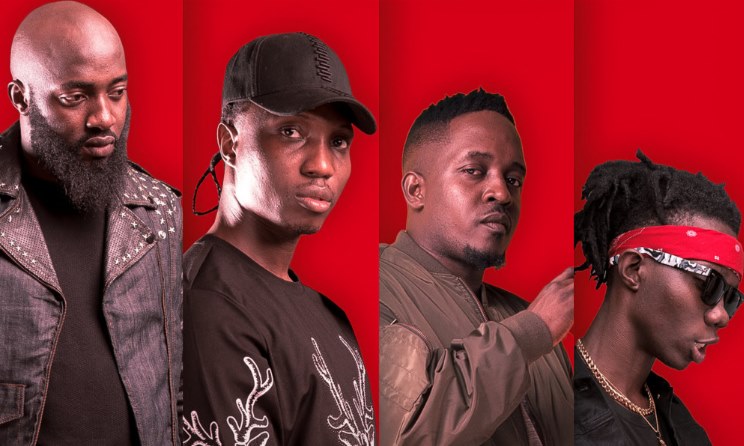
Only a few minutes into Bad Boy Blaq and it's clear he's wholly of his time. What with the druggy drawl voice; the trap music sound; and, at some point, the shaku-shaku sound. He’s a man of his time alright.
What he might mean is that his emphasis on actually rapping words can be considered a novelty in this era of mumble-rap. Plus he even throws in punchlines. But, of course, that only means he is a throwback act not a time traveller from the future.
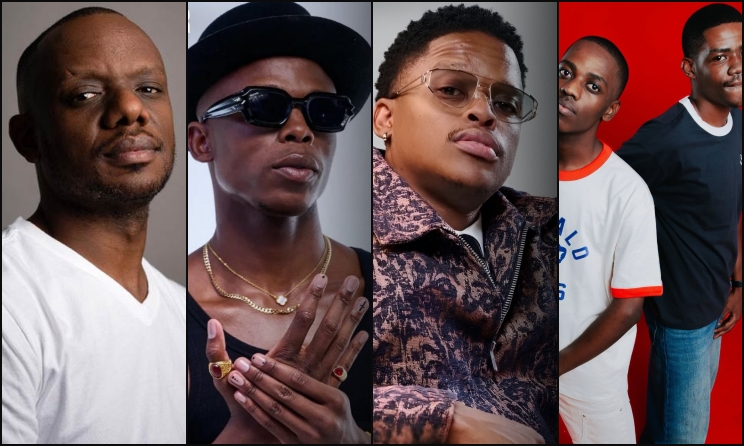
As the last of Chocolate City’s three recent hip-hop albums, Bad Boy Blaq shows the other two albums—MI Abaga’s Yung Denzel and Loose Kaynon & AQ’s Crown—how to merge so-called English hip-hop with something familiar to a Nigerian. For example, on one song, he combines a cleverness in English—“Something will kill a man and I think I just found it”—with a title as indigenous as ‘Mamiwota’.
The effectiveness of that blend shows he might know something Loose Kaynon and AQ don’t seem to realise: To court a large audience in Nigeria’s rap space, you have to give something familiar to the average Nigerian listener. But too many rappers confuse English rap with rapping in American. Who will tell them there is a space for a rapper who can rap in decent un-Afro-American English? Who will tell them that when MI said he doesn’t have to rap in vernacular he matched up his claim not with an accent but with a flow that was spectacular? Who will tell them that they can be both brilliant and reasonable?
Even on the level of rhyming, they could make use of some cohesiveness. Consider these lines from ‘Regrets’ off Crown:
Try to lay a finger on me
For recognition
You lay a finger
That’s fingerprint recognition
The next line mentions the iPhone X, so you get what AQ is up to: he is being clever about the word “finger”, but it is all disjointed—almost like an impatient schoolboy has just realised words in a dictionary can have several meanings. And that might be the problem with English rap in Nigeria: Several rappers using English have no story to tell and their technique and delivery are not sufficiently above average so you can enjoy them for their lyrical dexterity alone.
They do not realise that at their peak all of the English rappers in Nigeria found success had something clearly going for them: MI was funny and impeccably fluent; Jesse Jagz had melody and mystique; Mode 9 was incredibly witty. All three had great flow, the one quality that seems to separate the cult rapper from the mainstream one.
What can we say about the new guys? They don’t seem to have an identity: Can you tell where Loose Kaynon is from just by listening to his verses on Crown? I don’t think so. AQ seems to have scrubbed his vocals of place. The major sense of place on Crown comes from Tec of Show Dem Camp. He champions Lagos on his verse and manages to perform a trick with the name of the popular Ghanaian rapper: “I speak it into existence—Manifest, chale!”
In fact, Show Dem Camp shows Loose and AQ how bringing English rap back to reckoning in Nigeria could work: Ghost delivers a verse of grit and beauty that can stand on its own anywhere; Tec grounds his verse in Lagos, Nigeria. Those, to my mind, are the only ways rap can compete in today’s music scene. (That said, to their credit, AQ and Loose actually step up their flow on the song—and employ propulsive verses and an Igbo chorus on ‘Gang Gang’—but the lesson doesn’t last across the project.)
Of course, it’s fine if these rappers were making music for themselves, but they want some mainstream success. Months ago, rappers wondered why American rapper J. Cole’s concert was so successful when they can hardly find a following in this same country. The answer is nobody goes to J. Cole to hear something about the peculiarities of Nigerian living and lingo. That is what Nigerian rappers are for. It is what gave Mode 9 perhaps his biggest hit ‘Cry’. It is how young MI satisfied hip hop heads without sacrificing commercial success.
MI’s last album, the uber-introspective Yung Denzel, might have a radio-unfriendly problem but he’ll be fine because he has something the Crown pair doesn't have: He has a story his audience has become familiar with over the years. You can say he has earned his narcissism. This is AQ and Loose Kaynon’s first real excursion into the mainstream: they should be introducing themselves at some point. Instead, they start and end as strangers—with some decent punchlines but with no real story or audibly Nigerian background.
It is a shame because Crown has so many great set-pieces and some of the best production from Chocolate City's producers. Such songs as ‘No Time’ and ‘Off Blaq’ are great for bopping heads but the general feel of the project is that of a mixtape not a bid for the mainstream. Sometimes the project sounds so good but it never manages to lose a smell of incompatibility. In those moments, Crown sounds like a near-classic recorded in an unfamiliar location by a bunch of artists using semi-foreign language. Perhaps it is no accident that the album’s first rapped words are “I feel like I’m an alien…” on a song titled ‘Out of This World’.
Blaqbones might be alien as well, at least to a mainstream audience—but because he is younger than the Crown duo, he has the chance to cultivate his own audience while interacting with them on social media, but even he throws a bone to a wider audience with a song like ‘Mamiwota’. Of the three, he is the one most likely to find the middle ground without betraying his own artistry. One just has to hope that Chocolate City knows what to do with his talent.
But that potential can only be realised in the future. For now, English rap in Nigeria will remain unpopular, and if its representative rappers are looking for someone to blame, the culprit will be staring their pseudo-American selves in the mirror.


Most popular

Top Naija songs of 2026
31 Mar 2026

Top Afrobeats songs of 2026
19 Mar 2026

Top amapiano songs of 2026
16 Feb 2026
Ghana: Mr Eazi and MOLIY’s ‘Comfort’ earns Urban Music Awards nomination
21 Oct 2026
Open call: CANEX Music Business Lab and Songwriting Camp
15 Oct 2026
Nigeria: CANEX WKND unveils 2026 programme
21 Oct 2026
Disclaimer: Music In Africa provides a platform for musicians and contributors to embed music and videos solely for promotional purposes. If any track or video embedded on this platform violates any copyrights please inform us immediately and we will take it down. Please read our Terms of Use for more.

Subscribe to our monthly Newsletter
Follow us on social media


Please log in to post a comment.