






































NEFCISA
NEFCISA

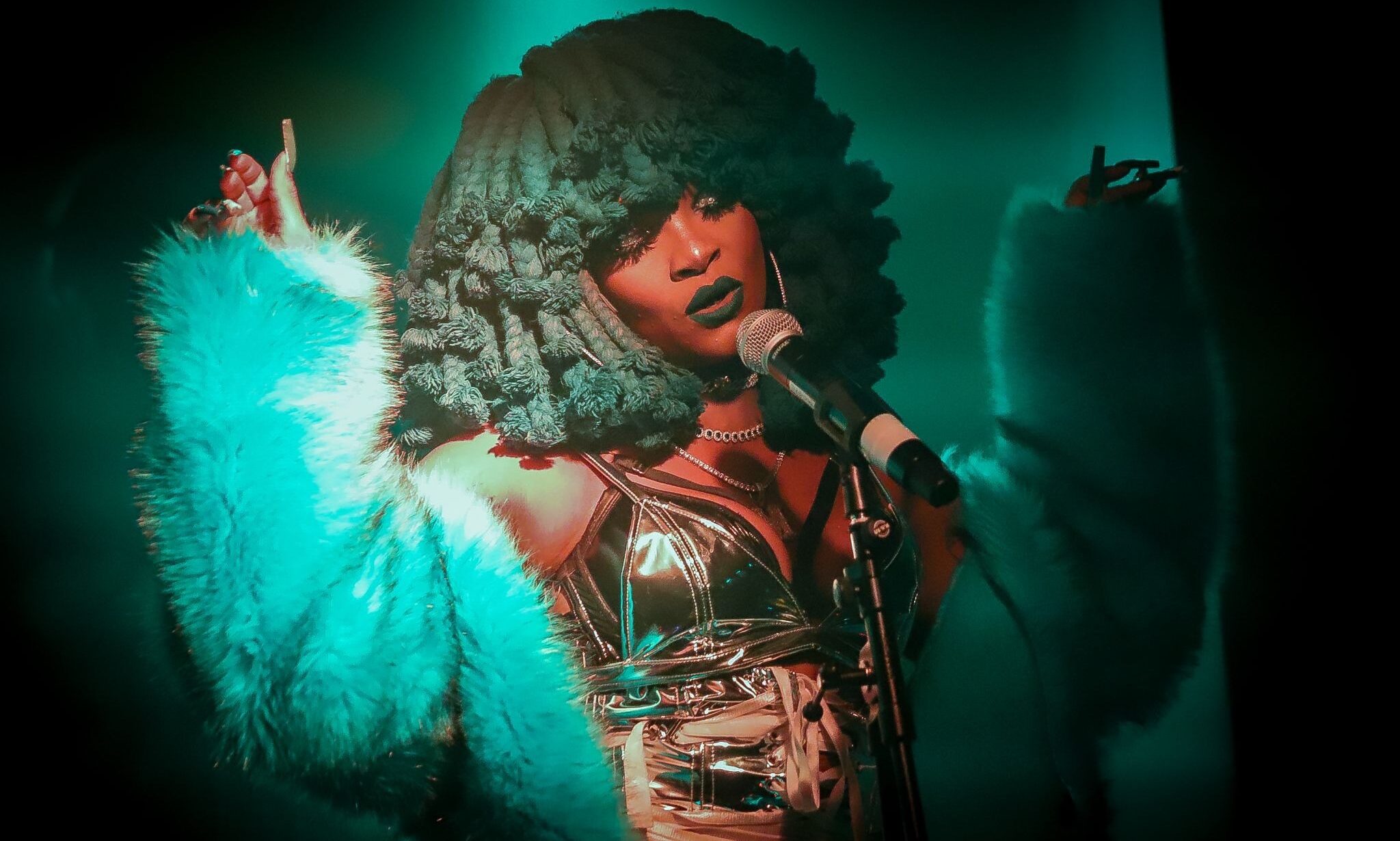
The Music In Africa Foundation (MIAF) is proud of its partnership with the Industrial Development Corporation (IDC) as a Strategic Implementing Partner (SIP) for its Social Employment Fund (SEF). Through this collaboration, MIAF is running a national programme that is creating jobs, addressing skills gaps, and strengthening South Africa's creative industries — in line with the SEF's overarching goal to generate work for the common good and build community value through employment, social contribution, and inclusive economic participation. Operating under the banner NEFCISA (National Employment Facility for Creative Industries in South Africa), the initiative is recruiting and training participants, matching them with host organisations, and has already placed 1 500 workers across the country — surpassing its original target of 1 000. NEFCISA is delivered through a network of 20 host organisations spanning five provinces, who are actively hosting participants and contributing to work for the common good across South Africa's creative and cultural industries. Key Objectives: Support employment and entrepreneurship in the creative industries. Offer skills development and training programmes. Foster partnerships between public and private creative sectors. Promote South African creativity at both provincial and national levels Foster community development through social contribution.

ACCES
ACCES

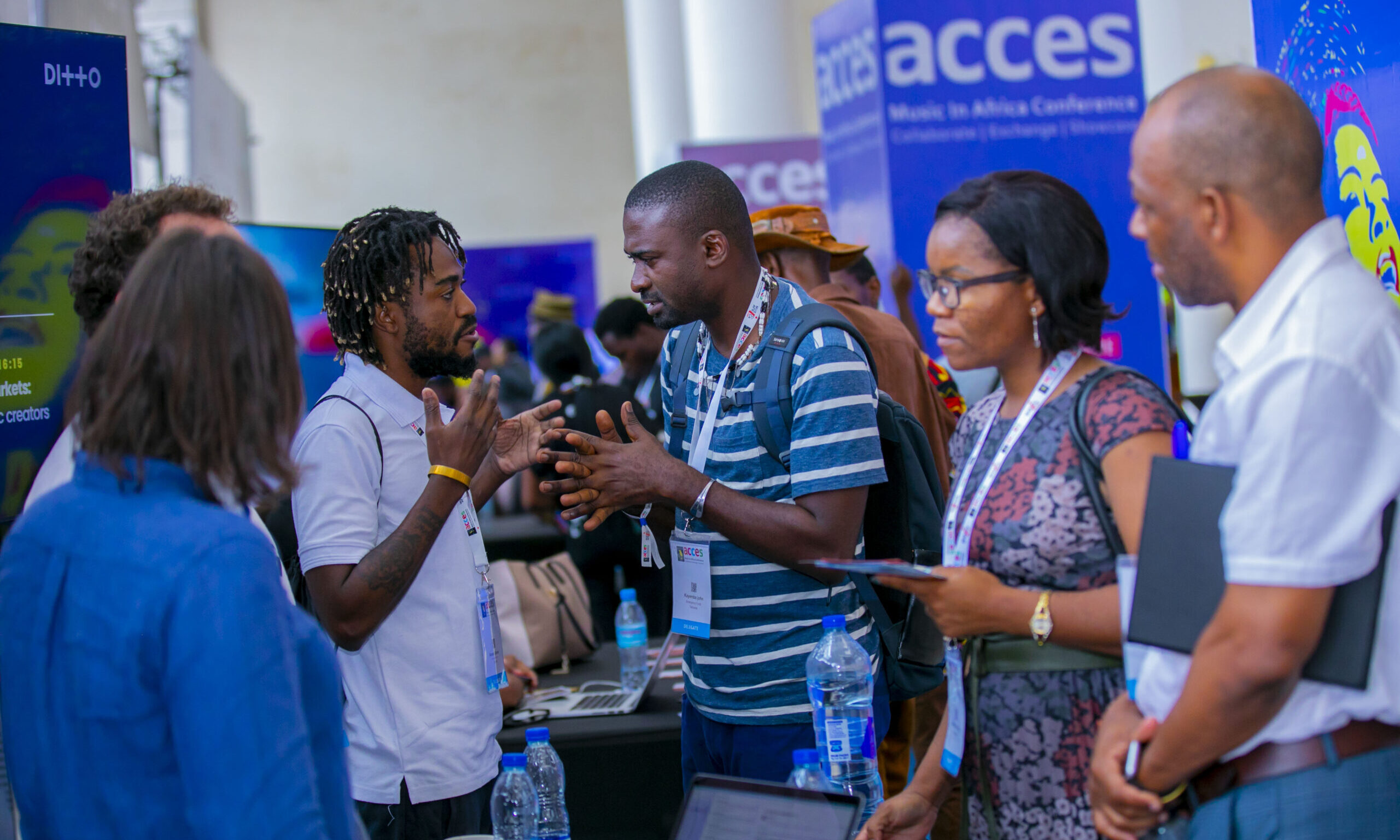
ACCES Conference and Showcase Festival is Africa's leading music industry gathering, bringing together the people shaping the future of the continent's music business. Artists, entrepreneurs, executives, investors, policymakers and cultural leaders from across Africa and around the world come to ACCES to build partnerships, exchange ideas, discover talent and create new business opportunities. Since its launch in 2017, ACCES has become the continent's premier platform for professional exchange and music market development. Combining a high-level conference with a curated showcase festival, networking, exhibitions and industry programmes, ACCES offers a unique space where creativity meets business and where African music connects with the global industry.

Gender@Work
Gender@Work

Music In Africa Gender @ Work is a three-year training programme aimed at upskilling and increasing the participation of female professionals in the African music sector. Launched by the Music In Africa Foundation (MIAF) in April 2019, the programme is connected to the MIAF’s ACCES music conference – a pan-African event held in a different African country every year. This connection enables the programme to reach new participants in a different African country every year. The programme marks the beginning of a more concerted effort by the Foundation to support the participation and inclusion of women in all facets of its programmes and the music sector in Africa as a whole. Over the three years, the programme will aim to address gender imbalances in the sector through training, lobbying, facilitating knowledge exchange and dialogues that foster the interest of women. The broader objectives of the programme are to: Provide industry training for women on critical music industry skills, focusing on: Stage management Electronic music production and recording Music business management Technical knowledge Provide an opportunity for both professional and aspiring women to benefit from the Music In Africa network and its broad range of activities in 2019, 2020 and 2021. Provide a solution-based platform in the form of a round table at ACCES with a view to identify challenges, discuss opportunities and lobby for the interests of female practitioners. Offer participants the opportunity to benefit from programmes offered by MIAF’s partners. Increase access to educational materials. Integrate participants in the broader ACCES programme to maximise experience and exposure to the industry. Record and present training materials on the www.musicinafrica.net, including but not limited to tutorials, templates and other best-practice materials. Communicate women-based themes that support the initiatives and messages of the programme. MAIN TRAINING ACTIVITIES Training in first country (Ghana): In the first year, participants will be trained on all aspects of stage management by a team of experienced stage managers from 10 to 17 November 2019. The programme will offer robust classroom training as well as practical, hands-on training in which participants will also be given the opportunity to manage various aspects of the ACCES performance programme. Training in second country: The second training iteration will take place at ACCES 2020 when the programme will diversify its course to include music production lessons and training on other music business topics. A round-table platform will also be introduced to coincide with the ACCES programme. Training in third country: The third training iteration will take place at ACCES 2021 in a different country, offering an advanced course. HOW DO YOU GET INVOLVED?  As a participant, facilitator or trainer: The programme enrolls up to 12 trainees every year. All opportunities are advertised publicly on this website, and will be added to this page. Please keep checking this page for new calls (below under UPDATES & CURRENT OPPORTUNITIES). As a partner Please contact Claire Metais at [email protected]. APPLY The call for applications for 2020 will be announced soon. The Music In Africa Gender @ Work programme is made possible with the support of the Prince Claus Fund, Siemens Stiftung and Goethe-Institut.

Sound Connects Fund
Sound Connects Fund

For cultural and creative practitioners and organisations operating in southern Africa, access to funding remains a major challenge. The COVID-19 pandemic has also had a massive impact on government policy, spending and the economy in general, and has seen spending on culture being moved further down the list of priorities. Further, the cultural and creative industries repeatedly cite four main areas where investment is needed for growth, which are increased visibility, mobility including access to new markets, finance and support structures.

Instrument Building And Repair Project

Experience the Vibrations African Instruments Exhibition online in 3D

Features

A curious case of academia vs music journalism

28 Mar 2024 - 10:29

cc-img flag-img

The point of going to college is to be equipped for real-world application. Still, I will never fully grasp the animosity within college walls towards the music industry and its practitioners.

academia-vs-music-journalism

A few months ago, during a work trip to Nigeria where I observed the alarming hold of social media influencers on various aspects of music journalism, I concluded that its practitioners are now an endangered species. In late February, speaking at a local university event, I realised that the profession is the focus of an odd pushback from what I previously thought was an unlikely faction: academia.

Before stepping foot at this venue, acclaimed as the top research university in a neighbouring West African country and situated in a coastal town where colonial infrastructure still manages to parent the present, I had been advised to expect academic arrogance toward “my sort”, even if I possessed talent, extensive academic training in storytelling and an obsessive infatuation – and curiosity – for music.

Still, I was intrigued (let’s go with “intrigued” ) by the verbiage of the smiling professor chairing the event when he finally introduced me as part of the panel. “Gabriel is just a journalist trying to write about music.”

This incident, which filled me with instant marvel, happened during a lecture series that aimed to track, among other things, how music shapes communities and vice versa. I was in the company of sound artists from Europe doing artistic research, and my task was to discuss my background in professionally observing pop music in the region for more than a decade – including perspectives surrounding listening patterns, music’s impact on evolving social behaviour, and the gradual shift of communities to digital platforms.

The professor would go on to tell the gathering that it was the first time he had heard of or encountered a “music journalist” and asked that I be excused if I didn’t use the appropriate language or terminology. Perhaps if this professor read my work, we would be having a different conversation.

Prior to this lovely introduction, in a cool, upper-floor office where we first shook hands, he inquired about my credentials. Sure, a master’s degree in journalism is cool, but how could I deem myself as a music journalist without qualifications in musicology? And it mattered little that I boast a career exceeding 10 years, and that I’m the author of three forthcoming books.

Malcolm Gladwell, the well-known Canadian journalist and author made disciples globally for his widely discussed theory in his 2008 best-seller Outliers: The Story of Success – that becoming an expert necessitates about 10 000 hours of deliberate practice, equivalent to roughly 10 years. In brief: it is in doing that one is.

Musicology degree or not, there must be value in my expertise as a storyteller. When articulating my profession, “journalist” may follow “music”, but I am a journalist first. Storytelling constitutes my core expertise. Well, the professor wasn’t buying it, and judging by other unimpressed looks around the room, neither were his colleagues.

A mentor of mine joked, when I recounted my experience to him moments later, that this university’s leading status in research has earned it the right to be “hostile”. He agreed, however, that academia can be often too tediously narrow-minded, and opportunities to ruffle feathers and challenge the status quo are crucial.

A Nigerian colleague of mine, a film critic, also laughed when he heard the story. “Has it not been said that those who can’t do, teach?” Of course, this oversimplifies the issue. Academia’s insular stance, narrow aperture and potential resentment towards practitioners may be a club rule. Still, it troubles me.

I suspect strongly that the divide is rooted in an ego clash and little else, and a resulting, perpetual schism between academia and the profession yields no positive outcomes. Academia’s commitment to proving intellectual rigour above all else means that it may be undervaluing practical experience and the efforts of practitioners. There should be diverse paths to credibility beyond obtaining academic titles.

It is true that practitioners may sometimes doubt the tangible relevance of academic theories in the arts, or dismiss research as irrelevant to the challenges they face in their day-to-day work. But the greater challenge lies in academia’s hesitance to expand its worldview. Valuable knowledge generated in academic institutions may remain locked in journals, inaccessible to those who need it the most, and hindering the application of research findings to real-world challenges. In a field like the music industry, where the user’s needs, attitudes, and market dynamics are constantly evolving, a failure to move towards a model of collaboration can stagnate innovation.

By the end of the session, one of the participants, a student, approached me expressing admiration for my work as a music journalist and requested that I mentor her. This moment, unexpected yet delightful, became a highlight for me. There may be apathy from the old guard toward my work but in that same room there was someone who knew that music journalism is an authentic and viable career after all.

Gabriel Myers Hansen is Music In Africa’s Anglophone West Africa Editor

Please log in to post a comment.

Most popular

Disclaimer: Music In Africa provides a platform for musicians and contributors to embed music and videos solely for promotional purposes. If any track or video embedded on this platform violates any copyrights please inform us immediately and we will take it down. Please read our Terms of Use for more.

newsletter banner

Subscribe to our monthly Newsletter

Follow us on social media