
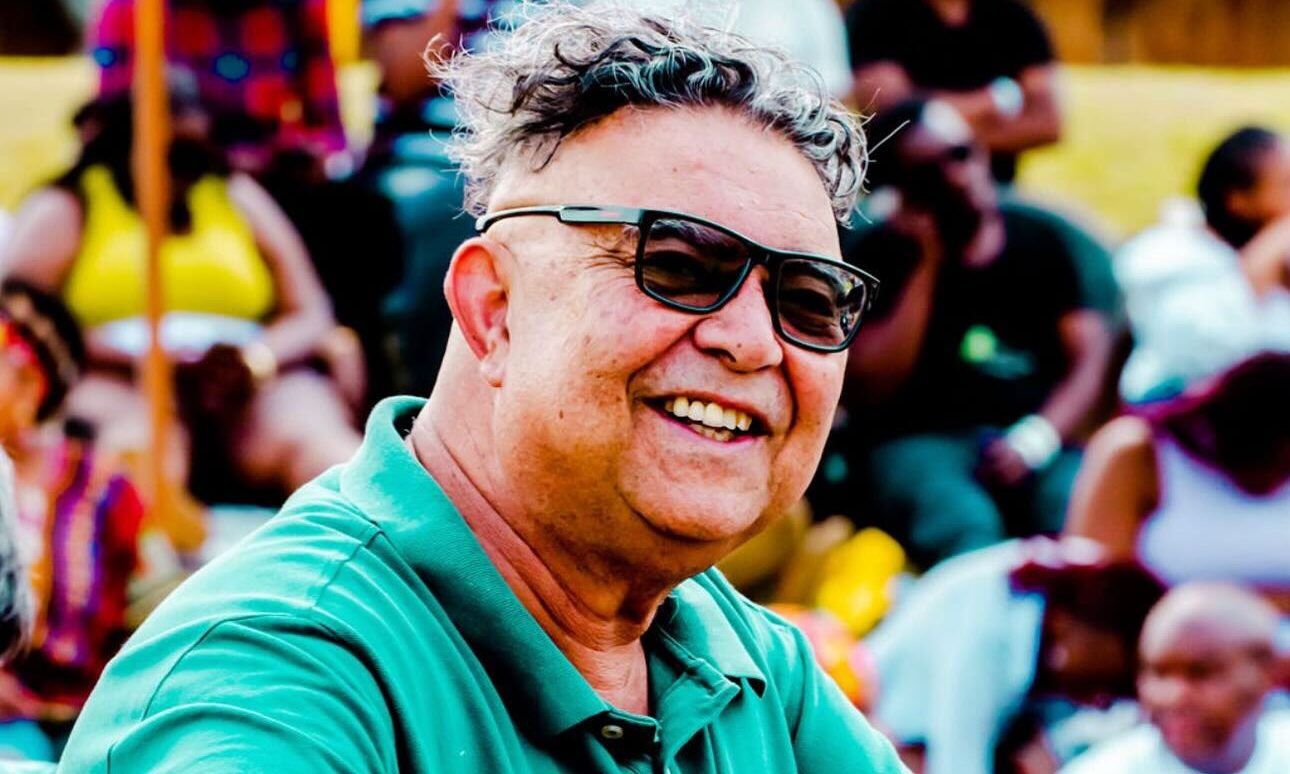


























































Herman Ssewanyana puts his soul and passion in sounding the drums. A man of frolics, he entertains to the rhythm, he sometimes connects with revelers through a smile that lights up his sweaty face. He says his joy is performing before an audience.
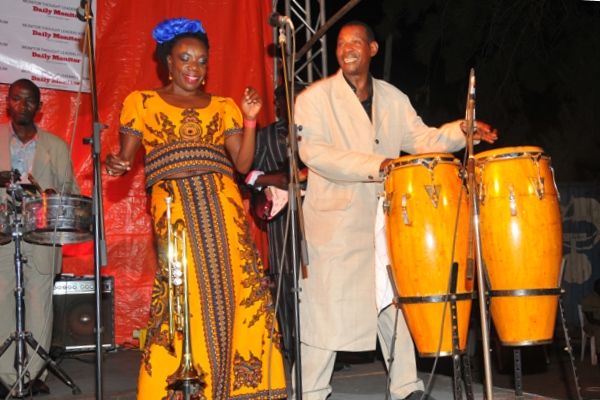
Ssewanyana is Afrigo Band’s lead drummer and the director at Percussion Discussion Africa (PDA), which he formed in 1981. During his travels around the world, patrons often commended him for his good performance skills as a drummer. This gave him the idea of setting up a group under which they would celebrate African percussion. He had some fame to his name, thanks to his stage acts with Afrigo Band, where revelers had branded him Omwana W’ensenene Ssewanyana after one of the stage outfit’s popular songs, ‘Afrigo Batuuse’. He took it up as his stage name.
Musical journey
Like destiny would dictate, music was to become Ssewanyana’s career because his earliest recollection was crying as a baby, which he says was melodic, at least according to what his mother later told him. He interpreted this as a sign from God to him that he would become a musician. While at St Andrew’s Matale Primary School in Masaka District, he joined the school choir and took initiative to learn how to play the drums, piano and shakers. Later he joined St Henry’s College Kitovu (SHACK) in Masaka, where he fine-tuned his skills because the school promoted talent. He would also play with the school choir and drama group at different schools. This, he says, spurred him to pay more attention to music.
“While at St Henry’s, I also learnt how to play the bass guitar. During my senior six vacation, I started playing at International Hotel (currently known as Sheraton Kampala Hotel),” he recalls. This was in 1974, during President Idi Amin’s regime. He played jazz drums with the band for eight years. Ssewanyana says he was keen at getting better as a musician so he often dedicated time to practice. One of his mentors was a gentleman called Mbabali Mansueto. In 1980, he joined Afrigo Band.
He was friends with Moses Matovu, who was one of the band leaders at Afrigo. Matovu used to play at Cape Hotel in Ggaba. Both hotels, Cape and International Hotel, were under State House and the two musicians occasionally met or shared stage. Ssewanyana joined Afrigo as a conga drum player. The conga, also known as tumbadora, is a tall, narrow, single-headed drum from Cuba. Playing congas and other drums is all Ssewanyana has done since.
“All that I have achieved in life is because of my skills as a drummer. I met my wife, Edith Nanfuka, while doing this job, and we have raised a family. I have been able to build a home and rentals and I have travelled the world,” the musician recollects.
Some of the memories he carries are those back in time when Afrigo Band played at places such as Nita Cinema (currently known as Theatre La Bonita), Delight Cinema (where Club Rouge was located), Noman Cinema (currently home of Watoto Church Central) and abroad. Whenever Ssewanyana played at international festivals, contemporaries such as Baaba Maal thought he had his roots in Congo, where renowned guitarists and conga players hail from. He always had to convince them that he was actually Ugandan.
Ssewanyana says he is able to balance between his work as a lead drummer with Afrigo Band and as band leader of PDA by planning well. Rehearsal schedules of both bands do not clash.
On music production. The veteran musician says it has changed for worse. “Whereas we used to sit down and compose as a group, artists today do not take time to sit and compose and give time to producers to create. They instead abuse other’s copyrights by using their tracks to mime. Incidentally, the audience is not keen to identify this,” he explains.
PDA performs every last Tuesday of the month at Uganda National Cultural Centre, formerly National Theatre. Every first Thursday of the month, the band performs at Don’s Club, located opposite the Constitutional Square. He plays traditional drums; otherwise he plays two Tonga drums as Afrigo Band’s lead drummer every weekend at different locations. Ssewanyana is married with three daughters and three sons.
Starting Percussion Discussion Africa
At festivals, Ssewanyana liked the sound of drums and he subsequently started working towards achieving a unique sound. “That is when I got the idea to fuse different instruments to bring out a unique sound. I always listened to productions of students and alumni of Music, Dance and Drama but their rhythms are similar. Listen to Ndere Troupe, Crane Troupe or Kiika Troupe. Unless someone told you their names, their sound is the same - traditional. We need different rhythms and sounds. I fused our traditional sound with African sound, accompanied with creative dances,” he explains.
He had initially begun Percussion Discussion Africa (PDA) in 1981. However, due to the turbulent times and lack of a proper direction, the group took a break. In late 1997, he joined hands with Amigo Atibu Wawawa, Michael Musoke, Fred Kajoba, Herbert Kinobe, Ssewakilyanga and Sam Bakkabulindi and they revived it.
Singing for the Kabaka
Together, they produced an album titled Omubala in 1998, which earned the group an invitation to the Kabaka Ronald Muwenda Mutebi’s birthday celebration that year. The album has songs including 'Omubala' as the title track, 'Abaana ba abaami', 'Etooke', 'Twabalamuusa' and 'Angelina'. 'Omubala' was a fusion of Uganda and African sounds. Buganda kingdom’s tourism office, under the leadership of former minister Nakiwala Kiyingi, used the song to educate students in school about their culture and Ssewanyana led the efforts.
The group has since released a number of albums, including Mulamu (2002), which won the Pearl of Africa Music Awards (PAM) 2003, and got nominated at the 2004 Kora Awards. In 2008, Ssewanyana worked on a music collaboration with Klear Kut, titled 'Klear Discussion', which was nominated at the Kora Awards. During the same year, the group did a sound track to the movie The Last King of Scotland, titled 'Nakawunde'. The group also produced other albums, including Nakayima and Nakato, and have done scores of soundtracks for other movies.
What others say about Ssewanyana
“Herman is what they call a real musician. He had choices in life, but he is still stuck with the mold of music that made him great. He has often offered advice to younger artists from his wealth of experience. He is a living legend,” says Daniel Kigozi, aka Navio.
“I believe he is the best drummer in Uganda. I was wowed when I saw him play five drums and sing at the same time at a Percussion Discussion Africa event. His kind of drumming is all about relaxation, technique and groove,” says Kenneth Kimuli aka Pablo, a comedian.
“He deserves an accolade as one of the most consistent musicians in Uganda. He cares for his instrument like a baby. He is so good at his trade that while on stage with another artiste, he can easily steal their limelight,” says Edward Ssendikadiwa, a music critic.
“He is a close friend. I think he has created an appreciation for drumming few people have. Who else can you point out as a professional drummer in Uganda? He shows a lot of respect for the profession that has made him,” says Philip Luswata, an actor.
Originally published on 25 July 2015 at the Daily Monitor.


Most popular

Top Naija songs of 2026
31 Mar 2026

Top Afrobeats songs of 2026
19 Mar 2026
Ghana: Mr Eazi and MOLIY’s ‘Comfort’ earns Urban Music Awards nomination
21 Oct 2026

Top amapiano songs of 2026
16 Feb 2026
Open call: CANEX Music Business Lab and Songwriting Camp
15 Oct 2026

Nigeria: CANEX WKND unveils 2026 programme
21 Oct 2026
Disclaimer: Music In Africa provides a platform for musicians and contributors to embed music and videos solely for promotional purposes. If any track or video embedded on this platform violates any copyrights please inform us immediately and we will take it down. Please read our Terms of Use for more.

Subscribe to our monthly Newsletter
Follow us on social media


Please log in to post a comment.