






















































By Laure Malecot
The advent of the Internet and the exponential development of new technologies have drastically changed our lives. For the music industry, especially in Africa, the Internet has brought with it a deep and progressive change that is affecting every aspect of the sector.
Are these current and future developments beneficial to all the actors in the industry, especially musicians? And what are the prospects for African music-makers, promoters, broadcasters and consumers in light of these new technologies?
Who’s online?
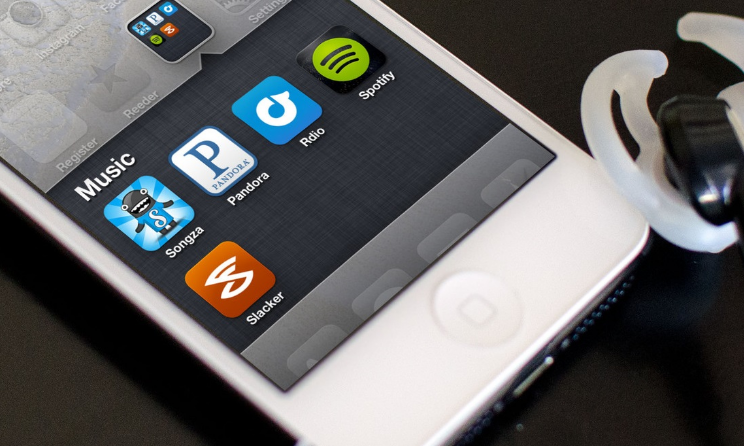
The global internet boom (3.81 billion Internet users in 2017, or 51% of the world population, according to We Are Social) allows consumers to discover a wide range of artists. Nowadays, even without a record label, artists can be heard from anywhere on Earth, with musicians being discovered every day thanks to relatively simple communication strategies. Artists often do not end up seeing much success, yet prosperous careers are sometimes launched via the Internet, and for the first time in 20 years, thanks to music streaming platforms like Spotify, Google Play Music and Apple Music, music revenue is showing an uptick.
Despite being the second largest mobile market after the Asia-Pacific zone, Africa is the least covered region in the world. Less than half of Africa’s population is subscribed to mobile networks, and according to Internet Live Stats, only about 23% of Africans, or about 281 million people, have access to the Internet. Add to that below-standard networks, and many musicians on the continent are finding it difficult to enjoy as much Internet presence as their US, Asian or European counterparts, regardless of the fact that there is great interest in African music from outside the continent. But connectivity in Africa is on the increase and more artists on the continent are expected to be present online in the near future. This means that they will undoubtedly employ the technology available to their advantage, connecting with artists around the world and in the process creating new styles of African music.
Creatives amid technological changes
Learning music theory, playing an instrument or singing has taken a playful dimension through videos, software, virtual reality (VR) and interactive applications. Everyday technology is now doubling up as musical instruments for a fraction of the price. In the video bellow, for example, a mobile phone app can turn everyday objects into musical instruments.
Electronic music is evolving constantly. It is enriched with new sounds and mixed with acoustic instruments to unleash the composer's imagination, even if the composer is an artificial intelligence (AI). We’re not quite there yet in terms of machines creating pop hits but we are seeing machines change the sound of music more drastically than ever before. African electronic music, which combines traditional songs and rhythms with experimental sounds made with the help of the latest technology, is experiencing remarkable worldwide success and giving Afrofuturism palpability outside literature and the visual arts.
Creative collaborations no longer know borders and are bourgeoning every day. Some websites, for example, allow musicians to be in contact with arrangers and to have their songs mixed anywhere in the world at competitive prices. New technologies also allow artists to collaborate without having to meet each beyond Skype sessions, chats and emails. Thus, interdisciplinary creative exchanges are developing at a rapid rate and giving rise to new styles of music.
Technology has also given more importance to the visual aspects of music. Beyond the traditional music video, we are now seeing the growing popularity of the visual album in which each song is accompanied by a video or visuals. An example of a visual album is Beyoncé’s Lemonade.
Live performances or music videos that are filmed in 3D and experienced with VR goggles are also becoming quite popular. It is realistic to conclude that in the next 20 years or so, music will rarely be conceived without the collaboration of a variety of visual artists. This also means that to keep up with this trend, the African music industry will need serious financial support, as video production is far more expensive than audio production. But the financial difficulties that most African musicians face to finance a video today negatively predict the possibility of making visual albums in the future, although video production is much cheaper than it was 20 years ago.
The Internet as a source of income
New ways of financing albums and music videos, such as crowdfunding, have emerged. Regularly used by musicians, legal online downloads are also a great way to generate revenue, despite the fact that only popular musicians seem to be making enough money on the Internet to sustain themselves. Nonetheless, online downloads provide a significant shift for African musicians whose national copyright laws and the implementation thereof are often ineffective.
African legal music download sites are on the increase, proving that there is much potential in the online sector. Akon's investment in Senegalese online platform Musik Bi, which he bought 50% of for 50 million West African CFA francs ($90 000) in 2017, is further proof that the Internet is seen as an investment opportunity by prominent music professionals.
But profits generated by legal downloads mainly benefit the record companies and the streaming platforms themselves, with only a tiny part of the revenue going to the musicians. Of the average price of a downloaded album, which is locked at $9.99, $4.58 goes to the producer, $1.99 goes for VAT, $1.96 to the streaming platform, $1 is shared between authors, composers and publishers, and only $0.46 go to the musician.
When artists are paid by streaming numbers or subscriptions, they only receive between $0.002 and $0.004 per play. This is partly due to the system of sharing, which is governed by monthly flat rates and market share. And when streaming is funded by advertising, and is therefore free for the consumer, the numbers go down even further to $0.0001. The consequence of these systems is that the disparity between artists in terms of income is likely to widen in the future. However, self-production and self-publishing are growing in popularity, with many musicians seeing the move away from commercial platforms that take too big of a cut as a sustainable model for the future.
Copyright, royalties and piracy
In 2015 more than $10bn in royalties was collected in 123 countries. Sadly only about 1% of the collected royalties came from the African continent.
Despite the many examples of collective management organisations’ (CMOs’) inaptitude, royalty collection in Africa has its success stories. Burkina Faso, for example, stands out with 454 million CFA francs ($820 000) distributed to more than 11 000 artists by the country's copyright office in 2016.
Beyond the effectiveness of CMOs, piracy is another major challenge facing musicians in Africa. Many African tech specialists are finding innovative solutions to tackle piracy while some governments, albeit no enough, are looking at updating outdated legislation to punish online transgressors. Piracy has been one of the biggest threats to intellectual property since the birth of the Internet, and because piracy has become so rampant, it is difficult to quantify how it has affected musicians in terms of revenue loss.
Many musicians have realised that piracy is impossible to control, at least for the time being. This is why they have opted to make their music available for free download while hoping to make money at live shows. Streaming platforms such as YouTube are aware of the problem and have made it their responsibility to secure the content they make available to the public. Some of them employ systems of automatic recognition in cases where pirated songs have been uploaded. Record labels such as Warner Music are developing recognition software to block pirated music from being played, but pirates always seem to be one step ahead, finding ways to beat the systems put in place.
African music has a promising future. It has the capacity to develop economies and promote the cultures of many countries. But musicians need the help of their governments and the private sector to remain competitive. Although they are endless possibilities for self-promotion with the development of new technologies, controlling piracy and payments to musicians are some of the challenges to be expected in the future. Nonetheless, African artists will see more collaborative opportunities as the Internet continues to break down physical and cultural boundaries.
Sources:
- International Confederation of Authors and Composers Societies, 2016 Economic Report
- https://www.blogdumoderateur.com/internet-trends-report-2017-kpcb/
- http://www.jeuneafrique.com/398696/economie/acces-a -internet Ethnicity African-between-inequality-progress /
- https://www.alain-bensoussan.com/avocats/technologie-blockchain-avenir-musique/2016/09/23/
This article was published in partnership with the African Music Development Programme


Most popular

Top Naija songs of 2026
31 Mar 2026

Top Afrobeats songs of 2026
19 Mar 2026

Ghana: Mr Eazi and MOLIY’s ‘Comfort’ earns Urban Music Awards nomination
21 Oct 2026

Top amapiano songs of 2026
16 Feb 2026

Open call: CANEX Music Business Lab and Songwriting Camp
15 Oct 2026
Nigeria: CANEX WKND unveils 2026 programme
21 Oct 2026
Disclaimer: Music In Africa provides a platform for musicians and contributors to embed music and videos solely for promotional purposes. If any track or video embedded on this platform violates any copyrights please inform us immediately and we will take it down. Please read our Terms of Use for more.

Subscribe to our monthly Newsletter
Follow us on social media


Please log in to post a comment.