















































NEFCISA
NEFCISA

The Music In Africa Foundation (MIAF) is proud of its partnership with the Industrial Development Corporation (IDC) as a Strategic Implementing Partner (SIP) for its Social Employment Fund (SEF). Through this collaboration, MIAF is running a national programme that is creating jobs, addressing skills gaps, and strengthening South Africa's creative industries — in line with the SEF's overarching goal to generate work for the common good and build community value through employment, social contribution, and inclusive economic participation. Operating under the banner NEFCISA (National Employment Facility for Creative Industries in South Africa), the initiative is recruiting and training participants, matching them with host organisations, and has already placed 1 500 workers across the country — surpassing its original target of 1 000. NEFCISA is delivered through a network of 20 host organisations spanning five provinces, who are actively hosting participants and contributing to work for the common good across South Africa's creative and cultural industries. Key Objectives: Support employment and entrepreneurship in the creative industries. Offer skills development and training programmes. Foster partnerships between public and private creative sectors. Promote South African creativity at both provincial and national levels Foster community development through social contribution.

ACCES
ACCES

ACCES Conference and Showcase Festival is Africa's leading music industry gathering, bringing together the people shaping the future of the continent's music business. Artists, entrepreneurs, executives, investors, policymakers and cultural leaders from across Africa and around the world come to ACCES to build partnerships, exchange ideas, discover talent and create new business opportunities. Since its launch in 2017, ACCES has become the continent's premier platform for professional exchange and music market development. Combining a high-level conference with a curated showcase festival, networking, exhibitions and industry programmes, ACCES offers a unique space where creativity meets business and where African music connects with the global industry.

Gender@Work
Gender@Work

Music In Africa Gender @ Work is a three-year training programme aimed at upskilling and increasing the participation of female professionals in the African music sector. Launched by the Music In Africa Foundation (MIAF) in April 2019, the programme is connected to the MIAF’s ACCES music conference – a pan-African event held in a different African country every year. This connection enables the programme to reach new participants in a different African country every year. The programme marks the beginning of a more concerted effort by the Foundation to support the participation and inclusion of women in all facets of its programmes and the music sector in Africa as a whole. Over the three years, the programme will aim to address gender imbalances in the sector through training, lobbying, facilitating knowledge exchange and dialogues that foster the interest of women. The broader objectives of the programme are to: Provide industry training for women on critical music industry skills, focusing on: Stage management Electronic music production and recording Music business management Technical knowledge Provide an opportunity for both professional and aspiring women to benefit from the Music In Africa network and its broad range of activities in 2019, 2020 and 2021. Provide a solution-based platform in the form of a round table at ACCES with a view to identify challenges, discuss opportunities and lobby for the interests of female practitioners. Offer participants the opportunity to benefit from programmes offered by MIAF’s partners. Increase access to educational materials. Integrate participants in the broader ACCES programme to maximise experience and exposure to the industry. Record and present training materials on the www.musicinafrica.net, including but not limited to tutorials, templates and other best-practice materials. Communicate women-based themes that support the initiatives and messages of the programme. MAIN TRAINING ACTIVITIES Training in first country (Ghana): In the first year, participants will be trained on all aspects of stage management by a team of experienced stage managers from 10 to 17 November 2019. The programme will offer robust classroom training as well as practical, hands-on training in which participants will also be given the opportunity to manage various aspects of the ACCES performance programme. Training in second country: The second training iteration will take place at ACCES 2020 when the programme will diversify its course to include music production lessons and training on other music business topics. A round-table platform will also be introduced to coincide with the ACCES programme. Training in third country: The third training iteration will take place at ACCES 2021 in a different country, offering an advanced course. HOW DO YOU GET INVOLVED?  As a participant, facilitator or trainer: The programme enrolls up to 12 trainees every year. All opportunities are advertised publicly on this website, and will be added to this page. Please keep checking this page for new calls (below under UPDATES & CURRENT OPPORTUNITIES). As a partner Please contact Claire Metais at [email protected]. APPLY The call for applications for 2020 will be announced soon. The Music In Africa Gender @ Work programme is made possible with the support of the Prince Claus Fund, Siemens Stiftung and Goethe-Institut.

Sound Connects Fund
Sound Connects Fund

For cultural and creative practitioners and organisations operating in southern Africa, access to funding remains a major challenge. The COVID-19 pandemic has also had a massive impact on government policy, spending and the economy in general, and has seen spending on culture being moved further down the list of priorities. Further, the cultural and creative industries repeatedly cite four main areas where investment is needed for growth, which are increased visibility, mobility including access to new markets, finance and support structures.

Instrument Building And Repair Project

Experience the Vibrations African Instruments Exhibition online in 3D

News

GEMA reports 4.3% annual revenue rise amid growth in live music and AI legal push
10 Apr 2025 - 08:28

cc-img flag-img

German music rights organisation GEMA has posted a 4.3% year-on-year increase in revenue and a 4.7% uptick in royalty distributions for the year 2024.
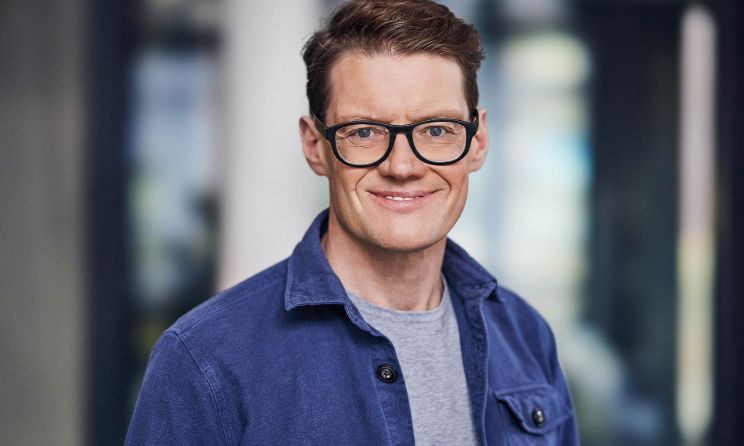
GEMA CEO Tobias Holzmüller. Photo: Sebastian Linder

GEMA represents the rights of approximately 98 000 members, including songwriters, composers and music publishers, as well as around 2 million rights-holders worldwide whose works are used within Germany.

In its annual report for 2024, published on 8 April, GEMA announced total income of €1.332 billion ($1.442 billion at 2024’s average exchange rate), up from €1.277 billion in 2023.

Of that amount, €1.133 billion was distributed to rights-holders, compared to €1.082 billion the previous year.

This resulted in a cost rate of 14.9%, an improvement from 15.2% in 2023.

Commenting on the improved efficiency, GEMA’s chief financial officer, Lorenzo Colombini, said: “we are not yet where we want to be in international comparison, but we are on the right track.”

He added, “The result clearly shows that GEMA works efficiently and is consistently improving and digitising its processes. Furthermore, we are investing in new services and technologies to ensure that we remain fit for the market and the expectations of our members and customers in the future.”

The strongest area of growth came from public performance rights, which rose 13.1% year-on-year to €502.0 million, bolstered by what GEMA described as a “boom” in live concerts. There were 249,610 live events during the year, drawing nearly 69.87 million attendees.

Meanwhile, revenues from online music remained flat at €310.1 million, and collections from radio and television rose modestly by 1.2% to €308.4 million.

GEMA noted that “positive development in the video-on-demand sector continued, while music-on-demand‘s market share declined.”

Interestingly, the previous year’s report had recorded “slight growth” in online music revenues, suggesting that the sector’s two-year growth has been just 3%.

GEMA CEO Tobias Holzmüller: “2024 was marked by geopolitical tensions, economic uncertainty, and disruptive technological developments. In this environment, GEMA demonstrated stability – financially, organisationally, and culturally.”

Holzmüller also described the 2024 distribution as “not only an economic achievement but also an expression of our responsibility towards music creators in Germany and around the world.”

GEMA’s results trail slightly behind those of Germany’s recorded music industry. According to the country’s Federal Association of the Music Industry (BVMI), recorded music sales grew 7.8% year-on-year to €2.38 billion in 2024. For the first time, digital music surpassed the €2 billion threshold.

Digital revenues reached €2.001 billion, a jump of 11.2%, accounting for 84.1% of total music sales in the world’s fourth-largest music market.

Streaming alone, excluding downloads and other digital formats, grew by 12.6% and made up 78.1% of the industry’s total revenue, according to BVMI’s February report.

Over the past year, GEMA has taken a prominent stance on matters related to artificial intelligence. It claims to be the first collection society globally to initiate legal action against developers of generative AI. In November, it filed a lawsuit against ChatGPT developer OpenAI, alleging the company used copyrighted lyrics without permission during training.

Earlier in 2024, GEMA launched another lawsuit against AI music platform Suno, alleging it had unlawfully used music recordings for training purposes. (Suno and rival Udio are also facing lawsuits in the United States brought by the major record labels: Sony Music Group, Universal Music Group, and Warner Music Group).

In addition to legal action, GEMA last year proposed a licensing model for the use of copyrighted music in AI development and published an “AI charter” aimed at protecting the role of human creators in the era of AI-generated music.

“We remain firmly committed to fair rules for the digital use of music, including in relation to major platforms and AI providers,” Holzmüller said.

“Creativity needs protection, and copyright remains a fundamental pillar of our culture. We will continue to help shape that protection with innovative foresight and our strong advocacy for legal clarity.”

Please log in to post a comment.

Most popular

Disclaimer: Music In Africa provides a platform for musicians and contributors to embed music and videos solely for promotional purposes. If any track or video embedded on this platform violates any copyrights please inform us immediately and we will take it down. Please read our Terms of Use for more.

newsletter banner

Subscribe to our monthly Newsletter

Follow us on social media



