






























































Lagbaja is the first masquerade to defy tradition and culture, and becomes the first masquerade to sings, play musical instrument, releases albums, and becomes brand ambassador for one of the telecommunication companies in Nigeria.
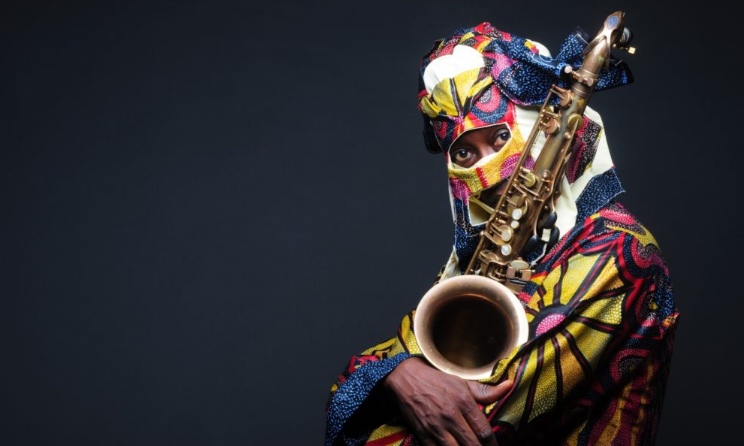
Before Lagbaja, masquerades only appear during festivals, ceremonies or rituals. They dance and recite incantations. Some of those masquerades perform extra-ordinary and inexplicable acts like entering the ground, or appear on a tree and standing on a leaf. Some spit fire from their mouths; some would grow and grow as though they would touch the sky. Their actions beat human imagination. Lagbaja possesses none of those masquerades extraordinary acts, but he has what they don’t have: he sings instead of mumbling some incantations; he plays musical instrument instead of spitting fire or wielding canes or charms. The other thing that stands Lagbaja out from other masquerades is his ability to use his songs as instruments for social justice, entertainments, and weapons to fight despotic and corrupt leaders.
Before other masquerades know it, Lagbaja had won awards, accolades, and street credibility plus million dollars or naira endorsement from Glo. Now masquerades are abandoning their shrines, markets and village squares for music videos. These days, most of those masquerades no longer stay in their shrines and expect to be worshipped by their worshippers, they are swiftly changing with the changing world and are gradually following Lagbaja’s step.
Also, Lagbaja’s mask or masquerading is not to keep the masquerade tradition alive or to represent the ancestral spirits; his mask is used as an icon of man’s facelessness. Lagbaja is a Yoruba word that means ‘nobody in particular’; the anonymity of the ‘so called common man’: The mask and the name embody the faceless, and the voiceless in the society, especially in Africa.
Lagbaja-- real name Bisade Ologunde-- released his eponymous debut album in 1993. The album was well-received by people and critics. What makes Lagbaja’s music standout from others music is his blend of musical instruments and style; his music is a pastiche of many influences ranging from traditional Yoruba music to jazz to Western orchestral. Critics refer to the groovy fusion of Lagbaja’s music as afrojazz, afrobeat, highlife and afropop until Lagbaja christened it AFRICANO, hinting on the prominent use of African drums and groovy nature of his music. Lagbaja albums are not just meant for songs; they are also meant for the exhibition of African arts and to promote the Yoruba culture.
Lagbaja lyrics are majorly sung in Yoruba, English, or a blend of the two with some touch of Nigeria Pidgin English. Lagbaja is undoubtedly Fela’s protégé, but he was able to formulate a destylized, unique, Afro-rhythm and most of his lyrics focus on important social issues. Although some of his songs are meant for entertainment (just like some of Fela’s songs), yet he would skillfully inject sarcasm on boiling social issues and also throw subtle shot at bad government officials. Musically Fela is more militant, abrasive, and iconoclast rebel than Lagbaja. Also Fela’s music is laden with brass and drums (not gangan and bata), Lagabja music is a fusion of juju, highlife, and jazz, hence the prominent use of traditional Yoruba talking drums: gan gan, bata, and omele. Although Fela’s earlier oeuvre were influenced by highlife before he created Afrobeat: his signature sound and tune. Lagbaja’s songs are mostly mild tempo and polyphony, and he could compose gutbucket caprices, and switches from one style to another while glibly code mixes and code switches. Another obvious difference between Fela’s and Lagbaja is their sartorial ensemble. Lagbaja is always heavily clothed, but Fela is mostly no frills and at times preferred wearing pant to any elaborated clothing.
Sartorially speaking, musically and art wise, Lagbaja is more of subculture than culture. Besides etching out a unique style of music, Lagbaja also melds the traditional Yoruba masquerade, poetry and chants into music. He uses Ijala (hunter poetry), Ofo (incantatory poem), Aro (Elegy), and Ayajo (Malignation). Note: listen to the grandfatherly-like pleading song, ‘Suru Lere’, and you will see how he skillfully blends some of the aforementioned traditional Yoruba poetry. Also Lagbaja masquerading is guerilla, his ability to remain mystique and incognito, even to this moment, makes him a genius. His masquerading can be likening to that of Banksy, an anonymous England-based guerrilla graffiti artist, political activist and film director of concealed identity. Banksy started stenciling elaborated ‘eye-deceiving’ or 3D images in his home town of Bristol. He soon arrived in London, springing his satirical street art and revolutionary epigrams combine dark humour with graffiti on roads, walls, bridges, subways. When offered awards, Banksy refused to show up to collect the awards because he was afraid he might be unmasked. His twitter avi is masquerade, nobody knows who he is. To most people he might as well be a ghost.
Guerrilla art is more rebel, expressive and fine art than any other art because of its realness and rawness. It’s a form of art that refuses to be cramped into the societal box of what-to-do and what-not-to-do. Lagbaja is guerilla in his approach to society and this makes him out of the ordinary. It takes gut for one to deviate from the society that's always willing and ready to bury one's dreams and ambitions into its casket of norms. But the deviant Lagbaja chose to break away from societal casket of norms and inhibition and decides to mask himself, create his own sound and flourish in his music and arts.
Beyond being nameless and incognito, Lagbaja brings the dying Yoruba masquerade culture to limelight and makes it an export just like what Jelili Atiku is doing with the masquerade art. Jelili Atiku is another deviance artist who never embraces the societal box of restrictions of talent and creativity. Though Jelili is not incognito, his art is guerrilla and he is also exhibiting the Africa masquerade culture to the Western world. Lagbaja, Banksy, and Jelili Atiku have arouse conversations on their arts through their imaginative performances, provocative and spectacular use of striking attire, unsettling body language, and unusual props to open up dialogue and influence popular attitudes.
Lagbaja is extraordinary. So is his music and art. And he would remain evergreen like Fela and other musicians of old.


Most popular

Top Naija songs of 2026
31 Mar 2026

Top Afrobeats songs of 2026
19 Mar 2026

Top amapiano songs of 2026
16 Feb 2026
Open call: CANEX Music Business Lab and Songwriting Camp
15 Oct 2026
Ghana: Mr Eazi and MOLIY’s ‘Comfort’ earns Urban Music Awards nomination
21 Oct 2026
Nigeria: CANEX WKND unveils 2026 programme
21 Oct 2026
Disclaimer: Music In Africa provides a platform for musicians and contributors to embed music and videos solely for promotional purposes. If any track or video embedded on this platform violates any copyrights please inform us immediately and we will take it down. Please read our Terms of Use for more.

Subscribe to our monthly Newsletter
Follow us on social media


Please log in to post a comment.