




























































The guitar has over the past centuries been cardinal to the growth of music in most nations. This stringed instrument has helped to shape many pop and folk music cultures, including throughout Africa. This text provides an overview of the role of the guitar in Zambian music.
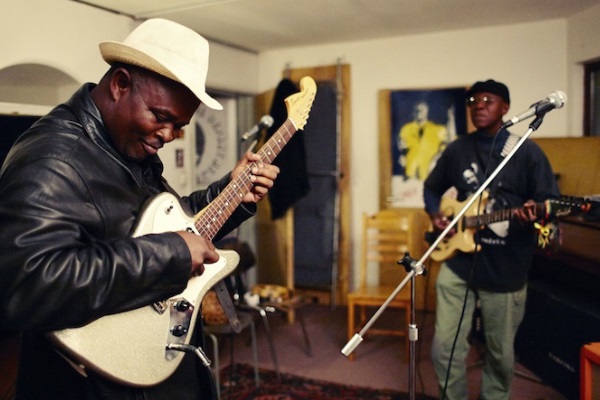
The modern guitar traces its roots to the Latin region of Spain, where the box or acoustic guitar is believed to have been invented in the 16th century. Various types of guitars have since evolved, such as the nylon-stringed classical and flamenco guitars. Other guitars include the steel-stringed guitars favoured by western folk or country musicians, the twelve-string guitar and the electric guitar. In many indigenous African cultures are found a variety of related stringed instruments such as banjos and harps.
On the African continent, the guitar arrived with the Portuguese voyagers who entered the southern region through the coastlines of present-day Angola and Mozambique. Simultaneously the British had also penetrated the same region through South Africa, cutting through to the Belgian Congo’s southern border in Central Africa.
Zambia, then a British colony called Northern Rhodesia, received her first contact with the guitar through the early missionaries who used it to spread the gospel through music. Hence the earliest African guitarists were usually lay preachers or school teachers. By the end of the 1930s, a new period of economic development was underway and together with it unfolded a new folk culture, heavily dependent on the guitar.
1940s-50s: Copperbelt folk guitarists
One path of civilization paving its way through Zambia during the mid-20th century was copper mining. The mineral is found in anore belt shared with the Katanga region of Congo. As the Zambian Copperbelt region bustled with new life, socially and culturally it became the centre of very fertile cultural pollination. A cross-section of Zambian tribes mingled in the mine townships, each bringing their different styles of music and dance.
The townships hosted evening social gatherings known as ‘sun-downs’, during which folk guitarists displayed their talents. These troubadours (like their counterparts in West Africa, the village griots) moved from town to town entertaining people at popular venues like community halls and marketplaces. They were mostly guitar soloists backed by beer-bottle-beating percussionists. The early folk guitarists were also handy during the independence struggle, performing during political campaign rallies.
When the famous ethnomusicologist Hugh Tracey traversed the region, he captured the music and voices on tape and later preserved them at his International Library of African Music (ILAM) in South Arica. The music of the Northern Rhodesia folk artists is now accessible internationally on the albums Origins of Guitar Music in Southern Congo & Northern Zambia: 1950, 51, 57, 58 (Sharp Wood Records/SWP, 2002) and From the Copperbelt: Zambian Miner’s Songs (Original Music, 1989). Other interesting recordings aired on the Voice of America as 'Zambia and Her Musicians', which was recorded on 9 November 1967 and is available online[i].
Traditional music was the early folk guitarists’ main inspiration. They borrowed a lot from folklore, which they adapted to the events of the era. Some songs were satirical of the newly arrived western culture, teasing colleagues who attempted to imitate it, struck by culture shock. Due to the migration of miners in the Southern and Central African regions, some musical styles were cross-pollinated from Zimbabwe, Malawi, Tanzania and Congo. The music was characterized by an intricate style of string plucking, likened to the playing of stringed traditional instruments like the Congolese likembe or the West African kora.
Among the major exponents of the craft during that period were Isaac Mapiki, Bartholomew Bwalya, Stephen Tsotsi Kasumali, John Lushi, Wilson Makawa, Simon Hamuchemba and AlickNkhata. Others such as Emmanuel Mulemena and Charles Muyamwa were of a later generation.
1960s: Rock and jazz
Inspired by their traditional folk music predecessors and the new western sounds that blared from the radio, a new breed of guitarists emerged in the 1960s. Apart from the radio, cinema (or bioscope) shows were beamed on large screens, bringing to the fore the latest movies and musical performances of American and British rock ‘n rollers.
At that time, Olivine cooking oil was a very popular household commodity. Its packaging in a cube-shaped tin brought out a new innovation among the musically minded youths. The oil tin, a plank of wood, iron nails and steel strings were carefully crafted into four- to six-stringed guitar- or banjo-like instruments.
Small street corner bands started mushrooming in the townships. Many teenage guitarists honed their talent and skills through such bands and were soon spotted by local businessmen, who formed proper bands with modern electric guitars. These were the formative years of Zambia’s famous rock, jazz and soul bands of the 1960s, such as The Rhokana Melodies, The Tigers Swingsters, The Dynamic-Mixies, The Black Souls, The Red Balloons, Kingston Market and Lusaka Beatles. Competency was judged on how well groups (particularly their individual guitarists) captured the original tracks from artists such as Jimi Hendrix, Chuck Berry, The Rolling Stones, Buddy Holly, The Beatles and Elvis Presley.
1975-1989: Zam-Rock
Out of the 1960s rock, blues and jazz imitators sprung a new guitar genre that came to be known as Zam-Rock. This was a strain of rock ‘n roll done the Zambian way. It was born from a 1975 presidential edict in which the state-owned Zambian radio station was instructed by Dr. Kenneth Kaunda to start playing 90% local music. The younger musicians, who were much more inclined to western rock, refused to diverge to far from it and innovatively ‘localized’ it. A local DJ, Manasseh Phiri, is credited with coining the name ‘Zam-Rock’ for Zambian Rock.
The Zam-Rock scene reverberated with various themes, ranging from politics, love affairs, culture, morality and religion. Some Zam-Rock artists had a rawer, ‘garage-rock’ feel which was likened to the 1960s British and American rock scene. Others replicated a refined, psychedelic rock style flavored with fuzzy guitars that could fit on any musical charts in the northern hemisphere.
This was the era of bands like Musi-O-Tunya, the WITCH, The Five Revolutions, The Black Foot, Amanaz, Machine Gunners and Ngozi Family. Individuals like Rikki Ililonga, Keith Mlevhu, Paul Ngozi, Mike Nyoni, Hector Sithole and Isaac Mpofu also displayed excellent guitar skills throughout their careers.
1980-1995: Kalindula
The Five Revolutions switched gears away from Zam-Rock when in 1980 they released the hit song ‘Mukamfwilwa’, composed by their lead and rhythm guitarists Morris Mwape and John Mwansa respectively. Their new invention came to be called Kalindula after the banjo-based style from the Northern, Luapula and Central Provinces of Zambia. The style, though similar to the traditional folk of the 1940s and 50s, was this time executed with electric guitars. The Kalindula scene quickly overrode Zam-Rock and some of the finest rock guitarists of the day actually switched over to it, such as Paul Ngozi, Mike Nyoni and Ackim Simukonda.
Because of its traditional touch, Kalindula unearthed authentic rhythms from other parts of Zambia. For example, the ‘kakonko’ beat from Luapula was promoted by Alfred Kalusha Chisala. Bands like Masasu and Mulemena Boys re-discovered ‘mantyantya’ from North-Western Province. Serenje Kalindula brought out sounds from Central parts of Zambia, while Oliya captured the tribal music of the Copperbelt. Julizya, Makishi and Mashabe bands were into the ‘warrior’ rhythms of Eastern Province, while Smokey Haangala and Greig Miyanda captured the Southern roots.
1980-1995: Zambian rhumba
Running concurrently with the other styles of Zam-Rock and Kalindulawas the rhumba style that drew inspiration from the Congo as well as East Africa. ‘Zam-Rhumba’ was steered by the threesome of Nashil Pichen Kazembe, Peter Tsosti Juma and Benson Simbeye, who had once lived and performed in Kenya from the 1960s to the mid-70s.
The decline of guitar music
In the 1990s guitar playing musical performers declined due to a number of reasons. Firstly, between 1982 and 1989 Zambia was robbed of skilful and inspiring expert guitarists like Emmanuel Mulemena, Smokey Haangala, Keith Mlevhu, Mike Nyoni, Lazarus Tembo and Paul Ngozi. The other reason was the arrival of the MIDI (musical instruments digital interface) keyboard, which replaced the need for full bands with instruments. Imported musical instruments had also become scarce due to stringent excise duty laws that affected the nation in the 1980s and 1990s.There was also rampant music piracy starting to take root in the country.
Today the number of active guitarists has drastically dwindled,with only a few lively notables keeping up the spirit. We still have great bands like Amayenge, Air Power, Green Labels and Misheck Mhango’s X-Virus soldiering on. In addition, solo artists such as Jones Kabanga (jazz, pop and studio session player), Andy Chola (folk), Pontiano Kaiche (traditional folk), Mumba Yachi (folk/rhumba/jazz), Uncle Rex (jazz) and Mutinta (the only female in the fray) are also making great contributions to Zambia’s proud guitar culture.
[i] http://blogs.voanews.com/music-time-in-africa/2008/07/29/zambian-radio-reels/


Most popular

Top Naija songs of 2026
31 Mar 2026

Top amapiano songs of 2026
16 Feb 2026

Call for applications: ACCES 2026 Emerging Artist Spotlight Competition
01 Oct 2026

Top Afrobeats songs of 2026
19 Mar 2026

AFRIMA 2026: All the winners
12 Jan 2026

CAPASSO backs global principles for fair generative AI music licensing
06 Oct 2026
Disclaimer: Music In Africa provides a platform for musicians and contributors to embed music and videos solely for promotional purposes. If any track or video embedded on this platform violates any copyrights please inform us immediately and we will take it down. Please read our Terms of Use for more.

Subscribe to our monthly Newsletter
Follow us on social media


Please log in to post a comment.