




























































How Kenya’s ‘patriotic’ choral music has been used to embed a skewed version of history
07 Jun 2022 - 09:46

By Doseline Kiguru and Patrick Ernest Monte
Choral music – patriotic choral music in particular – is a significant genre in Kenya’s political history.
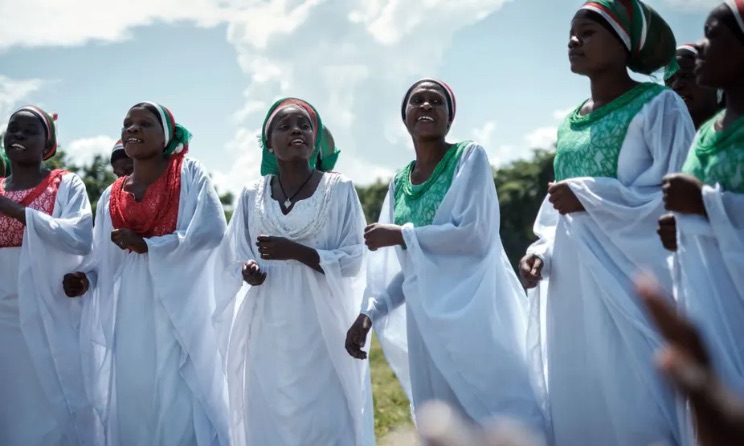
Patriotic music is defined by how it engages citizen to praise and express sentiments of national affiliation. In the Kenyan context patriotic choral music has been used to influence behaviour and the forming of a national identity.
We traced the history of the music to explore how it has been used in this way in the country. We found that songs that were composed and performed in the immediate aftermath of Kenya’s struggle for independence urged the public to forget colonial injustices to build the new country.
This music was used to create political heroes out of individuals at the expense of the hosts of people who contributed to the country’s independence. It continues to be used as a political tool. This is primarily done through a distribution network that involves airplay on both private and state broadcasters, and during national holidays.
A long tradition
Choral music was used to amplify former President Jomo Kenyatta’s widely publicised rhetoric of “forgive and forget”.
Kenya’s first president introduced the idea in his speech to the nation at the first celebration of Kenyatta Day – later renamed Mashujaa (Heroes) Day – on 20 October 1964. He proclaimed that:
the foundation of our future must lie in the theme: forgive and forget.
It would later become a motto closely linked to his presidency. His policies inaugurated a national culture of selective socio-political amnesia.
This persists in contemporary Kenya.
Most of the choral music composed and performed in Kenya as ‘patriotic music’ has been embraced and influenced by the government through the Permanent Presidential Music Commission (PPMC).
The commission was established in 1988 under President Daniel arap Moi, Kenya’s second president. The government agency deals with the entertainment functions of the state, among others.
Music researchers Hellen Agak and Kakston Mindoti observe that the commission scrutinises all Kenyan patriotic choral music to ensure that it conforms to the social and political ideals of the government. The commission also examines the quality of music and messages communicated.
Over different government regimes, patriotic choral music has been presented to the public through the national broadcaster and during state celebrations of national days. The music presented is curated through the commission.
During these celebrations, a few selected canonical choral pieces have continued to dominate through different governments and political regimes.
The telling of history
Our research focused mainly on the music of Enock Ondego, one of Kenya’s pioneer composers. Ondego’s ‘Huu ni Wimbo wa Historia’ (This is a Song of History) is perhaps the main choral composition that has persisted through different regimes.
‘Huu ni Wimbo wa Historia’ was composed in May 1964. It was first performed before President Kenyatta by the children of Samburu Primary School.
The song foregrounds the importance of the anti-colonial struggle in Kenya’s history. It opens with a plea to the audience to pay attention to the message.
It is a narrative of the experiences of different victims during the 1952 emergency period. The lyrics suggest that the struggle for Kenya’s independence was a collective moral phenomenon. Lines 7 and 8 – “there was sorrow in the country Kenya” and “all the people were very sad” – capture this reality.
In lines 14 and 15, the song further explains that there was “matata” (trouble) and that “many people died because of freedom”.
Yet, the history documented in the choral song is a selective one.
Despite the promise of its title, ‘Huu ni Wimbo wa Historia’ foregrounds only Kenyatta’s involvement in the freedom struggle. It does this by focusing on the supposed physical and emotional violence he faced as an individual. This erases the contribution of everyone else in the country’s struggle for independence.
The song initially mentions that Kenyatta was arrested together with other freedom fighters. But the others remain unnamed and unacknowledged (lines 4, 5 and 6).
Lines 20, 21, 22 and 23 invoke the memory of how Kenyatta and other representatives travelled to Britain to negotiate for Kenya’s constitution. Again, the lyrics foreground Kenyatta only. The promise of a collective identified by the idea of ‘representatives’ suddenly collapses into the singular.
When he reached there … he was beaten with rotten eggs … The father of the nation did not mind … he won and came back with a constitution for our country, Kenya.
Rather than recognising that Kenya’s constitutional victory was the result of collective endeavour, the song suggests that it was produced by the individual efforts of Kenyatta.
This silencing takes on added significance when considering the original naming of the commemorative day upon which this song reflects: Kenyatta Day.
The individuality cult of Kenyatta is central in understanding how music became a site where heroes were purged from Kenyan history, or where their role in the making of the nation was undermined.
Such narratives risk promoting socio-political, historical and even economic exclusion in the process of nation formation.
To echo literary professor Pumla Dineo Gqola’s work on postcolonial slave memory in South Africa, forgetting and remembering are framed within power hierarchies, where “unremembering is a calculated act of exclusion and erasure”.
In the current government, songs such as ‘Huu ni Wimbo wa Historia’ continue to get significant airplay, especially on national holidays.
Influencing memory and history
By relying on such music for entertainment during state commemorative events, the presidential music commission plays a crucial function in statecraft, especially in the context of influencing memory and history.
But the musical and performance component of the songs also reveals that it is multi-layered.
The emotive tone and mood of ‘Huu ni Wimbo wa Historia’ demonstrate the immensity of the pain endured in the anti-colonial struggle. Feelings of despair and sorrow are painted through repetition and by onomatopoeic sounds, such as ‘woooi woooi’ (line 11).
Such sounds capture the general mourning response of the public not only to Kenyatta’s arrest, but also to the deaths and torture witnessed after the state of emergency was declared.
Hence, the song’s text seems to call for a celebratory turn towards the future, while simultaneously ruminating in the pain of the past through non-linguistic verbal signifiers that reach their full effect only in performance.
This shows that patriotic choral music in Kenya, although repeatedly used as a political tool, also shares the potential for contesting meaning and drawing listeners’ attention to different layers of significance embedded in musical texts.
Doseline Kiguru is a research associate at University of Bristol while Patrick Ernest Monte is a lecturer of Music at Kabarak University. The article first appeared on The Conversation.


Most popular

Top Naija songs of 2026
31 Mar 2026

Top Afrobeats songs of 2026
19 Mar 2026

Ghana: Mr Eazi and MOLIY’s ‘Comfort’ earns Urban Music Awards nomination
21 Oct 2026

Top amapiano songs of 2026
16 Feb 2026

Open call: CANEX Music Business Lab and Songwriting Camp
15 Oct 2026

Nigeria: CANEX WKND unveils 2026 programme
21 Oct 2026
Disclaimer: Music In Africa provides a platform for musicians and contributors to embed music and videos solely for promotional purposes. If any track or video embedded on this platform violates any copyrights please inform us immediately and we will take it down. Please read our Terms of Use for more.

Subscribe to our monthly Newsletter
Follow us on social media


Please log in to post a comment.