





























































In the heart of Kampala, Uganda, sonic architect Brian Bamanya, known professionally as Afrorack, is redefining the boundaries of African electronic music. With less access to professional hardware, Bamanya takes an audacious route — building Africa’s first handmade modular synthesizers from circuitry salvaged from the city’s electronic graveyards. The unique sonic footprint of Bamanya’s creations is a textured blend of traditional Ugandan influence, the raw energy of Gqom and the propulsive rhythms of global house.
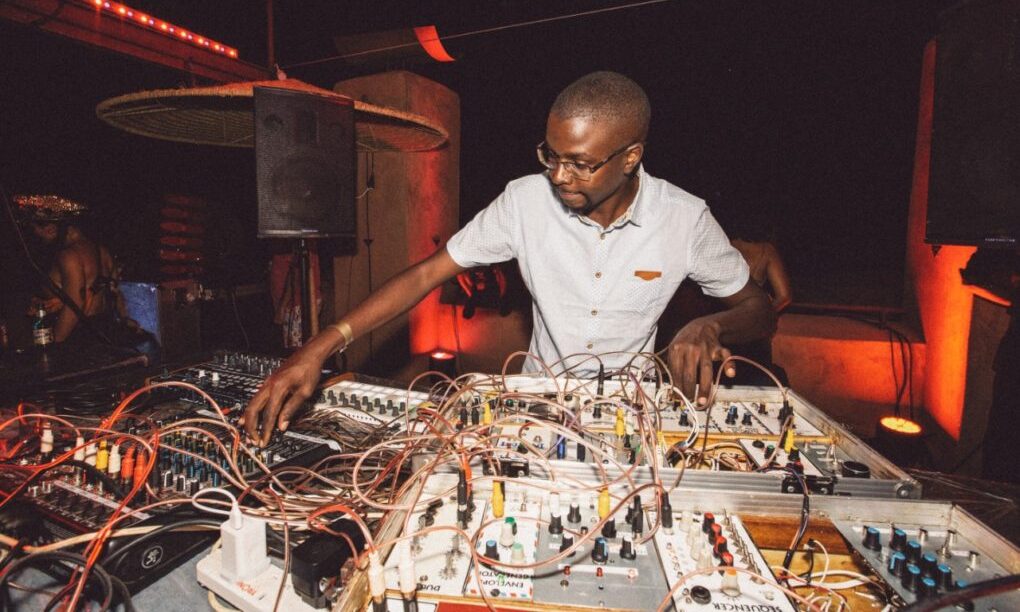
Afrorack, a Kampala-based artist, builds modular synthesizers from salvaged electronics, revolutionizing African electronic music with a DIY ethos.
This piece offers an analysis of Bamanya’s process, tracing the journey from discarded radio transistors to fully functional, custom instruments pulsing with a life of their own. Bamanya’s work challenges the top-down model of music technology and heralds a new wave of innovation in which the most compelling sounds are not bought, but built. The Kampala music producer’s growing influence signifies a pivotal moment for handcrafted gear within the global music landscape, proving that the future of sound can be soldered by hand, circuit by circuit.
From his workshop in Kampala, Uganda, Brian Bamanya, the artist known as Afrorack, is launching a sonic revolution. As the creator of Africa's first handmade modular synthesizers [1], ingeniously built from salvaged electronics, Afrorack’s approach is a jolt of raw authenticity in a digital music landscape that can feel as sterile as a "white box" room. His tangible, imperfect instruments inject a much-needed physical personality back into the electronic soundscape, proving true innovation is built from scratch, not bought.
Why Build from Scratch?
For most electronic artists in the global North, acquiring new hardware is a matter of budget and brand preference. For these musos, online retailers and local music shops pave the path to owning a sought-after Moog or Buchla synthesizer, but for a producer in Kampala, that path is riddled with obstacles. Prohibitive price tags associated with instrument fabrication are only the starting point.
Exorbitant international shipping fees, steep import taxes and a near-total absence of local distributors create a formidable economic and logistical barrier, effectively placing these creative tools out of reach for many African musicians.
This is the reality that confronted Bamanya. Being unable to access the tools of his trade was more a fundamental challenge to his artistic identity than simply an inconvenience. His response was not to abandon his vision but to sidestep the entire commercial ecosystem and forge his own solution. The decision to build his own modular synthesizer from scratch was more than a clever workaround — it was an act of profound ingenuity and creative resistance.
By sourcing his own components from salvaged electronics and mastering the art of circuit design, Bamanya declared his independence from a system designed to exclude him. It was an assertion of artistic sovereignty, transforming a limitation into a defining feature of his work. The spark of invention was about more than making music. It was about forging the very means of the music’s creation.
The Anatomy of an Afrorack Synth
While commercial synthesizers are born within sterile factories using precise components, an Afrorack synth begins life amid the sprawling electronic graveyards of Kampala. The process is a form of urban archaeology, with Bamanya sifting through discarded radios, forgotten televisions and obsolete computer hardware in search of his sonic gold. This hunt for materials provides a poignant commentary on the global e-waste crisis, a problem that, according to a 2024 UNITAR report, is accelerating dramatically [2].
However, where the world sees junk, Bamanya sees a treasure trove of transistors, resistors and capacitors, each with a potential voice for his next creation. He breathes new life into these abandoned electronics, transforming them from environmental hazards into instruments of profound creativity.
Crucially, with the history attached to these salvaged parts, they bring more than just their function. Unlike their modern counterparts, vintage components are often imperfect. Their values may have drifted over time, and their performance can be unpredictable, but for Afrorack, this isn’t a flaw. It's the source of the magic with this "component drift" imparting a warmth, grit and instability that digital models and even modern analog synths will struggle to emulate.
For example, a filter's unique, gritty sweep might be thanks to a capacitor from a 1980s television, its aged character now a permanent, audible feature in the music of tomorrow. The resulting instrument is not just a collection of circuits, but a living collage of electronic history.
Fusing Sound and Circuitry
Sourcing the parts is only the first step in a complex equation for Afrorack. The true alchemy happens at the workbench, where disparate components get meticulously fused into a cohesive whole.
This stage is a masterclass in precision, demanding a hand displaying a surgical steadiness and the mind of an engineer. Building a stable musical instrument from salvaged parts requires countless points of connection, each one made with a soldering iron to create a reliable pathway for electricity and, ultimately, sound.
The fundamental principles of creating strong, reliable bonds are universal, whether in large-scale industrial fabrication or microelectronics. Industrial fabricators rely on specialized welding processes to preserve the integrity of large-scale structures [3]. Bamanya’s work operates on a much smaller scale, where soldering — not welding — creates the electrical connections that hold the instrument together. Each tiny, shimmering solder joint is a critical weld in his instrument’s architecture.
A single cold joint or an imprecise connection can introduce unwanted noise or, worse, silence an entire section of the synthesizer. It is a painstaking process where the choice for every connection is deliberate, a critical link in the sonic chain that determines the synth’s stability, voice and character. In this intricate dance of heat and metal, the abstract idea of a circuit is transformed into a tangible, sound-making reality.
The Sound of Kampala: Afrorack's Musical Identity
The ultimate question, then, is what these homemade modular machines sound like. The answer lies at a compelling intersection of worlds. The music is alive with the unpredictable, organic textures that only a handmade instrument can produce, a sonic fingerprint of its salvaged-part DNA. This inherent experimentalism, full of evolving drones and chaotic bleeps, is the voice of the machine itself.
Yet, this exploration is never unmoored. It is firmly anchored by the propulsive, syncopated rhythms of Afrorack’s Ugandan heritage and the minimalist drive of weaving together contemporary genres like techno, abstraction and acid.
Instead of simply importing Western synth-pop tropes, Bamanya uses his creations to forge a new dialect for electronic music, speaking a global language of synthesis with a distinctly East African accent. The sound is both futuristic and deeply rooted [4].
The Soul of the Salvaged Synth
Ultimately, Afrorack is more than a musician — he is an innovator and a powerful symbol for a new wave of creators. His work is a testament to the idea that true artistry is defined not by the cost of one's tools but by the depth of one's ingenuity. By forging his own path, Bamanya has crafted a distinctive sonic identity and inspired a future for DIY electronic music in Africa and beyond — a future built on pure, unadulterated creativity.
References and citations
[1] https://pan-african-music.com/en/afrorack-album/
[3] https://www.bepeterson.com/understanding-bepetersons-different-types-of-welding-processes


Most popular

Top Naija songs of 2026
31 Mar 2026

Top Afrobeats songs of 2026
19 Mar 2026

Ghana: Mr Eazi and MOLIY’s ‘Comfort’ earns Urban Music Awards nomination
21 Oct 2026

Top amapiano songs of 2026
16 Feb 2026

Open call: CANEX Music Business Lab and Songwriting Camp
15 Oct 2026

Nigeria: CANEX WKND unveils 2026 programme
21 Oct 2026
Disclaimer: Music In Africa provides a platform for musicians and contributors to embed music and videos solely for promotional purposes. If any track or video embedded on this platform violates any copyrights please inform us immediately and we will take it down. Please read our Terms of Use for more.

Subscribe to our monthly Newsletter
Follow us on social media


Please log in to post a comment.