











































Interview: Kyekyeku and Rocky Dawuni unite to celebrate Africa
07 Jun 2023 - 15:39


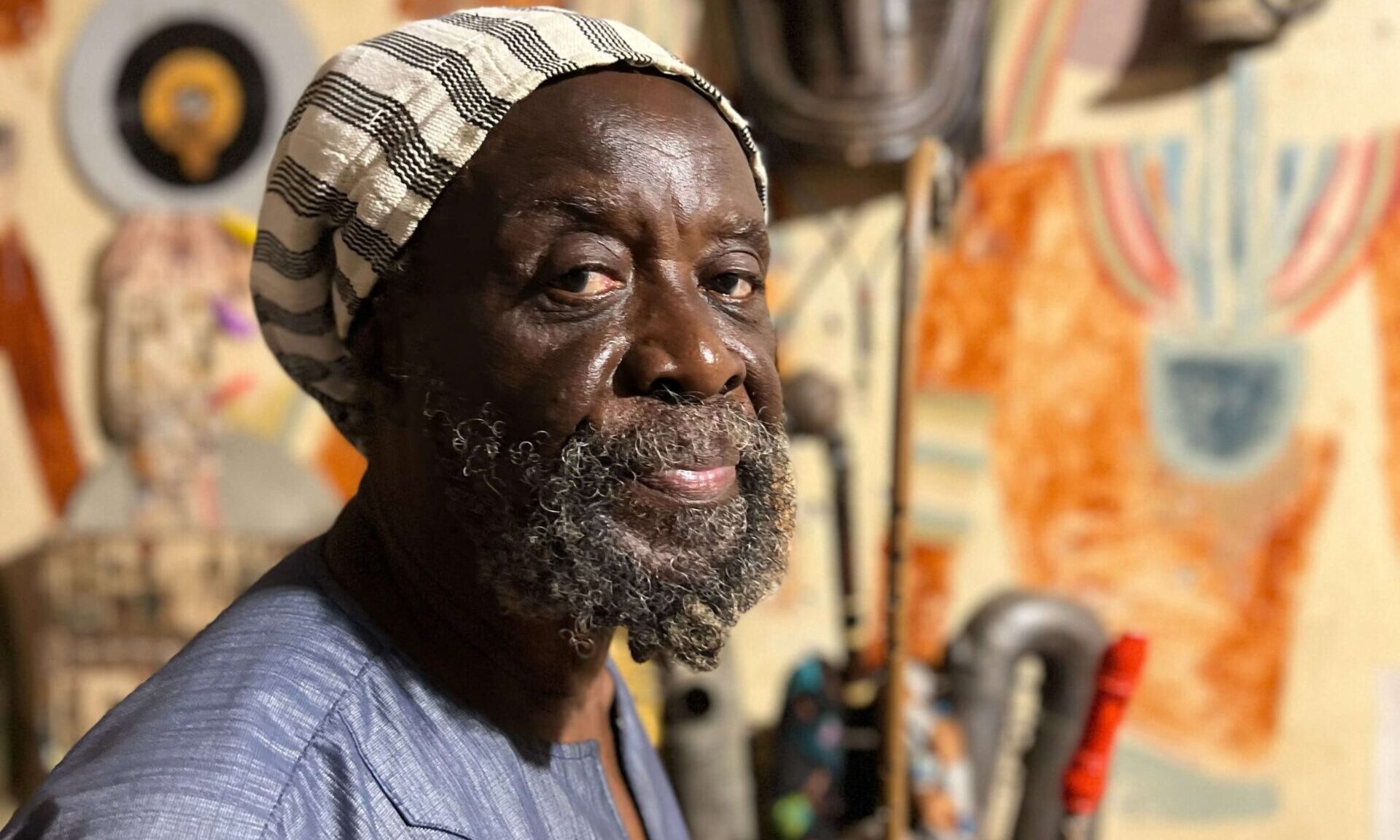
Following last week’s release of the video to their recent collaboration ‘Africa Till I Die’, an uplifting reggae-highlife fusion celebrating the continent’s immense beauty and resilience, renowned Ghanaian artists Kyekyeku and Rocky Dawuni have opened up on what informed the song’s composition.
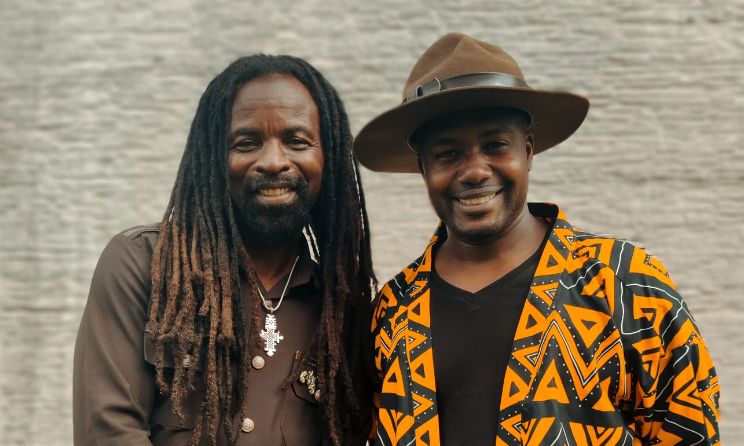
On the record, the musicians come together to share their firsthand experiences of living in Africa with the aim of shifting the narrative and showcasing the often overlooked side of the continent.
‘Africa Till I Die’ is taken from Kyekyeku’s latest album Funky Pangolin. In the music video directed by Slingshot, we witness the stark contrast between the cold and empty streets of France and the lively atmosphere of Accra.
Ultimately, Kyekyeku and Rocky Dawuni aim to inspire young Africans while galvanising renewed appreciation for Africa’s cultural value.
MUSIC IN AFRICA: How did the musical relationship between you two form?
KYEKYEKU: I first heard Rocky in 1997 when his monster hit ‘In Ghana’ was on constant rotation on the radio. It wasn’t until 2007 at the Labadi Beach Hotel on the occasion of the 40th Independence Celebration of Ghana where Rocky held his annual Rocky Dawuni’s Independence Splash concert that we met for the first time. Moving forward to 2022, at a concert at +233 Jazz Club, I invited Rocky on stage for an impromptu jam on one of my songs. After the concert, it was clear that we had finally found a groove and inspiration for a song to work together on.
ROCKY: I remember seeing Kyekyeku play in Zanzibar and was really blown away. He is an incredible live performer. I was so happy to see fellow Ghanaians bringing back organic highlife music. The rest, as we say, is history in the making.
Can you share your experiences as Ghanaian musicians in the diaspora and how it has influenced your music?
ROCKY: Being a Ghanaian musician in the diaspora gave me a unique cultural perspective and insight into the commonalities that are shared between the two worlds. I also consciously worked to expand my musical universe by trying to learn about artists and music that I had not been exposed to whilst growing up in Ghana. This curiosity really helped to mould my Afro roots sound by putting emphasis on songwriting, melodies, lyrics and production.
KYEKYEKU: I am fully aware of how people who did not grow up on Ghanaian music react to our music and so spending time here also helps me to know how to make my music attempt to be more accessible. I think of the Ghana displacement of beats and pulses and I also think of a straightforward placement in a bid to marry the global north and south tendency of perceiving rhythm.
‘Africa Till I Die’ differs from traditional anthems about Africa, fundamentally in its victorious approach. Was this deliberate?
ROCKY: Our approach was in terms of uplifting the positive narrative of our homeland. We also worked to stress the humanity of the place with the power in community, family and individuals interacting with each other in everyday life. Ultimately, we hope that we captured the soulful sunshine of Africa in the song and through the visuals for the video.
KYEKYEKU: The experiences are clear for all to see if one really wants to see. So why not make more music about that? But I also know that Africa is the continent that is sung about a lot in songs and can easily be clichéd. We made sure that this song was how we felt about Africa from a pure place.
Why was it essential to express the specific message in the song, and in what ways do you believe ‘Africa Till I Die’ celebrates the strength and pride of the African continent?
ROCKY: The song is about our unquestionable dedication to our identity and to ourselves as a people. It is about innately being aware and having gratitude for life and for what you have been given. I believe that this is a theme that is needed in Africa today to inspire the youth and the consciousness of the continent. It is very important to highlight the value of African culture and identity in an age where things of value are increasingly being diminished. Africa is at a crossroads when it comes to the unfettered influence of external cultural forces which is rapidly eroding what it means to be African. We need to protect what we have as a people in order to use it as a means to step into the future.
KYEKYEKU: I think we need to drum home the fact that Africa hasn’t been the most volatile place on earth, not even in recent history – nothing compared to even just Western Europe so it’s important to change the narrative that Africa is all war and strife. Our strength and pride are celebrated each day by a population that never ceases to grow in strength in the face of internal and external oppression. With all that has been thrown at us, our survival and particular vibration and radiation of life itself is a celebration.
What was the discussion on the concept for the record like and how was the creative process of shaping the song?
ROCKY: Kyekyeku and I had had conversations about working on a track together but everything switched on when I jumped on stage with him for an impromptu performance. That is when the light bulb went on as to the direction and the concept of the collaboration
We worked remotely according to our travel and geography. I recorded most of my parts in Los Angeles and he recorded his in Ghana and some in France. In the video, I am in Ghana and he is abroad but the actual recording of the audio was the other way around just to show the cultural conversation that is constantly taking place between Africa and the diaspora.
KYEKYEKU: We did it remotely, myself in France and Ghana and Rocky in Los Angeles. But we had already performed the song at a gig in Accra at +233 Jazz Bar. I then visited Rocky at home to just relax, drink tea and talk music. That helped with the flow. Once we hit the studio, everything went really smooth.
Both of you are known for your cross-over styles, despite being rooted in your highlife and reggae foundations. How has this influenced your collaboration and the sound of ‘Africa Till I Die’?
ROCKY: For me, it was very natural because anybody who has heard my Afro roots sound can hear the synergy of highlife, Afrobeat and reggae Music. Many of my heroes from growing up were highlife musicians including Nana Ampadu & the African Brothers, AB Crentsil, Pat Thomas and Gyedu-Blay Ambolley. We were definitely at home whilst working together to forge a modern highlife classic.
KYEKYEKU: Rocky has this voice that can fit in reggae, highlife and many other styles. I think I am at home with the idea of fusions and that already helps to open up the possibilities. The idea was to use a very typical highlife vibe as the canvas to explore vocal and melodic possibilities and I love the results we had.
How do you think the fusion of highlife and reggae in the song represents the cultural heritage and musical traditions of Ghana?
ROCKY: ‘Africa Till I Die’ expresses a full Sankofa moment for people of African descent who were taken from the continent through slavery and then, in turn, influenced the music and the sounds of Ghana later on when their descendants returned as West Indian soldiers from the Caribbean who were stationed in the Central Region of Ghana with their brass bands which went on to directly influence highlife Music. I myself was also influenced by reggae music which travelled the same path – from Africa to the diaspora and back again.
KYEKYEKU: The evolution of these two musical forms has similar roots. We know that Jamaican culture has strong Ghanaian influences. Reggae itself evolved from mento, ska, and rocksteady. The earliest forms had the rumba box which is an instrument that is very present in Ghanaian palm wine music which also went on to birth highlife. Ghanaians accepted and took to reggae from very early on. To the ears of most Ghanaians, reggae music is not too far away and highlife is engrained in it. When the two come together it’s a beautiful cultural artefact.
How would you label this song and how do you envision it resonating with listeners, both within Africa and globally?
ROCKY: I would label this song as highlife. I think it is an organic song with a message that every person of African descent and every champion of Africa can identify with. I think it is an innately universal song because all life came from Africa and the rhythms, melodies and sounds of Africa continue to resonate with the world.
KYEKYEKU: ‘Africa Till I Die’ definitely has a strong highlife vibe, but it is open for interpretation. As far as comments that are coming in, that nostalgic feeling that the song carries is working magic. People who have dreams to see the continent one day have these feelings even more heightened. To highlife purists, nothing has come closer in a while.


Most popular

Top Naija songs of 2026
31 Mar 2026

Top Afrobeats songs of 2026
19 Mar 2026
Ghana: Mr Eazi and MOLIY’s ‘Comfort’ earns Urban Music Awards nomination
21 Oct 2026

Top amapiano songs of 2026
16 Feb 2026
Open call: CANEX Music Business Lab and Songwriting Camp
15 Oct 2026
Nigeria: CANEX WKND unveils 2026 programme
21 Oct 2026
Disclaimer: Music In Africa provides a platform for musicians and contributors to embed music and videos solely for promotional purposes. If any track or video embedded on this platform violates any copyrights please inform us immediately and we will take it down. Please read our Terms of Use for more.

Subscribe to our monthly Newsletter
Follow us on social media


Please log in to post a comment.