











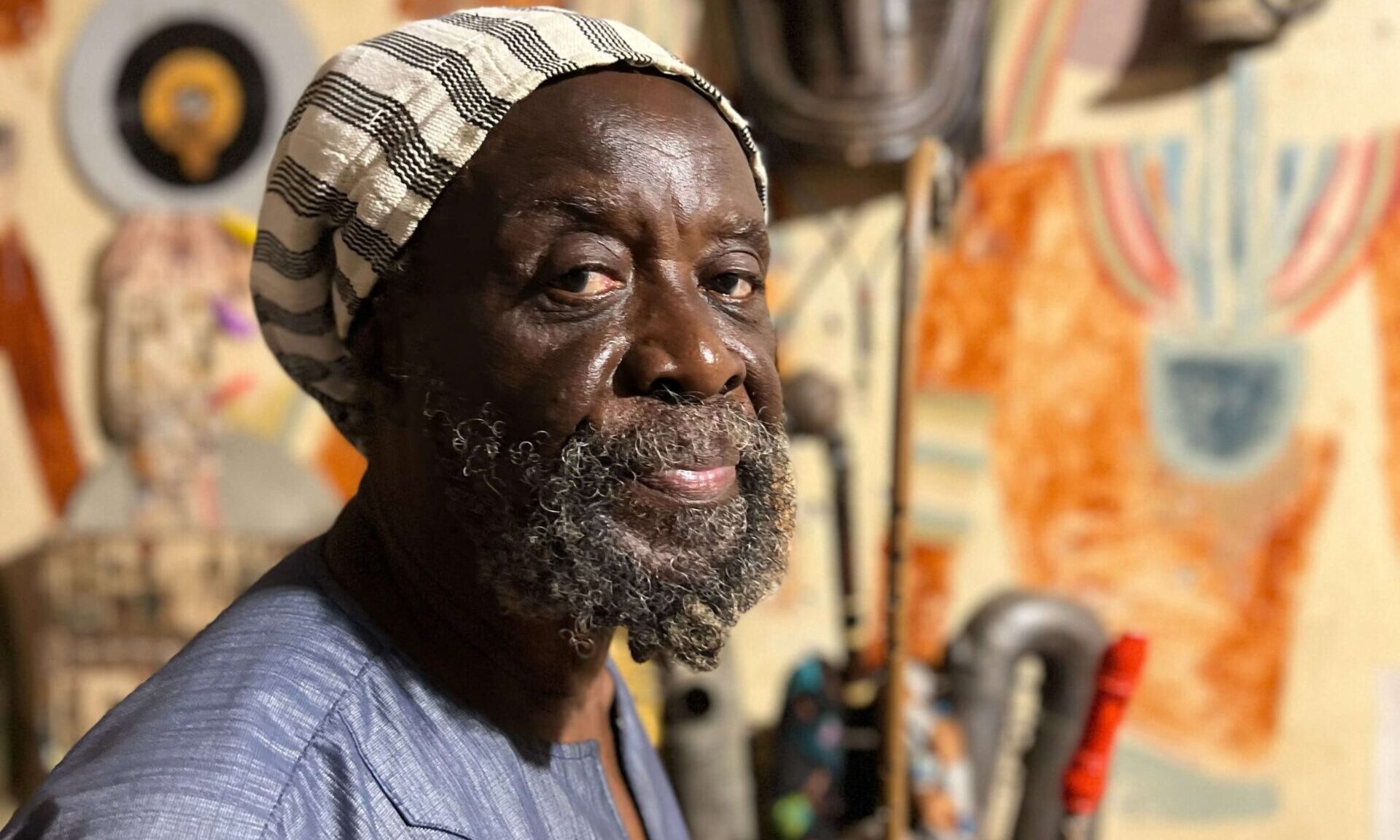

















































Mellitus Nyongesa Wanyama is a name that needs little introduction to those acquainted with choral music and music education in Kenya. The 51-year-old musicology and ethnomusicology professor has trained some of the country’s most well-known choirs and is a leading composer, arranger, choreographer and adjudicator.

He is the founder, executive director and editor-in-chief of Utafiti Foundation Publishers, a research and documentation centre in Eldoret, Kenya. He is also the editor-in-chief of African Musicology Online and president-elect of the Pan-African Society for Musical Arts Education (PASMAE).
Music In Africa spoke to Wanyama ahead of the 2018 World Choir Games in South Africa, where about 400 choirs and some 25 000 choir members from around the world are expected to converge on the country’s capital Tshwane for 10 days of competition and cultural exchange.
We asked the academic about what he was expecting from the world’s biggest choir event and to elaborate on his rich experience in working with music.
MUSIC IN AFRICA: The World Choir Games are coming to Africa for the first time. What does this mean for the continent?
MELLITUS NYONGESA WANYAMA: I am very excited because I will be attending the games. It is an honour for Africa, especially because our continent from time immemorial has been associated with singing and choral music as a medium of communication and entertainment.
In your line of work you have interacted with various choirs. Which are some of the choirs that you have trained?
As an ethnomusicologist I have trained many groups like the Teachers’ Service Commission’s (TSC) Secretariat Choir in Nairobi. I have also worked with the workers of the Coffee Board of Kenya, Holy Family Basilica, which is the biggest Catholic Church in Nairobi, St Theresa Eastleigh High School, Kariobangi Holy Trinity Catholic Church and Kibabii Girls Primary Boarding School. I trained the choir at Mosoriot Teachers' Training College as I pursued my certificate in education. I then moved on to pursue a diploma in music at Kisii College before I was employed at Moi University where I also got involved with the choir. Finally I did my PhD at the University of Pretoria [Tshwane] in South Africa. I was also appointed the coordinator of Nairobi province girls’ schools mass choir in the mid-90s.
During the reign of president Daniel Toroitich arap Moi from 1979 to 2002, choirs were a big deal. They were often invited to entertain people and dignitaries during public holidays. Did you at any point work with these choirs?
The retired president, who is my personal friend, loved music. And yes, mass choirs, which constituted high schools, universities, churches and so on, would travel from far and wide to perform for the public and dignitaries during national holidays. I was at one point one of the trainers for the universities’ mass choir.
Which are the best choirs in Kenya?
It’s very difficult to say because there are myriads of choirs for different functions, and singers based on age, gender and religion. You cannot use one criterion to name the best choir. Parastatal choirs, for example, sing secular music or even political songs while church choirs sing gospel songs. This makes it impossible to give a direct answer because my music preference may be different from yours. However, there are some factors that one can consider when choosing a good choir, such as the melody, how a song sounds and its structure, particularly how a song starts and how it ends.
What are some of the challenges you have experienced while working with choirs?
Like I mentioned before, I have worked with different choirs including children’s choirs, mostly Sunday schools, therefore the challenges vary with the type of group I deal with. But the biggest challenges are experienced when working with adults. Issues like punctuality, social life, whereby married individuals, especially ladies, always seem to be in a hurry to go home. Before recruiting one to a choir I like conducting auditions to understand one’s type of voice and whether they have a good memory. But some people do not value that, which makes the training process frustrating. Another challenge is when interpersonal relationships develop between members in gender-mixed adult choirs where you find romantic relationships ruining practices because of lack of concentration. For example, when we are rehearsing for a performance the coupled members are rehearsing on how they will get married.
Has the music recording industry changed over the years?
Yes, it has changed for the better. When choirs began, there were few studios and the best were in Nairobi. Most of the first choirs in Kenya and Tanzania came to record in Nairobi. But thanks to technology, choirs can now purchase advanced equipment that can record audio instead of booking studio sessions.
Another visible change is the increased number of choirs, which can be attributed to the emergence of commercial choirs. Both adults and young people have started groups with which they perform for different audiences and get paid. In the past, choirs were formed as entertainment for the president when he visited various institutions.
To what do you attribute your success?
It is the job of my choice so I enjoy it. Mentoring upcoming scholars, professional musicians, performers, music producers and researchers has been a part of my success thanks to my hard work and commitment. My academic portfolio has also opened numerous doors for me. The most memorable part of my career was when I was appointment by the former president [Moi] to be the founding dean of the School of Music and Performing Arts at Kabarak University, which is the only university school of music and the biggest in East and Central Africa. The school has many courses. We offer music education, musicology, ethnomusicology, church music, music theory and performance.
Click here to register a choir for the 2018 World Choir Games.


Most popular

Top Naija songs of 2026
31 Mar 2026

Top Afrobeats songs of 2026
19 Mar 2026

Ghana: Mr Eazi and MOLIY’s ‘Comfort’ earns Urban Music Awards nomination
21 Oct 2026

Top amapiano songs of 2026
16 Feb 2026

Open call: CANEX Music Business Lab and Songwriting Camp
15 Oct 2026

Nigeria: CANEX WKND unveils 2026 programme
21 Oct 2026
Disclaimer: Music In Africa provides a platform for musicians and contributors to embed music and videos solely for promotional purposes. If any track or video embedded on this platform violates any copyrights please inform us immediately and we will take it down. Please read our Terms of Use for more.

Subscribe to our monthly Newsletter
Follow us on social media


Please log in to post a comment.