




























































To track J.Derobie’s story accurately, we must start from the very beginning – 2019’s ‘Poverty’, which established him among Ghana’s first examples of viral success.
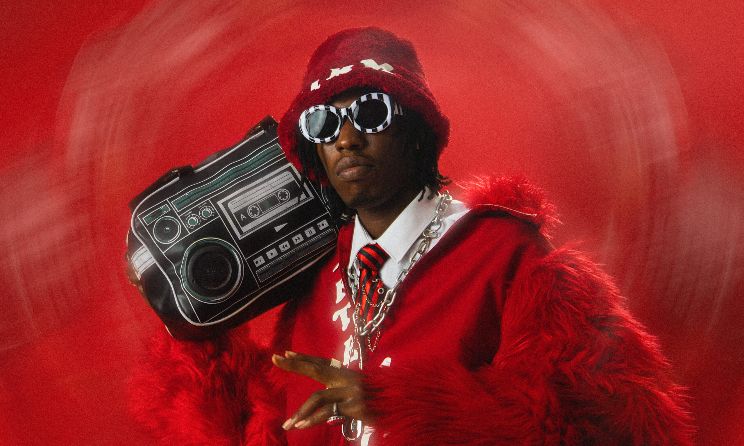
When it debuted, the uplifting record ignited a cultural moment in the country, as dancehall then dominated the music landscape, led by figures like Shatta Wale, Stonebwoy and Samini. For a young artist like J.Derobie, born Derrick Obuobi Jr, to make such an impact on his first attempt, especially with dancehall rather than the usual Afropop, was unprecedented.
One morning following its release, I was commuting to work in an Uber when ‘Poverty’ started playing. The driver turned to me and remarked, “This boy go make am!” His words, declaring career success for J.Derobie, carried sincerity and belief, and it struck me how the singer’s music instantly sparked conversations and connections, even among strangers in a cab.
I shared this story with J.Derobie recently, asking if he recognised that moment in the same way the rest of us did. The short answer is yes. “It was intense! I had to step away, pour water on myself, and just lie down. I didn’t even bother to clean up.” It gets better, or worse: “Even friends of mine didn’t believe what was happening. I was completely shocked and unprepared for how viral it went.”
Was the moment too big for his own good, I ask? “I deserved it. But like I said, it was unexpected.” The song’s unprecedented reach brought attention from industry heavyweights and icons he admired, such as Konshens and Mr Eazi.
“When you have the biggest song, it puts a spotlight on you. It accelerates things for you. It helps you reach the highest level,” J.Derobie says.
He is speaking from experience, for the record secured him a deal with Mr Eazi’s label emPawa Africa, a remix by Jamaican star Popcaan, and the Reggae/Dancehall Song of the Year Award at the 2020 Ghana Music Awards.
This monumental success also carried with it substantial pressure. “Everyone expected me to top it with something bigger. They were like, ‘He’s the guy who gave us ‘Poverty.’ He has to top that’.”
But life doesn’t always work like that. For J.Derobie, the best competition is always with oneself. “To grow and get better, you always need to make sure what you’re doing now is better than what you did before,” he says. “I’m always aiming to surpass that mark. I try to match or exceed that level, both in terms of writing and my skills.”
This is the same point he tries to prove with his new EP Firm After All, released on his independent record label Turf Way Records, following his exit from emPawa Africa.
J.Derobie tells me that the project, which was released in May after his 2022 album Grains From Love & Reality and his 2020 debut EP Nungua Diaries, is a soundtrack to “going for what your dreams are, chasing your dreams and fighting for what you want and what belongs to you.”
The inspiration for Firm After All came from a track on the EP titled ‘Still Firm’. “I was in the room, home alone, feeling lonely, feeling down.” Determined to overcome these emotions, he turned to his music equipment and found a beat that resonated with him.
The EP represents more than just a collection of songs for J.Derobie; it holds a significant place in his story. “I’m still around. I’m still there. I’m still doing music,” he says.
He proceeds to take me through other songs from the project. ‘Time’ discusses making hay while you still have daylight. ‘New Brand’ explores themes of personal transformation and growth. I press for more details. “I’ve learnt certain things, especially the business aspect of music,” he explains. I ask about his time at emPawa. He doesn’t disclose much, but credits his time with the company for providing crucial insights that contributed to his professional development.
J.Derobie also tells me about his journey from working odd jobs to pursuing music full-time. “I’ve garnered some experiences, like in learning to record myself. Right now, mostly I just go and then I record myself. When it comes to the creative aspect, the way I envision the music, that is how it comes out.”
We shift to talking about the misconceptions surrounding his rapid rise to fame, as portrayed in a mini-documentary released alongside the new EP. J.Derobie recounts the challenges of being perceived as an overnight success, when in reality his path has been fraught with hardships. “People didn’t see me coming up,” he laments. “Going to shows at the underground level, struggling to even secure platforms to perform my own songs.”
There are also thoughts about his unique position as a digital artist. “After I came up, a couple of artists also followed,” he notes, highlighting the shift towards digital platforms like TikTok in music promotion. “It’s all about creating content now. Things change a lot, and it’s been good so far.”
I ask J.Derobie about how he copes during times of uncertainty. Mostly, his first choice is a trip to the beach, to “enjoy the breeze, process things and see the way forward.”
On his devotion to reggae and dancehall in an era when Afrobeats reigns supreme, J.Derobie explains that people know him through those specific sounds. “I want to lean towards the dancehall side more and really cement that side properly. As an artist, you also have to listen to your fans and what they want from you. Most of my people are always calling for dancehall. And since they’re calling for dancehall, I have no option but to give them that. So far, the reception has been great, even though Afrobeats is the trendy genre. People still listen to dancehall. I go to the ghettos and it’s in every corner and every street. Dancehall is what they play. They don’t play Afrobeats. That’s only for partying. But personally, on their playlists, they play dancehall. Because of how personal dancehall is, people relate to it more,” he affirms.
This sentiment aligns with my theory that dancehall’s messaging, often rebellious and raw, speaks to listeners’ everyday realities and struggles. It is this authenticity that sets dancehall apart and makes it a mainstay in the hearts of his fans.
Yet, J.Derobie, a versatile voice, is no stranger to Afrobeats. “People do love Afrobeats,” he acknowledges, referencing his own hits like ‘Ginger Me’. He recounts a surprising encounter with a fan who, despite his tough exterior, declared ‘Ginger Me’ as his favourite song. “Every time I see him, he wants me to play that song,” J.Derobie laughs. “People talk about the Afrobeats songs, and they love them. But the reception from the dancehall side is more powerful than the Afro one.”
At this point, I float a hypothesis about J.Derobie’s musical identity: had he initially blown up with an Afrobeats track instead of a dancehall song, might he be perceived differently today? “Definitely. You’re accurate. That’s what people know you for. When you bring any different genre, they go like, ‘What’s going on?’ So they’ll now begin to go with you on that level. And as of now, people know I can do Afrobeats, too. That’s the best part of it. One day when I release an Afrobeats hit and it becomes great, people won’t be surprised.”
I bring up what I notice has been a recurring theme in our chat: J.Derobie’s desire to be understood. “Why do you care?” I ask.
“Why do I care? I have to care. People have to understand what it is. Let me put it this way. People have to understand who J.Derobie is and what he is about. I think that’s why I care. Another reason I care is my fans, for them to know that I ‘still dey with them’.”


Most popular

Top Naija songs of 2026
31 Mar 2026

Top Afrobeats songs of 2026
19 Mar 2026

Top amapiano songs of 2026
16 Feb 2026
Open call: CANEX Music Business Lab and Songwriting Camp
15 Oct 2026

Ghana: Mr Eazi and MOLIY’s ‘Comfort’ earns Urban Music Awards nomination
21 Oct 2026

Nigeria: CANEX WKND unveils 2026 programme
21 Oct 2026
Disclaimer: Music In Africa provides a platform for musicians and contributors to embed music and videos solely for promotional purposes. If any track or video embedded on this platform violates any copyrights please inform us immediately and we will take it down. Please read our Terms of Use for more.

Subscribe to our monthly Newsletter
Follow us on social media


Please log in to post a comment.