











































NEFCISA
NEFCISA

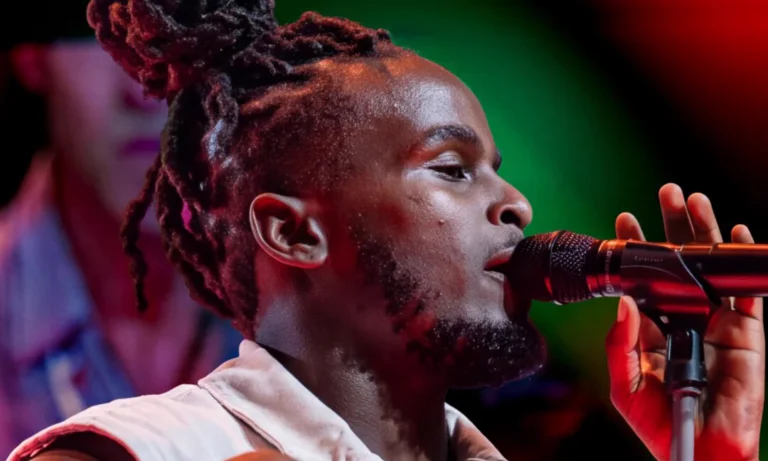
The Music In Africa Foundation (MIAF) is proud of its partnership with the Industrial Development Corporation (IDC) as a Strategic Implementing Partner (SIP) for its Social Employment Fund (SEF). Through this collaboration, MIAF is running a national programme that is creating jobs, addressing skills gaps, and strengthening South Africa's creative industries — in line with the SEF's overarching goal to generate work for the common good and build community value through employment, social contribution, and inclusive economic participation. Operating under the banner NEFCISA (National Employment Facility for Creative Industries in South Africa), the initiative is recruiting and training participants, matching them with host organisations, and has already placed 1 500 workers across the country — surpassing its original target of 1 000. NEFCISA is delivered through a network of 20 host organisations spanning five provinces, who are actively hosting participants and contributing to work for the common good across South Africa's creative and cultural industries. Key Objectives: Support employment and entrepreneurship in the creative industries. Offer skills development and training programmes. Foster partnerships between public and private creative sectors. Promote South African creativity at both provincial and national levels Foster community development through social contribution.

ACCES
ACCES

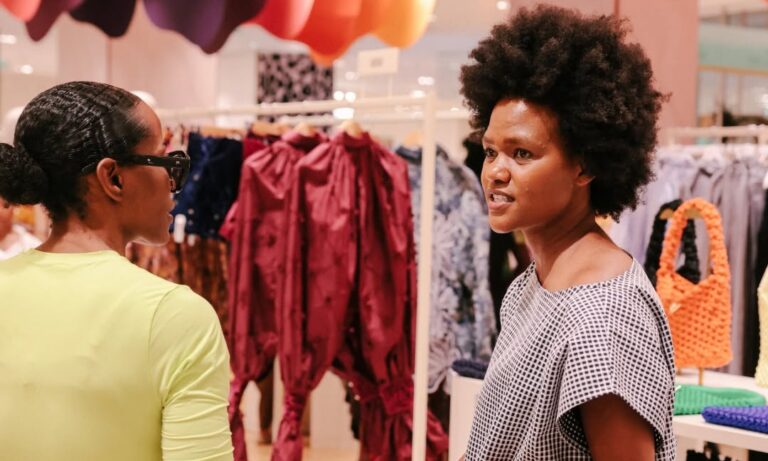
ACCES Conference and Showcase Festival is Africa's leading music industry gathering, bringing together the people shaping the future of the continent's music business. Artists, entrepreneurs, executives, investors, policymakers and cultural leaders from across Africa and around the world come to ACCES to build partnerships, exchange ideas, discover talent and create new business opportunities. Since its launch in 2017, ACCES has become the continent's premier platform for professional exchange and music market development. Combining a high-level conference with a curated showcase festival, networking, exhibitions and industry programmes, ACCES offers a unique space where creativity meets business and where African music connects with the global industry.

Gender@Work
Gender@Work

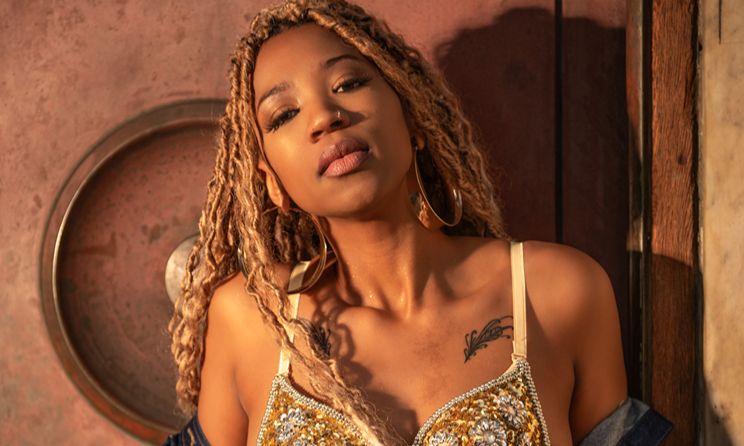
Music In Africa Gender @ Work is a three-year training programme aimed at upskilling and increasing the participation of female professionals in the African music sector. Launched by the Music In Africa Foundation (MIAF) in April 2019, the programme is connected to the MIAF’s ACCES music conference – a pan-African event held in a different African country every year. This connection enables the programme to reach new participants in a different African country every year. The programme marks the beginning of a more concerted effort by the Foundation to support the participation and inclusion of women in all facets of its programmes and the music sector in Africa as a whole. Over the three years, the programme will aim to address gender imbalances in the sector through training, lobbying, facilitating knowledge exchange and dialogues that foster the interest of women. The broader objectives of the programme are to: Provide industry training for women on critical music industry skills, focusing on: Stage management Electronic music production and recording Music business management Technical knowledge Provide an opportunity for both professional and aspiring women to benefit from the Music In Africa network and its broad range of activities in 2019, 2020 and 2021. Provide a solution-based platform in the form of a round table at ACCES with a view to identify challenges, discuss opportunities and lobby for the interests of female practitioners. Offer participants the opportunity to benefit from programmes offered by MIAF’s partners. Increase access to educational materials. Integrate participants in the broader ACCES programme to maximise experience and exposure to the industry. Record and present training materials on the www.musicinafrica.net, including but not limited to tutorials, templates and other best-practice materials. Communicate women-based themes that support the initiatives and messages of the programme. MAIN TRAINING ACTIVITIES Training in first country (Ghana): In the first year, participants will be trained on all aspects of stage management by a team of experienced stage managers from 10 to 17 November 2019. The programme will offer robust classroom training as well as practical, hands-on training in which participants will also be given the opportunity to manage various aspects of the ACCES performance programme. Training in second country: The second training iteration will take place at ACCES 2020 when the programme will diversify its course to include music production lessons and training on other music business topics. A round-table platform will also be introduced to coincide with the ACCES programme. Training in third country: The third training iteration will take place at ACCES 2021 in a different country, offering an advanced course. HOW DO YOU GET INVOLVED?  As a participant, facilitator or trainer: The programme enrolls up to 12 trainees every year. All opportunities are advertised publicly on this website, and will be added to this page. Please keep checking this page for new calls (below under UPDATES & CURRENT OPPORTUNITIES). As a partner Please contact Claire Metais at [email protected]. APPLY The call for applications for 2020 will be announced soon. The Music In Africa Gender @ Work programme is made possible with the support of the Prince Claus Fund, Siemens Stiftung and Goethe-Institut.

Sound Connects Fund
Sound Connects Fund

For cultural and creative practitioners and organisations operating in southern Africa, access to funding remains a major challenge. The COVID-19 pandemic has also had a massive impact on government policy, spending and the economy in general, and has seen spending on culture being moved further down the list of priorities. Further, the cultural and creative industries repeatedly cite four main areas where investment is needed for growth, which are increased visibility, mobility including access to new markets, finance and support structures.

Instrument Building And Repair Project

Experience the Vibrations African Instruments Exhibition online in 3D

Reviews

Lindsey Abudei — And the Bass is Queen

02 Dec 2016 - 07:56

cc-img flag-img

Artist: Lindsey Abudei
Album: …and the Bass is Queen
Label, Year: Stealth Entertainment, 2016

Lindsey Abudei has released a terrific first album

Lindsey Abudei can sing. Lindsey Abudei can write a song. In the Nigerian music scene, those two qualities are too radical for a single artist. The album that confirms both statements is named …And the Bass is Queen. It is Ms Abudei’s debut album, and is possibly the very best album released by a Nigerian in 2016.

She’s been here before—Ms Abudei has been on songs by fellow Jos-raised artist Jesse Jagz, and back in 2013 she released an EP, Brown. Many missed it. Those familiar with the Abuja culture scene over the last half-decade were luckier: Ms Abudei was a fixture, occasionally jamming with Laolu Sebanjo, who is now known mostly for his work on Beyonce’s Lemonade. Staying away from Lagos means the singer-songwriter has had limited access to the centre of the Nigerian music industry. If you think of that as a mistake, you are both right and wrong.

Lagos gives prominence to the working artist but there’s no purity in the land. Lagos is the place where everyone and everything—including art, especially art—bows before commerce. In Lagos, the thought is never “How can we make this art better?” It is always: “How can we sell this?” If you think both questions are related, then you don’t belong in Lagos.

It may prove unpopular but I’ll make a declaration: there is no chance a Lagosian could have made an album as personal, precious, fragile and free as Bass is Queen. Lagos makes a Yemi Alade not a Lindsey Abudei. And Ms Abudei knows just how much her music comes from artistic liberty. “My freedom and I, we were born to live together,” she sings on ‘Freedom and I.’ The song starts off as a testament to individual freedom, and along the line becomes a tribute to nationhood:

The dream will not die
We would learn to live together
This land would abide
And we would sing this song forever
If it’s too wide. we’ll build a bridge across it
If it’s too high, we’ll bring it down

On the lips of another artist, these words might come off as cheap and patronising, instead it is both personal and patriotic. This is because a large part of the success of this remarkable debut album is the nature of Ms Abudei’s vocals. She is every bit as convincing and unpretentious singing about her country as when she sings about a love interest. And, as the artist is a young woman, love naturally takes a fair portion of the album. On one of the weaker songs on the album, the words “I love you” are repeated with what sounds like increasing anguish, the kind that only love, that paroxysm of madness, can cause. Like most repetitive sections of songs, it teeters close to the unbearable—and yet you may find yourself wanting to be the object of such earnest love.

The album’s love songs are not all adulatory. “Apologize,” for example, is a love song coloured with contrition. In its remorseful words, it’s possible to see both a love interest and, if you are that kind of a listener, the Christian God:

I realise I am nothing without you
Cos you are my king
You are my all
And I can do nothing without you
I have been too foolish
And I’ve been too proud
I realise I am nothing without you

This association of godly and human love recalls an interpretation of the Songs of Solomon. According to Christian thought, the unabashed declarations of love (and lust) in that book of the Bible is between Christ and the church. It is however only a partial connection because Lindsey Abudei avoids erotic expressions. (In this way, she is different from both the Bible—and Banky W, who is the one Nigerian artist who has used religious imagery to suggest sex. Two examples: On last year’s ‘High Notes,’ he sang “She just went down on her knees and started blessing me” to describe a blow job. This year, he deploys a church choir to chorus the words “She has been with everybody else” in a line about sexual promiscuity in the video for ‘Gidi Love.’)

Unlike her contemporaries, Ms Abudei puts production and songwriting on equal footing. She enunciates clearly; she sings wonderfully; and the beat throughout the album is stellar but never intrusive. On occasion, as on ‘Home (Free)’ she coos to the beat, giving the listener yards and yards of sound to get lost in. It is a technique used by her pop music colleagues to perhaps allow the listener enjoy some dancing. On Bass is Queen the withdrawal of lyrics serves a different purpose: it sets up an atmosphere—a rare quality these days.

The album’s last two songs—‘Shoot Them Down’ and the aptly named ‘Leaving’—retain the atmospherics but switch the tempo to a delightfully groovy vibe. These pair of songs may not yield to the shoki dance but the songs seem designed for two persons, one of whom ideally would be both leggy and lithe.

Ms Abudei is clearly influenced by the west. Who isn’t? Her influences are in R&B from the nineties and early 2000s. (She paid tribute on Brown with an up-tempo song named ‘The 90s Song.’) These days when we celebrate what might be called indigenous sounds, it is easy to forget that we may also call it homogenous sounds. Radio hits are alike. With some variation, Reekado Banks is Wizkid is Wande Coal. That thread of Nigerian music has barely changed face in about a decade.

To an extent, that bit of Nigerian music was set in motion by Don Jazzy who brought in tricks learned from his time in the west. Thus, the contemporary sound does owe an uncertain debt to the west. What Lindsey Abudei does on Bass is Queen is take a different bit of the western sound and filter it through her own Nigerian experience. Other acts who have done similar channelling include Bez and Asa. Lindsey Abudei is perhaps the purest singer of the group. Her album is an act of courage, a quality easily dismissible as empty—it neither sells albums nor makes anyone dance—in the pop music scene. Not this time though, and that’s because …and the Bass is Queen is both original and pleasurable. It is one of the best albums released by a Nigerian in a decade.


Buy Lindsey Abudei's ...and the Bass is Queen on iTunes. Listen on Soundcloud.

Please log in to post a comment.

Most popular

Disclaimer: Music In Africa provides a platform for musicians and contributors to embed music and videos solely for promotional purposes. If any track or video embedded on this platform violates any copyrights please inform us immediately and we will take it down. Please read our Terms of Use for more.

newsletter banner

Subscribe to our monthly Newsletter

Follow us on social media