











































NEFCISA
NEFCISA

The Music In Africa Foundation (MIAF) is proud of its partnership with the Industrial Development Corporation (IDC) as a Strategic Implementing Partner (SIP) for its Social Employment Fund (SEF). Through this collaboration, MIAF is running a national programme that is creating jobs, addressing skills gaps, and strengthening South Africa's creative industries — in line with the SEF's overarching goal to generate work for the common good and build community value through employment, social contribution, and inclusive economic participation. Operating under the banner NEFCISA (National Employment Facility for Creative Industries in South Africa), the initiative is recruiting and training participants, matching them with host organisations, and has already placed 1 500 workers across the country — surpassing its original target of 1 000. NEFCISA is delivered through a network of 20 host organisations spanning five provinces, who are actively hosting participants and contributing to work for the common good across South Africa's creative and cultural industries. Key Objectives: Support employment and entrepreneurship in the creative industries. Offer skills development and training programmes. Foster partnerships between public and private creative sectors. Promote South African creativity at both provincial and national levels Foster community development through social contribution.

ACCES
ACCES

ACCES Conference and Showcase Festival is Africa's leading music industry gathering, bringing together the people shaping the future of the continent's music business. Artists, entrepreneurs, executives, investors, policymakers and cultural leaders from across Africa and around the world come to ACCES to build partnerships, exchange ideas, discover talent and create new business opportunities. Since its launch in 2017, ACCES has become the continent's premier platform for professional exchange and music market development. Combining a high-level conference with a curated showcase festival, networking, exhibitions and industry programmes, ACCES offers a unique space where creativity meets business and where African music connects with the global industry.

Gender@Work
Gender@Work

Music In Africa Gender @ Work is a three-year training programme aimed at upskilling and increasing the participation of female professionals in the African music sector. Launched by the Music In Africa Foundation (MIAF) in April 2019, the programme is connected to the MIAF’s ACCES music conference – a pan-African event held in a different African country every year. This connection enables the programme to reach new participants in a different African country every year. The programme marks the beginning of a more concerted effort by the Foundation to support the participation and inclusion of women in all facets of its programmes and the music sector in Africa as a whole. Over the three years, the programme will aim to address gender imbalances in the sector through training, lobbying, facilitating knowledge exchange and dialogues that foster the interest of women. The broader objectives of the programme are to: Provide industry training for women on critical music industry skills, focusing on: Stage management Electronic music production and recording Music business management Technical knowledge Provide an opportunity for both professional and aspiring women to benefit from the Music In Africa network and its broad range of activities in 2019, 2020 and 2021. Provide a solution-based platform in the form of a round table at ACCES with a view to identify challenges, discuss opportunities and lobby for the interests of female practitioners. Offer participants the opportunity to benefit from programmes offered by MIAF’s partners. Increase access to educational materials. Integrate participants in the broader ACCES programme to maximise experience and exposure to the industry. Record and present training materials on the www.musicinafrica.net, including but not limited to tutorials, templates and other best-practice materials. Communicate women-based themes that support the initiatives and messages of the programme. MAIN TRAINING ACTIVITIES Training in first country (Ghana): In the first year, participants will be trained on all aspects of stage management by a team of experienced stage managers from 10 to 17 November 2019. The programme will offer robust classroom training as well as practical, hands-on training in which participants will also be given the opportunity to manage various aspects of the ACCES performance programme. Training in second country: The second training iteration will take place at ACCES 2020 when the programme will diversify its course to include music production lessons and training on other music business topics. A round-table platform will also be introduced to coincide with the ACCES programme. Training in third country: The third training iteration will take place at ACCES 2021 in a different country, offering an advanced course. HOW DO YOU GET INVOLVED?  As a participant, facilitator or trainer: The programme enrolls up to 12 trainees every year. All opportunities are advertised publicly on this website, and will be added to this page. Please keep checking this page for new calls (below under UPDATES & CURRENT OPPORTUNITIES). As a partner Please contact Claire Metais at [email protected]. APPLY The call for applications for 2020 will be announced soon. The Music In Africa Gender @ Work programme is made possible with the support of the Prince Claus Fund, Siemens Stiftung and Goethe-Institut.

Sound Connects Fund
Sound Connects Fund

For cultural and creative practitioners and organisations operating in southern Africa, access to funding remains a major challenge. The COVID-19 pandemic has also had a massive impact on government policy, spending and the economy in general, and has seen spending on culture being moved further down the list of priorities. Further, the cultural and creative industries repeatedly cite four main areas where investment is needed for growth, which are increased visibility, mobility including access to new markets, finance and support structures.

Instrument Building And Repair Project

Experience the Vibrations African Instruments Exhibition online in 3D

Features

More Ugandan musicians turn to politics as Bobi Wine rattles Museveni status quo

13 Jan 2021 - 12:34

cc-img flag-img

Bobi Wine was the first musician in Uganda to be elected as MP in 2017. He is now the youngest presidential candidate in the upcoming general election on 14 January, when the 38 year old will be the main challenger to President Yoweri Museveni’s almost four-decade grip on power.
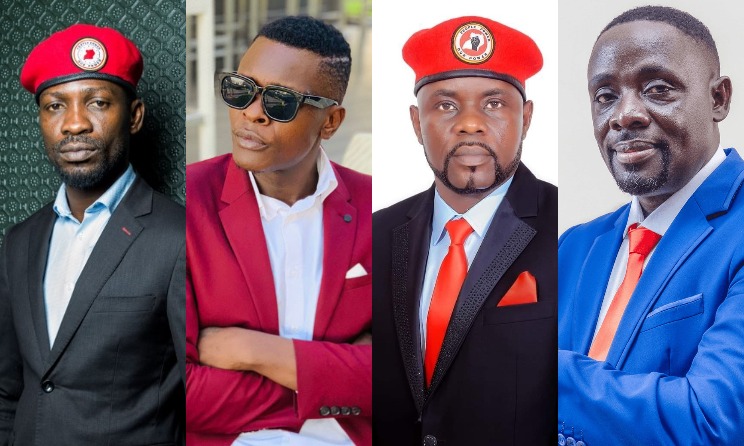
Bobi Wine, Jose Chameleone, Mathias Walukagga and Geoffrey Lutaaya are among the musicians seeking political seats.

Bobi Wine, whose real name is Robert Kyagulanyi, is running on the National Unity Platform ticket and his manifesto pledges prosperity for Ugandans, especially the youth. It also promises improvements to the health-care, education and agriculture sectors as well as equal opportunities for all, built on the pillars of transparency, unity and human rights.

But Bobi Wine is not the only musician seeking legislative, mayoral or district leadership seats across Uganda. Hilderman, Kato Lubwama, Geoffrey Lutaaya and Katongole Omutongole have been campaigning for parliamentary seats, while one of Uganda’s best known musicians, Joseph Mayanja (popularly known as Jose Chameleone), will be running for mayor in the capital Kampala against reggae-dancehall artist Ragga Dee. Councillorship hopefuls for the Makindye, Bunamwaya, Lubaga North and Kampala Central Division municipalities are Dr Bitone, DJ Jacob Omutuuze, Victor Kamenyo and Sophie Gombya, respectively. Mathias Walukagga will be contesting the Kyengera Town Council mayoral seat in Wakiso District.

“I am not surprised that many artists are contesting,” Ugandan musician and activist Maro told Music In Africa. “Politicians and musicians have a lot in common, including the fact that both have to engage the public and often push for a cause.”

Campaigning ahead of the elections has been tense. Bobi Wine and other opposition candidates have faced restrictions on movement, intimidation and harassment from the police. He began wearing a bulletproof vest after his car was shot at and an explosive device was detonated near him while on the campaign trail. He and his team say they spent several nights sleeping in their vehicles after officials prevented them from booking into hotels. On 12 January, he said soldiers raided his home on Tuesday and arrested his security guards. “The army has this morning raided my home, arrested all my security guards and anyone they could see around my premises,” he wrote on Twitter.

There have also been numerous arrests of activists, journalists and those presumed to be opposition supporters. Local and international media reported that more than 50 people were killed in violent clashes between anti-Museveni protesters and security forces in Kampala last November. Thus far, there has been no official inquiry into the extrajudicial killings and human rights violations by security forces.

“More than 1 000 of our supporters have been kidnapped,” Bobi Wine said in a New Year’s address on 2 January. “Some are being held in military incarceration while others have disappeared and are yet to be seen.”

Maro says although many Ugandans are looking forward to the end of Museveni’s reign, it is likely that the 76 year old will add another presidential victory to his name. “Museveni commands loyalty from public institutions, the security forces and much of the bureaucracy that has benefited from his long stay in power. For example, the Electoral Commission has in previous elections been accused of anti-opposition bias.”

Maro added that if Museveni lost the election, he would likely not concede defeat. In 2005, Uganda’s MPs voted to remove a limit of two five-year presidential terms, which blocked Museveni from standing at the time. In 2017, when Bobi Wine was picking up political steam, the National Resistance Movement majority Parliament amended a constitutional clause that limited the age of a presidential candidate at 75 years.

“The stakes are high for a Bobi Wine victory, but there are doubts that the election will be fair,” Maro said. “The public’s faith in the commission’s confidence is low, and conditions for a free and fair vote do not exist. When Museveni was first elected, he promised to hand power to the civilians, but he went back on his word. Therefore, he will not accept anything less than a victory. If there are claims of election fraud from either side, there is a likelihood that violence will occur. So the party leaders’ key challenge would be to stop it from cascading and avoid further bloodshed.”

Please log in to post a comment.

Most popular

Disclaimer: Music In Africa provides a platform for musicians and contributors to embed music and videos solely for promotional purposes. If any track or video embedded on this platform violates any copyrights please inform us immediately and we will take it down. Please read our Terms of Use for more.

newsletter banner

Subscribe to our monthly Newsletter

Follow us on social media