














































NEFCISA
NEFCISA

The Music In Africa Foundation (MIAF) is proud of its partnership with the Industrial Development Corporation (IDC) as a Strategic Implementing Partner (SIP) for its Social Employment Fund (SEF). Through this collaboration, MIAF is running a national programme that is creating jobs, addressing skills gaps, and strengthening South Africa's creative industries — in line with the SEF's overarching goal to generate work for the common good and build community value through employment, social contribution, and inclusive economic participation. Operating under the banner NEFCISA (National Employment Facility for Creative Industries in South Africa), the initiative is recruiting and training participants, matching them with host organisations, and has already placed 1 500 workers across the country — surpassing its original target of 1 000. NEFCISA is delivered through a network of 20 host organisations spanning five provinces, who are actively hosting participants and contributing to work for the common good across South Africa's creative and cultural industries. Key Objectives: Support employment and entrepreneurship in the creative industries. Offer skills development and training programmes. Foster partnerships between public and private creative sectors. Promote South African creativity at both provincial and national levels Foster community development through social contribution.

ACCES
ACCES

ACCES Conference and Showcase Festival is Africa's leading music industry gathering, bringing together the people shaping the future of the continent's music business. Artists, entrepreneurs, executives, investors, policymakers and cultural leaders from across Africa and around the world come to ACCES to build partnerships, exchange ideas, discover talent and create new business opportunities. Since its launch in 2017, ACCES has become the continent's premier platform for professional exchange and music market development. Combining a high-level conference with a curated showcase festival, networking, exhibitions and industry programmes, ACCES offers a unique space where creativity meets business and where African music connects with the global industry.

Gender@Work
Gender@Work

Music In Africa Gender @ Work is a three-year training programme aimed at upskilling and increasing the participation of female professionals in the African music sector. Launched by the Music In Africa Foundation (MIAF) in April 2019, the programme is connected to the MIAF’s ACCES music conference – a pan-African event held in a different African country every year. This connection enables the programme to reach new participants in a different African country every year. The programme marks the beginning of a more concerted effort by the Foundation to support the participation and inclusion of women in all facets of its programmes and the music sector in Africa as a whole. Over the three years, the programme will aim to address gender imbalances in the sector through training, lobbying, facilitating knowledge exchange and dialogues that foster the interest of women. The broader objectives of the programme are to: Provide industry training for women on critical music industry skills, focusing on: Stage management Electronic music production and recording Music business management Technical knowledge Provide an opportunity for both professional and aspiring women to benefit from the Music In Africa network and its broad range of activities in 2019, 2020 and 2021. Provide a solution-based platform in the form of a round table at ACCES with a view to identify challenges, discuss opportunities and lobby for the interests of female practitioners. Offer participants the opportunity to benefit from programmes offered by MIAF’s partners. Increase access to educational materials. Integrate participants in the broader ACCES programme to maximise experience and exposure to the industry. Record and present training materials on the www.musicinafrica.net, including but not limited to tutorials, templates and other best-practice materials. Communicate women-based themes that support the initiatives and messages of the programme. MAIN TRAINING ACTIVITIES Training in first country (Ghana): In the first year, participants will be trained on all aspects of stage management by a team of experienced stage managers from 10 to 17 November 2019. The programme will offer robust classroom training as well as practical, hands-on training in which participants will also be given the opportunity to manage various aspects of the ACCES performance programme. Training in second country: The second training iteration will take place at ACCES 2020 when the programme will diversify its course to include music production lessons and training on other music business topics. A round-table platform will also be introduced to coincide with the ACCES programme. Training in third country: The third training iteration will take place at ACCES 2021 in a different country, offering an advanced course. HOW DO YOU GET INVOLVED?  As a participant, facilitator or trainer: The programme enrolls up to 12 trainees every year. All opportunities are advertised publicly on this website, and will be added to this page. Please keep checking this page for new calls (below under UPDATES & CURRENT OPPORTUNITIES). As a partner Please contact Claire Metais at [email protected]. APPLY The call for applications for 2020 will be announced soon. The Music In Africa Gender @ Work programme is made possible with the support of the Prince Claus Fund, Siemens Stiftung and Goethe-Institut.

Sound Connects Fund
Sound Connects Fund

For cultural and creative practitioners and organisations operating in southern Africa, access to funding remains a major challenge. The COVID-19 pandemic has also had a massive impact on government policy, spending and the economy in general, and has seen spending on culture being moved further down the list of priorities. Further, the cultural and creative industries repeatedly cite four main areas where investment is needed for growth, which are increased visibility, mobility including access to new markets, finance and support structures.

Instrument Building And Repair Project

Experience the Vibrations African Instruments Exhibition online in 3D

News

MTN Bushfire 2026 attracts 23 000 festivalgoers from 55 countries

17 Jun 2026 - 12:33

cc-img flag-img

By Livhuwani Malelelo and Moletsane A. Rampai 

The 2026 edition of MTN Bushfire attracted more than 23 000 attendees from over 55 countries, with organisers reporting growth in visitor numbers, tourism activity and participation across the three-day event held in eSwatini from 29 to 31 May.
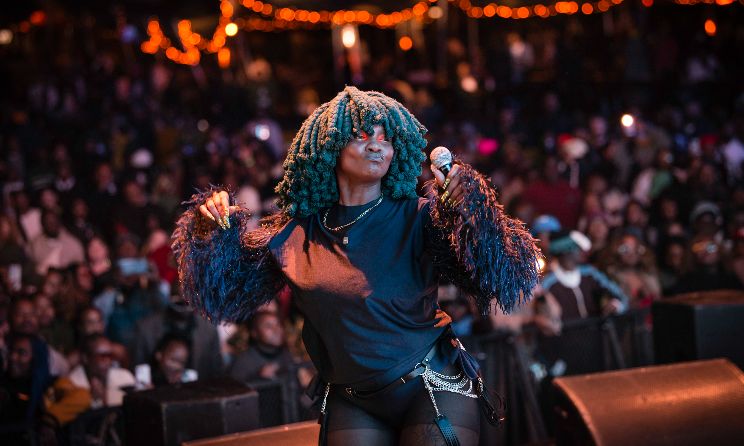
South African artist Moonchild Sanelly performing at Bushfire 2026.

The festival, hosted at House On Fire in Malkerns, featured a programme of music, arts, advocacy and cultural activities. Organisers said the event brought together 378 artists across 96 acts from 20 countries.

According to figures released after the festival, eSwatini recorded 50,403 arrivals during the festival weekend, including 28,392 international visitors and 22,011 EmaSwati living abroad. The total represented an 11.5% increase compared to arrival figures recorded during the same period in 2025.

Visitors travelled from several countries, with the largest numbers arriving from South Africa, Mozambique, Zimbabwe, Lesotho, Tanzania, the United States, France, the Netherlands, the United Kingdom and Germany.

Accommodation establishments also reported increased occupancy levels during the festival period, with occupancy reaching 73% in Mbabane, 80.5% in Ezulwini and 82.3% in Manzini. Air traffic increased during the festival weekend, with 32 aircraft arriving at King Mswati III International Airport between 28 and 29 May, compared to 23 aircraft during the corresponding period in 2025.

In a statement, eSwatini’s Ministry of Home Affairs said the figures reflected the event's continued appeal.

“The slight rise in total arrivals, including those arriving by air, reflects the ongoing appeal of the festival and underscores eSwatini’s sustained efforts to facilitate a welcoming environment for all guests. The Immigration Department remains committed to ensuring smooth border crossings, efficient processing, and the safety and security of all attendees for a successful festival weekend.”

Festival director Jiggs Thorne said the event continued to contribute to tourism and economic activity in the country.

“We are deeply grateful to all the Fire Starters that made their way to eSwatini during the festival weekend, the Lobamba Lomdzala community, and our lead sponsor MTN, whose unwavering support made this festival possible. To all our partners who contributed in ways big and small, thank you,” Thorne said.

“Reflecting on this year's edition, it is humbling to see the continued impact the festival has, not only in bringing people together through music and culture, but in driving real economic activity and showcasing eSwatini on a regional and international stage. We look forward to building on this momentum.”

Organisers said the festival's economic impact extends beyond ticket sales through spending on accommodation, transport, hospitality, retail and creative industries. The 2025 edition generated E121.2 million for eSwatini’s economy, according to previously released figures.

Several initiatives aimed at supporting local businesses and service providers continued during the 2026 event. These included the Food Passport programme, which encouraged visitors to explore different trading areas across the festival site, and the Park n’ Ride shuttle service, operated by local transport providers.

A total of 1 858 festivalgoers used the shuttle service this year, compared to 1 700 in 2025.

The festival programme featured performances from artists representing a range of musical traditions and genres. Among the headline acts were Uncle Waffles, whose performance marked a return to her home country, and Hope Masike, who presented a set centred on Zimbabwean mbira music.

Other notable performances included a collaboration between Lindigo and Anna Sato, a tribute to the late Busi Mhlongo featuring Xolisa Dlamini, Buhlebendalo and Zawadi Yamungu, and a performance by Congolese group Jupiter & Okwess. South African kwaito artist Kabelo Mabalane closed the festival’s final evening.

Beyond music, the festival hosted advocacy and community engagement activities through the Bring Your Fire Zone, which featured 11 organisations and a mobile health clinic. Discussions focused on environmental sustainability, healthcare access, HIV prevention and minority rights.

The annual Unity Parade attracted approximately 200 participants, while the MTN Bushfire Arts Round Table, organised in partnership with the Africa Rising Music Conference, brought together 22 international delegates, 24 speakers and more than 180 attendees for discussions on developments within the creative industries.

The festival also hosted the Vuts’Umlilo showcase, highlighting emerging talent from eSwatini.

The next edition of MTN Bushfire is scheduled to take place from 28 to 30 May 2027 and will mark the festival's 20th anniversary.

Please log in to post a comment.

Most popular

Disclaimer: Music In Africa provides a platform for musicians and contributors to embed music and videos solely for promotional purposes. If any track or video embedded on this platform violates any copyrights please inform us immediately and we will take it down. Please read our Terms of Use for more.

newsletter banner

Subscribe to our monthly Newsletter

Follow us on social media