

























































By Fred Zindi
Music has an important function in the development of culture in any society and is an important subject in the holistic development of learners. Nurturing children’s music talent also promotes the development of skills in key academic areas such as mathematics and science[i]. Music is therefore as important as the three R’s (reading, writing and arithmetic) and other so-called “intellectual” subjects.
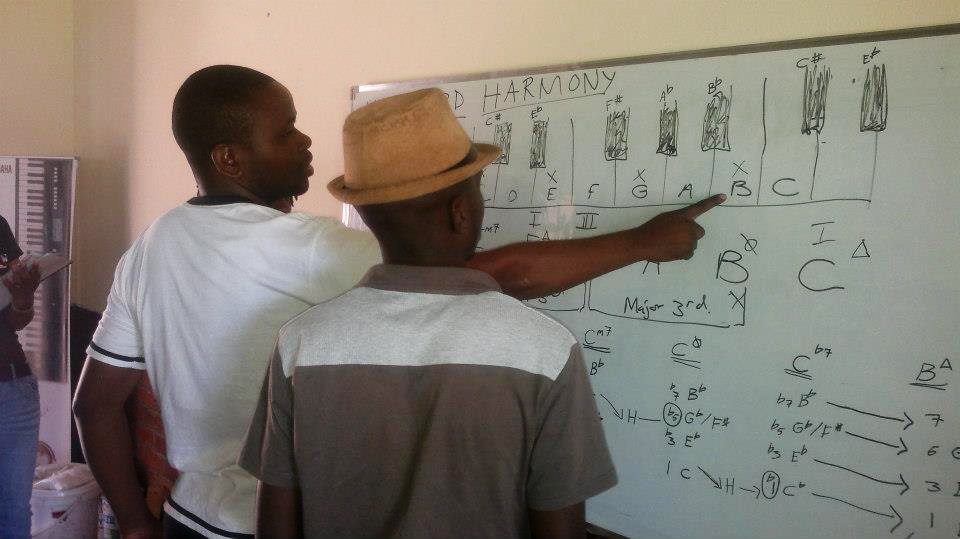
As early as 1964, Alan Merriam, a renowned anthropologist and researcher in music education, identified 10 functions of music which he used to justify the inclusion of music in the school curricula[ii]. A recent study carried out in Germany by Jacobs (2013) showed that schools with strong music departments achieved higher academic standards when compared with those with little or no music departments[iii].
In view of this, one would think that since Zimbabweans are so proud of their culture, they would include music as one of its compulsory subjects within the school curriculum in the education system. However, this is not the case at the moment. There is no clear policy on cultural activity in Zimbabwe and music education has become a victim of this.
Music Education in Primary and Secondary Schools
For years, Zimbabwe’s music educators have been engaged in endless struggles to justify the inclusion of music in school curricula, but without success. When Stephen Chifunyise, a well-known cultural activist in Zimbabwe, became secretary of Education, Sport and Culture in 2004, the ministry made the teaching of music compulsory from grades 1 to 7 in the primary school. The Zimbabwe Primary School Syllabus, which had been drafted as far back as 1989, was put in force. However, the majority of teachers in these primary schools were not trained in music and therefore could not implement it. Due to the fact that it was not an examinable subject, the music syllabus was done away with by most schools, except those who had the expertise. Attempts by the Zimbabwe Schools Examinations Council (ZIMSEC)[iv] to establish an ordinary level music syllabus for secondary schools were met with the same fate.
Only those few schools with dedicated music teachers have placed music education on their syllabuses or teach music as an extra-curricular activity for interested students. These include Prince Edward School[v], Churchill Boys High School[vi], St George’s College[vii], Gateway Primary[viii] and High Schools and the Harare International School[ix] in Harare; Falcon College[x] in Esigodini; Girls’ College[xi] in Bulawayo; and the Peterhouse group of schools in Marondera[xii]. However, many of these schools are private institutions that are far too expensive for most Zimbabweans to afford. Furthermore, timetables that include music are often rendered ineffective as many teachers prefer to use the music periods for teaching extra mathematics or other subjects which they consider to be more important.
As a way to spread music education more fairly, prominent Zimbabwean musician Oliver Mtukudzi in 2003 opened the Pakare Paye Arts Centre[xiii], situated in Norton, 40km outside Harare. Here youngsters learn to play musical instruments free of charge. The centre hosts regular live events, such as the annual Schools Solo Festival.
Music Education at Tertiary Level
The Department of Teacher Education at the University of Zimbabwe[xiv] in Harare offers music education courses to Bachelor of Education and Master of Education degree students who already possess qualifications in music from teachers’ colleges. More recently, other universities such as Great Zimbabwe University[xv] in Masvingo, Midlands State University[xvi] in Gweru and Africa University[xvii] near Mutare have also embarked on offering music degrees, although the impact of this is yet to be seen. Elsewhere, teachers’ colleges such as the Mutare Teachers’ College[xviii] in Mutare train students to teach music after their graduation. However, these institutions typically concentrate on the “more important” academic subjects and leave music out of their main timetables, meaning that very few schools ultimately benefit from the music training these teachers receive.
It is mainly through the efforts of established private institutions that formal music education is provided in Zimbabwe. The most prominent of these is the Zimbabwe College of Music (ZCM)[xix] in Harare. Founded by Eileen Reynolds in 1947, the college aims to provide comprehensive training in all branches of music to students of all races and social backgrounds. It also seeks to promote and develop an appreciation of music among the general public. Here students are trained to read and write music, to dance and sing. In addition, they also teach communication skills and give practical lessons in playing instruments such as the drums, violin, mbira, keyboards, marimba, ngoma, flute, oboe, trumpet saxophone and other wind instruments. Guitar lessons have long been popular at the college and two styles are taught: classical and folk. Piano training is offered in contemporary, classical and jazz styles. Programmes in which these instruments are taught include Ethnomusicology and Jazz. Other programmes studied at the college are: The Music Business, Music Rights, Sound Engineering, World Music Studies, Organology, Harmony and Melody Structures, Compositional Studies and Research. These courses can be taken at various levels: National Certificate in Music, Bandmasters Diploma or Degree.
Another college of note is the Kwanongoma College of African Music in Bulawayo, Zimbabwe’s second largest city. The college was founded in 1960 by Robert Sibson with the assistance of Hugh and Andrew Tracey to provide lessons in traditional music to the Zimbabwean population. It has since been incorporated into the United College of Education (UCE)[xx]. At this institution, traditional African instruments such as ngoma, mbira and marimba are taught.
In the same city, the Zimbabwe Academy of Music (ZAM)[xxi] offers private tuition in music to all races and ages. Based in Famona, Bulawayo, the academy was founded in 1949 and is a non-profit organisation offering individual tuition in various instruments as well as singing. Individual and group lessons in marimba and mbira are also available. It has approximately 170 students between the ages of 6 and 80. There are also weekly theory classes for all grades, a percussion band, recorder groups and a small choir, the Academy Singers. The academy’s School of Rock teaches guitar, drumming and singing and runs its own pop band. Students are entered for international examinations, either ABRSM or Trinity and Guildhall. Internal assessments are offered for lower grade practical examinations, while for Grade 6 and above, candidates travel to either South Africa or Botswana. In recent years the academy has been the driving force behind the Bulawayo Music Festival and also hosts regular activities in the renowned Robert Sibson Hall.
Another important educational initiative is Music Crossroads Zimbabwe (MCZim, also known as the MCZ Trust), a founding member of the Music Crossroads International[xxii] programme that spreads throughout Southern Africa. It was initiated in Zimbabwe in 1995 by Jeunesses Musicales International (JMI)[xxiii]. MCZim aims to improve self-awareness and social inclusion for the youth and to develop Zimbabwe’s music infrastructure. It has launched the careers of hundreds of artists nationwide, including Progress Chipfumo, First Farai, Munyaradzi Munodawafa, Willom Tight, Bongo Love, Liyana and Ihawu Lesizwe. The Music Crossroads Inter-Regional Festival is an annual competition for the best bands representing various countries in Southern Africa and has helped launch the careers of Zimbabwean bands like Mokoomba and Club Shanga. In 2013, the Music Crossroads Academy[xxiv] was established in Budiriro, Harare. It teaches both traditional and western instruments, and students enrolled at the college graduate with a diploma in music.
Recommendations
Concerns about the current state of music education in Zimbabwean schools are based on the conviction that this specific subject area is of the utmost importance in ensuring the holistic development of all learners. Children who excel in the arts but struggle in other subjects can learn a lot through music and stand to benefit from playing an instrument and singing if they fail academically. It is indisputably clear how important it is to conceive of music as part of mainstream education to the benefit not only of each individual, but also to society at large. Yet this is still to be implemented, as the potential contributory role of music education in Zimbabwe is not always recognised. Curriculum planners should therefore seriously consider including music education in every school’s syllabus. The government should re-align the Education Act to ensure that Arts and Culture are also given priority in the school system.
Music education has the potential not only to nurture the emotional development of individual Zimbabwean learners, but also to enhance harmonious social interaction between these learners and aid the country as a whole. Indeed music education can be one of the avenues through which a peaceful society can be achieved[xxv]
[i] Whitthall, A. 2002. “Rhythm Chambers”. The Oxford Companion to Music. Oxford University Press. [ii] Merriam, A.P. 1964. The Anthropology of Music. Northwest University Press [iii] Jacobs, T. 2013. “Music Lessons Boost Emotional, Intellectual Development”. The Science of Society. See also Hallam, S. & J. Price. 1998. “Music and Academic Performance”. British Journal of Special Education. [iv] www.zimsec.co.zw [v] www.peschool.ac.zw [vi] www.churchill.ac.zw [vii] www.stgeorges.co.zw [viii] www.gatewayprimary.co.zw [ix] www.harareinternationalschool.com [x] www.falconcollege.com [xi] www.girlscollegebulawayo.org [xii] www.peterhouse.co.zw [xiii] www.facebook.com/PakarePayeArtsCentre [xiv] www.uz.ac.zw [xv] www.gzu.ac.zw [xvi] www.msu.ac.zw [xvii] www.africau.edu [xviii] www.mutareteachers.ac.zw [xix] www.zcm.co.zw [xx] Contact the college at: [email protected] [xxi] www.zimbabwemusicacademy.org [xxii] www.music-crossroads.net [xxiii] www.jmi.net [xxiv] www.music-crossroads.net/zimbabwe [xxv] Zindi, F. 2013. “School Syllabi Must Embrace Music Education”. The Herald, 13 August. http://allafrica.com/stories/201308130425.html
Disclaimer: Music In Africa's Overviews provide broad information about the music scenes in African countries. Music In Africa understands that the information in some of these texts could become outdated with time. If you would like to provide updated information or corrections to any of our Overview texts, please contact us at [email protected].


Most popular

Top Naija songs of 2026
31 Mar 2026

Top Afrobeats songs of 2026
19 Mar 2026

Ghana: Mr Eazi and MOLIY’s ‘Comfort’ earns Urban Music Awards nomination
21 Oct 2026

Top amapiano songs of 2026
16 Feb 2026
Open call: CANEX Music Business Lab and Songwriting Camp
15 Oct 2026
Nigeria: CANEX WKND unveils 2026 programme
21 Oct 2026
Disclaimer: Music In Africa provides a platform for musicians and contributors to embed music and videos solely for promotional purposes. If any track or video embedded on this platform violates any copyrights please inform us immediately and we will take it down. Please read our Terms of Use for more.

Subscribe to our monthly Newsletter
Follow us on social media


Please log in to post a comment.