















































By Tavares Cebola
After Mozambique gained independence in 1975, the media became controlled by the state and was seen as an instrument for the dissemination of a new political narrative, one to "safeguard the revolution" and mobilise the 'New Man'.[1] This was especially true after the FRELIMO (the Mozambique Liberation Front) Congress of 1977, which established a single-party system.
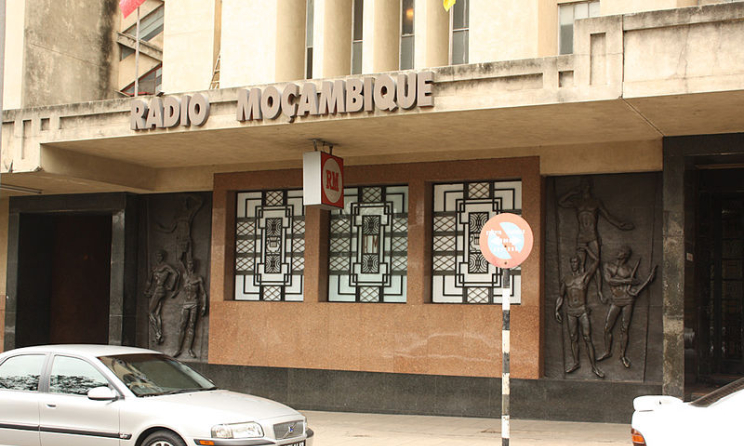
The new Constitution of 1990 introduced freedom of expression and, concomitantly, freedom of the press. The subsequent Constitution of 2004 reinforced both the plurality of and the right to information. These political and legal changes influenced the development of the media and the promotion of competition among media organisations.[2]
Over the past 20 years, the media space in Mozambique has changed drastically, as more and more enterprises have entered the market. As we will see, religious organisations, too, continue to play an important role in the development of the media landscape in Mozambique.
Radio
In the 1930s, an association of radio lovers, Grémio dos Radiófilos da Colónia de Moçambique, started what would become the first radio station in Mozambique. The station played music from major record labels such as Columbia, His Master's Voice, Regal and Polydor, and in the following years a dance and salon orchestra was hired to play live on the radio.[3]
Samuel Dabula Nkumbula occupies a unique place in the dissemination of Mozambican music on the radio. From 1958, he hosted the radio show Hora Nativa in various local languages. In the 1970s, the radio was broadcasting in 11 languages in provinces such as Sofala, Cabo Delgado, Nampula and Zambezia. A radio show named África à Noite (Africa at Night) was a platform for well-known bands in the 1960s, such as Djambo, João Domingos and Xicuembo. Also in the 1960s, Grémios dos Radiófilos was transformed to Rádio Clube de Moçambique.[4]
According to a recent report by the National Institute of Statistics, radio is still the most dominant form of media in Mozambique.[5] A study in 2014-15 reported that about 40% of Mozambican households had access to a radio. Some 118 radio stations exist in Mozambique, mainly public and community radio stations. Community radio stations comprise 64.1% of existing stations in Mozambique, showing how important they are to the broadcasting of information and music. Music also gets the most broadcasting time than any other form of radio programming.[6]
Radio stations in Mozambique[7]
Rádio Moçambique
Radio Moçambique was founded after independence in 1975, and until 1990 it was the only radio station operating in the country. It has regional stations in all provinces and therefore is the most popular radio station in Mozambique. Rádio Moçambique is famous for its yearly competition Ngoma Moçambique, which invites musicians to enter in various categories. Rádio Moçambique has a sister radio station, Rádio Cidade, with a youth-orientated programme schedule.
Commercial radio stations
With the liberalisation of the media market through the Media Act of the early 1990s, a new wave of commercial radios emerged. The first to surface was RTK, founded in 1993. RTK broadcast music and cinema content and eventually became KFM, broadcasting online.
Other private radio stations are SFM, owned by the Soico media group, the biggest private media company in Mozambique; LM Radio, a music radio for the Southern Africa region broadcasting from Maputo and Gauteng in South Africa; 99FM, dedicated to music and talk shows; Super FM; and Savana FM, owned by Mediacoop, which was the first independent media group in Mozambique.
Radio stations owned by religious organisations
Religious organisations have played a pivotal role in the development of media in Mozambique. To disseminate their content they bought or started their own media outlets and incorporated entertainment and news programmes to diversify their content and reach new audiences. Radio Maria, Radio Encontro and Radio Pax are affiliated with the Catholic Church; Rádio Capital and Radio Miramar with Protestantism; and Rádio A Voz do Islam caters for the Muslim market.
Community radio stations
Community radio stations are important in rural areas, not only because they reach areas and listeners where most radio stations cannot, but also because they broadcast in local languages. FORCOM (Fórum Nacional das Rádios Comunitárias) aggregates 45 such radio stations across the country. Instituto de Comunicação Social (Institute of Social Communication), a public institution whose objective is the development of communication in rural areas, also runs a network of community radio stations.
International radio stations
Although broadcasting only in urban areas and focusing mostly on news coverage, international radio stations have a solid presence on the Mozambican media landscape. With regard to music, some dedicate their cultural programmes to showcase promising musicians. RFI, BBC and Voz da América (Voice of America) are among those broadcasting in Portuguese.
RDP África, a state radio station from Portugal, broadcasts 24 hours a day from Lisbon with correspondents in Mozambique. It broadcasts to Maputo, Beira, Nampula and Quelimane, the biggest cities in the country. Its programming includes news, talk shows, literary shows and African music shows.
Television
Television in Mozambique began in 1981 with Televisão Experimental (TVE), which broadcast on Sundays only at first and eventually became Televisão de Moçambique in 1991.
Many television channels allocate their broadcasting time to international pop music. However, a common feature is talk shows with local musicians. These shows also debut new music and interview musicians and music industry players. According to Sistema Nacional de Estatística 2017, music airtime has decreased both on public and private TV stations.[8]
Television stations in Mozambique[9]
Televisão de Moçambique (TVM)
TVM is one of the only television stations in Mozambique that broadcasts to all provinces in the country. The state-run station had, until its recent shutdown, a second channel, TVM2, with a schedule dedicated to culture and entertainment. TVM is now operating a new channel, TVM Internacional, covering news and targeting the Mozambican diaspora. Some of TVM’s music programmes are Alta Tensão, which features interviews, quick facts about musicians, music event promotion and video clips, and Ressonâncias, a weekly show dedicated to gospel music.
Soico Televisão (STV)
STV is a private channel broadcasting 24 hours a day since 2002 to all provinces. It is run by Soico. Some of its music programmes are Espaço Musical, Manhãs Alegres, A Tarde É Sua, Fest Coros (gospel) and Big Box Show, which is arguably the most popular on the station.
Televisão Independente de Moçambique (TIM)
TIM is a free-to-air channel in Maputo, Beira, Quelimane, Nampula, Pemba and Tete. It started to broadcast in 2007 in Maputo and expanded to the aforementioned cities in the following years. 360० + Carga and Culturite are programmes dedicated to culture and the arts. Musicians are commonly interviewed and profiled, music videos are debuted and upcoming music events are presented.
TV Miramar
Founded by the Universal Church of the Kingdom of God, TV Miramar started to broadcast in 1998 and currently covers all territories of Mozambique. Its main music programme is arguably Atracções. There are also programmes such as Belas Manhãs that premiere video clips and interview musicians and arts practitioners.
Gloom TV
Owned by Mosaik Live Communication, Gloom is also a music event organiser. Gloom TV broadcasts chart-friendly music videos from international and Mozambican artists. Besides that, the channel attracts audiences with shows about the day-to-day lives of music celebrities.
RTP África
RTP África is a Portuguese TV channel that broadcasts to most Lusophone countries in Africa and has a broadcast schedule that covers news, entertainment and sports. Regarding music, there is as well-known weekly programme called Músicas d’África, focusing on African music, as the name suggests.
Other private and religious TV channels operating in Mozambique are TV Sucesso, Top TV, Gungu TV, TV Maná and ITV.[10]
Print media[11]
It is generally accepted that the first newspaper in Mozambique, emerging in opposition to the prevailing colonial press, was O Brado Africano, founded in 1918. From the 1990s, many newspapers emerged outside of the state apparatus. Mediacoop was a cooperative of journalists that pioneered independent journalism. Currently, there is a large number of newspapers, mostly edited and distributed in the capital city Maputo.
Daily newspapers
Notícias, a semi-private paper owned by Sociedade de Notícias; O País, owned by Soico; and Diário de Moçambique, founded in central Beira in 1950, are the country's most popular daily newspapers, all printing not more than 15 000 copies and distributing in all provinces. There are several newspapers distributed daily via email, with the most popular so far being Mediafax.
Weekly newspapers
Savana appeared in 1994 as the first independent newspaper in the country and is the best-selling weekly. Other weekly newspapers include Zambeze, Magazine Independente, Canal de Moçambique, Domingo and Público.
Generally speaking, a lack of space for reviews, music criticism, profiles and features on the cultural pages of most of these newspapers is a well-known fact. Attempts to cover music are usually limited to gig guides and general announcements.
Online media
Portuguese portal Sapo owns a platform that aggregates the Mozambican radio stations that can be streamed online. However, streaming radio online is not popular, as internet penetration in the country is still low.
With the proliferation of social media, there is an increasing number of users starting their own magazines, blogs and music pages – sometimes with a significant number of followers.[12]
Platforms such as Spotify, Deezer, Tidal or Apple Music are barely used. Some are not available in the country and others are paid-for services, making them largely non-viable, while free streaming services like Mixcloud, SoundCloud and YouTube are popular among the youth in urban areas.
Resources and citations:
[1] Sérgio Chichava and Jonas Pohlmann. 'Uma Breve Análise da Imprensa Moçambicana' in Desafios para Moçambique, 2010: https://www.iese.ac.mz/~ieseacmz/lib/publication/livros/des2010/IESE_Des2010_5.ImpMoc.pdf.
[2] Claudio Jone. Press and Democratic Transition in Mozambique 1990-2000. IFAS Working Paper Series / Les Cahiers de l’ IFAS, 2005, 7, 102p. Ffhal-00787210f: https://hal.archives-ouvertes.fr/hal-00787210/document.
[3] António Sopa. A Alegria É Uma Coisa Rara. Marimbique: Maputo, 2014.
[4] Radio Mozambique. Sobre: https://www.rm.co.mz/rm.co.mz/index.php/sobre.html.
[5] Government of Mozambique. Media and Telecoms Landscape Guide (2012): http://www.cdacnetwork.org/contentAsset/raw-data/1fd9d708-6b9e-4c35-bf99-c606d8baad2a/attachedFile.
[6] Fernando Andre. Mozambique: Research findings and conclusions for African Media Development Initative, 2005.
[7] The Business Year.Spreading the Word, Slowly (2016): https://www.thebusinessyear.com/mozambique-2016/spreading-the-word-slowly/review.
[8] Mozambique Statistical Yearbook, 2017. Instituto Nacional de Estatística, 2018.
[9] The Business Year. Spreading the Word, Slowly (2016): https://www.thebusinessyear.com/mozambique-2016/spreading-the-word-slowly/review.
[10] Government of Mozambique. Media and Telecoms Landscape Guide (2012): http://www.cdacnetwork.org/contentAsset/raw-data/1fd9d708-6b9e-4c35-bf99-c606d8baad2a/attachedFile.
[11]The Business Year. Spreading the Word, Slowly (2016): https://www.thebusinessyear.com/mozambique-2016/spreading-the-word-slowly/review.
[12] SAPO.mz. New free online radio service in Mozambique (2014): https://noticias.sapo.mz/tecnologia/artigos/novo-servico-de-radio-online-gratuito-em-mocambique.
Disclaimer: Music In Africa's Overviews provide broad information about the music scenes in African countries. Music In Africa understands that the information in some of these texts could become outdated with time. If you would like to provide updated information or corrections to any of our Overview texts, please contact us at [email protected].
Editing by David Cornwell


Most popular

Top Naija songs of 2026
31 Mar 2026

Top Afrobeats songs of 2026
19 Mar 2026

Top amapiano songs of 2026
16 Feb 2026
Ghana: Mr Eazi and MOLIY’s ‘Comfort’ earns Urban Music Awards nomination
21 Oct 2026
Open call: CANEX Music Business Lab and Songwriting Camp
15 Oct 2026
Nigeria: CANEX WKND unveils 2026 programme
21 Oct 2026
Disclaimer: Music In Africa provides a platform for musicians and contributors to embed music and videos solely for promotional purposes. If any track or video embedded on this platform violates any copyrights please inform us immediately and we will take it down. Please read our Terms of Use for more.

Subscribe to our monthly Newsletter
Follow us on social media


Please log in to post a comment.