











































NEFCISA
NEFCISA

The Music In Africa Foundation (MIAF) is proud of its partnership with the Industrial Development Corporation (IDC) as a Strategic Implementing Partner (SIP) for its Social Employment Fund (SEF). Through this collaboration, MIAF is running a national programme that is creating jobs, addressing skills gaps, and strengthening South Africa's creative industries — in line with the SEF's overarching goal to generate work for the common good and build community value through employment, social contribution, and inclusive economic participation. Operating under the banner NEFCISA (National Employment Facility for Creative Industries in South Africa), the initiative is recruiting and training participants, matching them with host organisations, and has already placed 1 500 workers across the country — surpassing its original target of 1 000. NEFCISA is delivered through a network of 20 host organisations spanning five provinces, who are actively hosting participants and contributing to work for the common good across South Africa's creative and cultural industries. Key Objectives: Support employment and entrepreneurship in the creative industries. Offer skills development and training programmes. Foster partnerships between public and private creative sectors. Promote South African creativity at both provincial and national levels Foster community development through social contribution.

ACCES
ACCES

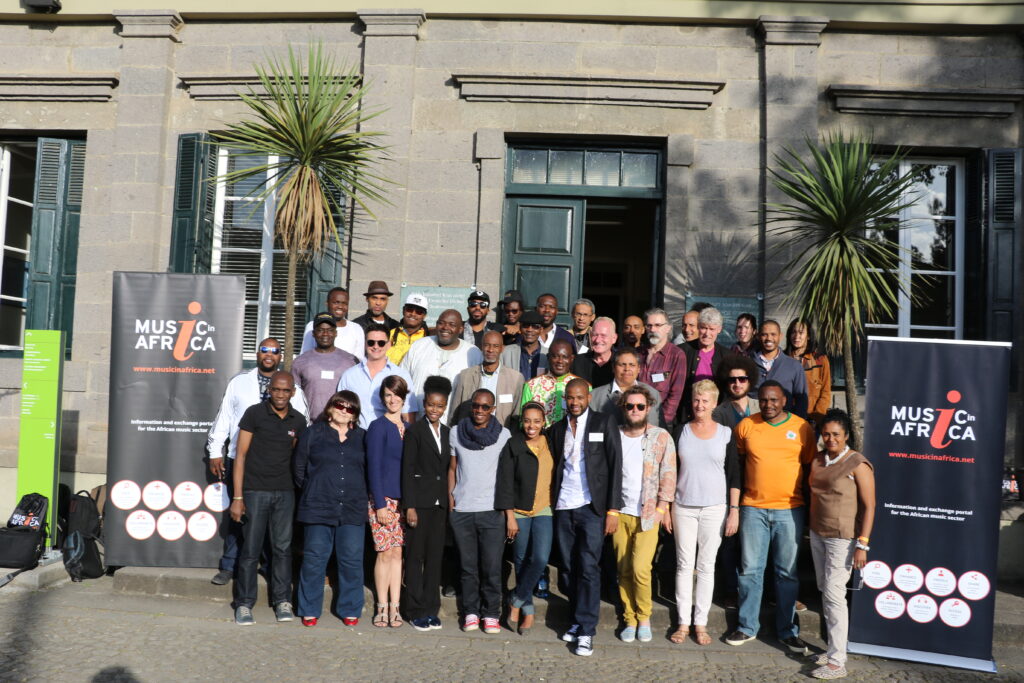
ACCES Conference and Showcase Festival is Africa's leading music industry gathering, bringing together the people shaping the future of the continent's music business. Artists, entrepreneurs, executives, investors, policymakers and cultural leaders from across Africa and around the world come to ACCES to build partnerships, exchange ideas, discover talent and create new business opportunities. Since its launch in 2017, ACCES has become the continent's premier platform for professional exchange and music market development. Combining a high-level conference with a curated showcase festival, networking, exhibitions and industry programmes, ACCES offers a unique space where creativity meets business and where African music connects with the global industry.

Gender@Work
Gender@Work

Music In Africa Gender @ Work is a three-year training programme aimed at upskilling and increasing the participation of female professionals in the African music sector. Launched by the Music In Africa Foundation (MIAF) in April 2019, the programme is connected to the MIAF’s ACCES music conference – a pan-African event held in a different African country every year. This connection enables the programme to reach new participants in a different African country every year. The programme marks the beginning of a more concerted effort by the Foundation to support the participation and inclusion of women in all facets of its programmes and the music sector in Africa as a whole. Over the three years, the programme will aim to address gender imbalances in the sector through training, lobbying, facilitating knowledge exchange and dialogues that foster the interest of women. The broader objectives of the programme are to: Provide industry training for women on critical music industry skills, focusing on: Stage management Electronic music production and recording Music business management Technical knowledge Provide an opportunity for both professional and aspiring women to benefit from the Music In Africa network and its broad range of activities in 2019, 2020 and 2021. Provide a solution-based platform in the form of a round table at ACCES with a view to identify challenges, discuss opportunities and lobby for the interests of female practitioners. Offer participants the opportunity to benefit from programmes offered by MIAF’s partners. Increase access to educational materials. Integrate participants in the broader ACCES programme to maximise experience and exposure to the industry. Record and present training materials on the www.musicinafrica.net, including but not limited to tutorials, templates and other best-practice materials. Communicate women-based themes that support the initiatives and messages of the programme. MAIN TRAINING ACTIVITIES Training in first country (Ghana): In the first year, participants will be trained on all aspects of stage management by a team of experienced stage managers from 10 to 17 November 2019. The programme will offer robust classroom training as well as practical, hands-on training in which participants will also be given the opportunity to manage various aspects of the ACCES performance programme. Training in second country: The second training iteration will take place at ACCES 2020 when the programme will diversify its course to include music production lessons and training on other music business topics. A round-table platform will also be introduced to coincide with the ACCES programme. Training in third country: The third training iteration will take place at ACCES 2021 in a different country, offering an advanced course. HOW DO YOU GET INVOLVED?  As a participant, facilitator or trainer: The programme enrolls up to 12 trainees every year. All opportunities are advertised publicly on this website, and will be added to this page. Please keep checking this page for new calls (below under UPDATES & CURRENT OPPORTUNITIES). As a partner Please contact Claire Metais at [email protected]. APPLY The call for applications for 2020 will be announced soon. The Music In Africa Gender @ Work programme is made possible with the support of the Prince Claus Fund, Siemens Stiftung and Goethe-Institut.

Sound Connects Fund
Sound Connects Fund

For cultural and creative practitioners and organisations operating in southern Africa, access to funding remains a major challenge. The COVID-19 pandemic has also had a massive impact on government policy, spending and the economy in general, and has seen spending on culture being moved further down the list of priorities. Further, the cultural and creative industries repeatedly cite four main areas where investment is needed for growth, which are increased visibility, mobility including access to new markets, finance and support structures.

Instrument Building And Repair Project

Experience the Vibrations African Instruments Exhibition online in 3D

Other

The new freedom fighters of South Africa

21 Nov 2014 - 14:58

cc-img flag-img

Research title: 'The New Freedom Fighters of South Africa: Hip hop artists searching for interpretations and solutions in a changing society' 
Publication: University of Amsterdam: Masters thesis in Anthropology and Sociology of Non-Western Societies 
Author: Jorien Waanders
Year: 2009
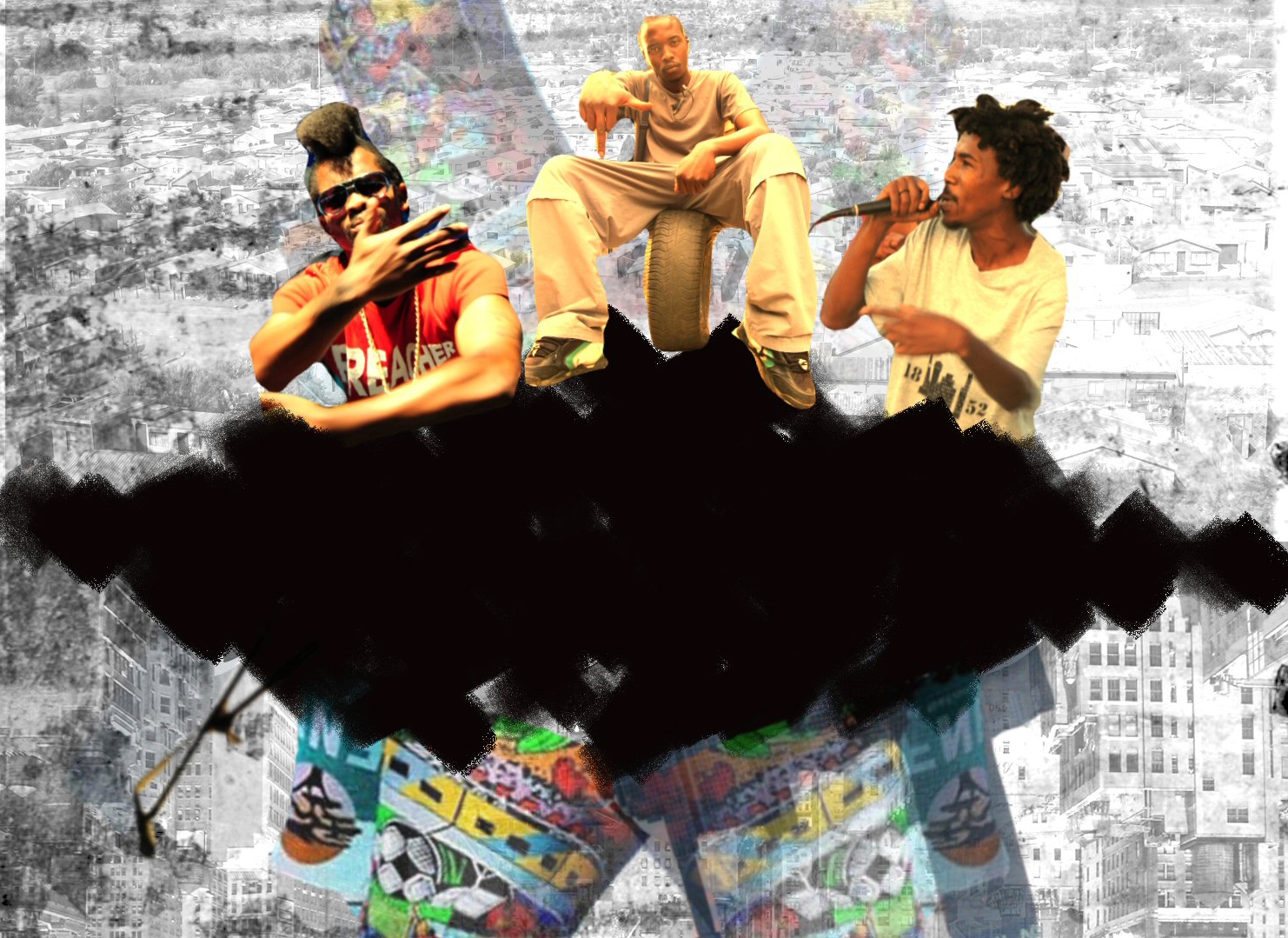
Freedom Fighters, by Jorien Waanders

“This moment. Feels so good. This moment is mine. The skyline of Jozi (Johannesburg). Just above the wing. Three sunbeams shine through the clouds exactly on the television tower. The skyline of Jozi. Jozi again. The plane turns. I expect it to descend, but it seems especially for me, it goes up just a little, takes a turn south-west. There, this view is for me, it tells me I am back. The two towers and the rows and rows of colorful houses. Little sheds in the garden a villa now and then. A bright orange light seems to shine back from the ground. Straight into my heart. Soweto again. The plane turns towards the east. And passes huge white roofs, many small blue squares in the very green large gardens before it turns to land.”

Soweto again. Doing a three month-research on music in Soweto was a dream that came true. I had met Soweto briefly a year before, during a short research on creative initiatives in the township for the organization Music Mayday South Africa. Our few meetings were enough to attract me enormously, to poison me and draw me into his arms. My colleague said to me: ‘what is it with you and Soweto, you have been there more often in your first week in South Africa then I have been there all my life and it is ugly’. Soweto has fights, drugs, unemployment, poverty, litter, guns, diseases, Aids, shacks, inequality. But so much more if you take the effort to go there: music, fashion, parties, spinning cars, togetherness, gezelligheid. It is a place like anywhere else in the world, where its people are faced with daily struggles and where the youth has wild dreams and aspirations like youth anywhere else.

She surprised me: how can you life for 25 years in a city and not have seen the township? I understood, Soweto is a world on its own within South Africa with its very own characteristics. Viewed from the outside as the place of crime and sometimes of Mandela and 2010. But that is not the characteristic of Soweto that attracted me. Its seductiveness is its people. Not the one or the two that finished their long walk to freedom, but the many people. They are the heart of Soweto: proud, creative, independent, stubborn. Full of passion, belief, wisdom and most of all creativity.

That brief research did not give me any answers. It only gave me questions and admiration for the perseverance and inventiveness of the young people of Soweto. They might be poor in economic capital but are rich in social networks and in finding solutions. They are initiative takers, creating opportunities to realize dreams, building on the road towards improvement, equality.

I wanted to know more about these youngsters and I wanted to learn from them. It was a dream to come true to do research on these creative initiatives in Soweto. And it has been beautiful, those three months. The people I met, the people I got to know better, they inspired me in persevering, in believing in myself, in humanness and in viewing the world from a different angle. Most of all they inspired me to be strong. It is these youngsters that are taking upon their shoulders the tough task to build the road for their communities and the many people that are still walking, towards freedom.

And then I came back. I missed the take off and landing of my flight, because I was so exhausted of all the lessons learned, all the information gathered, all the impressions and at the same time heart broken to leave Soweto and its people. I slept. If I would have known the length and the toughness of the journey that was ahead of me in writing my thesis, I probably would not have slept so nice.

It was a tough, heavy and long journey. Of over 100 books and articles, and I believe over 500 pages written. I landed that day, but I did not really land. My supervisor explained to me I had landed physically but yet had to land emotionally to be able to take a distance from Soweto and my fieldwork that is needed to write critically. I am not sure if I have ever landed completely. Half of my heart really is in Soweto and will be there for some more time I believe.

I went back a year after my fieldwork. And I collaborated with one of the bands of my main informants on a tour through Europe. I have spend much more time with my informants after my fieldwork. I believe I needed that to be able to complete this journey. At the same time there are still many questions open and there is still so much that I do not know about them and feel I have to know to write about them.

Download the full pdf below.

Please log in to post a comment.

Most popular

Disclaimer: Music In Africa provides a platform for musicians and contributors to embed music and videos solely for promotional purposes. If any track or video embedded on this platform violates any copyrights please inform us immediately and we will take it down. Please read our Terms of Use for more.

newsletter banner

Subscribe to our monthly Newsletter

Follow us on social media