
















































NEFCISA
NEFCISA

The Music In Africa Foundation (MIAF) is proud of its partnership with the Industrial Development Corporation (IDC) as a Strategic Implementing Partner (SIP) for its Social Employment Fund (SEF). Through this collaboration, MIAF is running a national programme that is creating jobs, addressing skills gaps, and strengthening South Africa's creative industries — in line with the SEF's overarching goal to generate work for the common good and build community value through employment, social contribution, and inclusive economic participation. Operating under the banner NEFCISA (National Employment Facility for Creative Industries in South Africa), the initiative is recruiting and training participants, matching them with host organisations, and has already placed 1 500 workers across the country — surpassing its original target of 1 000. NEFCISA is delivered through a network of 20 host organisations spanning five provinces, who are actively hosting participants and contributing to work for the common good across South Africa's creative and cultural industries. Key Objectives: Support employment and entrepreneurship in the creative industries. Offer skills development and training programmes. Foster partnerships between public and private creative sectors. Promote South African creativity at both provincial and national levels Foster community development through social contribution.

ACCES
ACCES

ACCES Conference and Showcase Festival is Africa's leading music industry gathering, bringing together the people shaping the future of the continent's music business. Artists, entrepreneurs, executives, investors, policymakers and cultural leaders from across Africa and around the world come to ACCES to build partnerships, exchange ideas, discover talent and create new business opportunities. Since its launch in 2017, ACCES has become the continent's premier platform for professional exchange and music market development. Combining a high-level conference with a curated showcase festival, networking, exhibitions and industry programmes, ACCES offers a unique space where creativity meets business and where African music connects with the global industry.

Gender@Work
Gender@Work

Music In Africa Gender @ Work is a three-year training programme aimed at upskilling and increasing the participation of female professionals in the African music sector. Launched by the Music In Africa Foundation (MIAF) in April 2019, the programme is connected to the MIAF’s ACCES music conference – a pan-African event held in a different African country every year. This connection enables the programme to reach new participants in a different African country every year. The programme marks the beginning of a more concerted effort by the Foundation to support the participation and inclusion of women in all facets of its programmes and the music sector in Africa as a whole. Over the three years, the programme will aim to address gender imbalances in the sector through training, lobbying, facilitating knowledge exchange and dialogues that foster the interest of women. The broader objectives of the programme are to: Provide industry training for women on critical music industry skills, focusing on: Stage management Electronic music production and recording Music business management Technical knowledge Provide an opportunity for both professional and aspiring women to benefit from the Music In Africa network and its broad range of activities in 2019, 2020 and 2021. Provide a solution-based platform in the form of a round table at ACCES with a view to identify challenges, discuss opportunities and lobby for the interests of female practitioners. Offer participants the opportunity to benefit from programmes offered by MIAF’s partners. Increase access to educational materials. Integrate participants in the broader ACCES programme to maximise experience and exposure to the industry. Record and present training materials on the www.musicinafrica.net, including but not limited to tutorials, templates and other best-practice materials. Communicate women-based themes that support the initiatives and messages of the programme. MAIN TRAINING ACTIVITIES Training in first country (Ghana): In the first year, participants will be trained on all aspects of stage management by a team of experienced stage managers from 10 to 17 November 2019. The programme will offer robust classroom training as well as practical, hands-on training in which participants will also be given the opportunity to manage various aspects of the ACCES performance programme. Training in second country: The second training iteration will take place at ACCES 2020 when the programme will diversify its course to include music production lessons and training on other music business topics. A round-table platform will also be introduced to coincide with the ACCES programme. Training in third country: The third training iteration will take place at ACCES 2021 in a different country, offering an advanced course. HOW DO YOU GET INVOLVED?  As a participant, facilitator or trainer: The programme enrolls up to 12 trainees every year. All opportunities are advertised publicly on this website, and will be added to this page. Please keep checking this page for new calls (below under UPDATES & CURRENT OPPORTUNITIES). As a partner Please contact Claire Metais at [email protected]. APPLY The call for applications for 2020 will be announced soon. The Music In Africa Gender @ Work programme is made possible with the support of the Prince Claus Fund, Siemens Stiftung and Goethe-Institut.

Sound Connects Fund
Sound Connects Fund

For cultural and creative practitioners and organisations operating in southern Africa, access to funding remains a major challenge. The COVID-19 pandemic has also had a massive impact on government policy, spending and the economy in general, and has seen spending on culture being moved further down the list of priorities. Further, the cultural and creative industries repeatedly cite four main areas where investment is needed for growth, which are increased visibility, mobility including access to new markets, finance and support structures.

Instrument Building And Repair Project

Experience the Vibrations African Instruments Exhibition online in 3D

Reviews

Particula reflects the importance of collaborations

28 Nov 2017 - 15:41

cc-img flag-img

You might have come across the expression, “to make it in the music industry, it’s all about who you know”. This is true in most cases – the more musicians work with their colleagues from other regions, the bigger their network of professionals, which leads to an increase in opportunities.
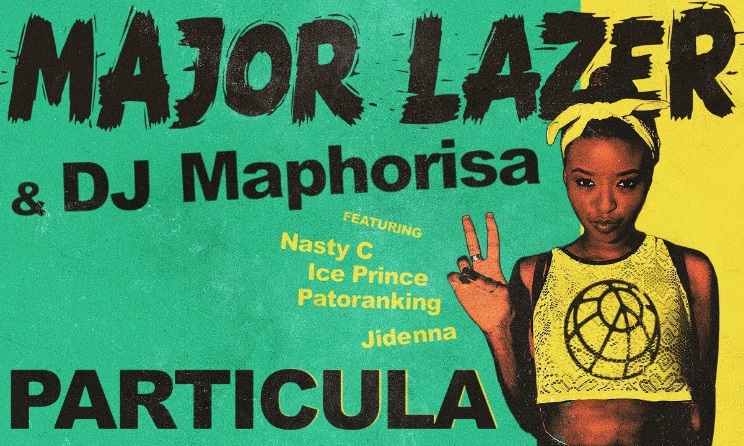
Particula is a fusion of dancehall, Afrobeats and  electronic dance music.

When artists from different countries work together on one project, they come up with a product which allows fans to relate and present an opportunity to debate on a similar subject. Such projects no doubt benefit artists involved in this cause by way of adding knowledge and skills. ‘Particula’, a song by South African artist DJ Maphorisa and US electronic music trio Major Lazer, is one such song that reflects the power of collaborations.

Initially produced by Maphorisa and finessed by Major Lazer, the song is proof enough that music collaborations, if effectively used, enable artists to upsurge their fan base and increase their status in different regions. Its public knowledge that the success behind ‘Particula’ and its music video is credited to artists that are involved in its making.

‘Particula’, a fusion of dancehall, Afrobeats and electronic dance music, is a love song that features Nasty C (South Africa), Ice Prince (Nigeria), Patoranking (Nigeria) and Jidenna (US). Shot in Johannesburg and produced by South African producer Allison Swank, the music video begins with three men sitting on the rooftop of a tall building with music playing in the background. Clad in brown boot cut trousers, clingy shirts and Afro-textured hair, they start dancing to music playing from an old radio thus portraying a hoary vibe. The opening scene of the video depicts a dance crew on set in Africa in the early 1980s.

The producers chose to shoot some scenes during sunset so as to include twilight filters in the video. It worked well, the dusk moment takes you back to old times when pictures and videos were made using such filters. Filmed in different parts of Johannesburg, the video shows a momentous dance party by three dancers in more than four unique dance sequences — each one targeted to a historic period and dance style. Incorporating all these different elements gets one thinking about great moments in the history of visual effects (VFX) for music videos.

‘Particula’ is no doubt an expensive video. Giving videos a slightly used vintage and older look requires expensive lighting and human expertise. In the video, director Adriaan Louw makes it to look natural which usually requires expensive equipment.

Enter Nasty C

With his commanding rap lyrics accompanied by a decent and groovy beats by Major Lazer and Maphorisa, Nasty C is the first to blow the microphone. Seated in an old nice car, the young rapper oozes his lyrics with much confidence and this complements the sound that comes with the video let alone the love message he is sending to a lady who can’t hide her excitement.

No wonder why Nigeria is always on top when it comes to music. Hip hop artist Ice Prince adds some flavour with his mesmerising stanzas which appear in the entire song three times thus affirming his position as one of Nigeria’s talented and sought after artists. In the chorus, Prince employs his powerful expressions to describe how well-built the woman in the video is.

I like you, girl, in particula

You in particula

Said I like your waist in particula, ah ha, eh

The above lyrics, if allowed to sink into one’s memory, can evoke pure romantic nostalgia. One will be reminded of a moment(s) they have told a woman how good looking she is.

Jidenna, a long time affiliate of the R&B futurist Janelle Monáe, displays the hoarsest and strongest part of his voice. In the video, his voice sounds brilliant and merges well with the tempo to create a massive fullness in the song. Dressed in a grey jacket, bottom open olive pants and shiny brown shoes, his regalia reflects the varying development of civilisations and technologies. With a lovely brownie haircut, ‘The Chief’ singer uses a cane to command authority and control in the video.

Give me love one of these days (Yeah)

In what seems to be a dance party, reggae-dancehall singer Patoranking’s voice sounds like the echo of voices one hears from the other side of the valley. The ‘Alubarika’ singer has the shortest verses with only four lines, but he significantly reinforces the main idea of the song by repeating the same pattern throughout.

Come Come

Give me the love gal

Give me the love gal

Give me the love gal

Published on 12 October 2017, the ‘Particula’ music video was sitting at more than 11 million YouTube views at the time of writting. 'Particula' is available on Spotify, Apple Music, Google Play, SoundCloud and Deezer.

Artist: Major Lazer & DJ Maphorisa - Particula (ft. Nasty C, Ice Prince, Patoranking & Jidenna)
Song: Particula
Year: 2017

Please log in to post a comment.

Most popular

Disclaimer: Music In Africa provides a platform for musicians and contributors to embed music and videos solely for promotional purposes. If any track or video embedded on this platform violates any copyrights please inform us immediately and we will take it down. Please read our Terms of Use for more.

newsletter banner

Subscribe to our monthly Newsletter

Follow us on social media



