

































NEFCISA
NEFCISA

The Music In Africa Foundation (MIAF) is proud of its partnership with the Industrial Development Corporation (IDC) as a Strategic Implementing Partner (SIP) for its Social Employment Fund (SEF). Through this collaboration, MIAF is running a national programme that is creating jobs, addressing skills gaps, and strengthening South Africa's creative industries — in line with the SEF's overarching goal to generate work for the common good and build community value through employment, social contribution, and inclusive economic participation. Operating under the banner NEFCISA (National Employment Facility for Creative Industries in South Africa), the initiative is recruiting and training participants, matching them with host organisations, and has already placed 1 500 workers across the country — surpassing its original target of 1 000. NEFCISA is delivered through a network of 20 host organisations spanning five provinces, who are actively hosting participants and contributing to work for the common good across South Africa's creative and cultural industries. Key Objectives: Support employment and entrepreneurship in the creative industries. Offer skills development and training programmes. Foster partnerships between public and private creative sectors. Promote South African creativity at both provincial and national levels Foster community development through social contribution.

ACCES
ACCES

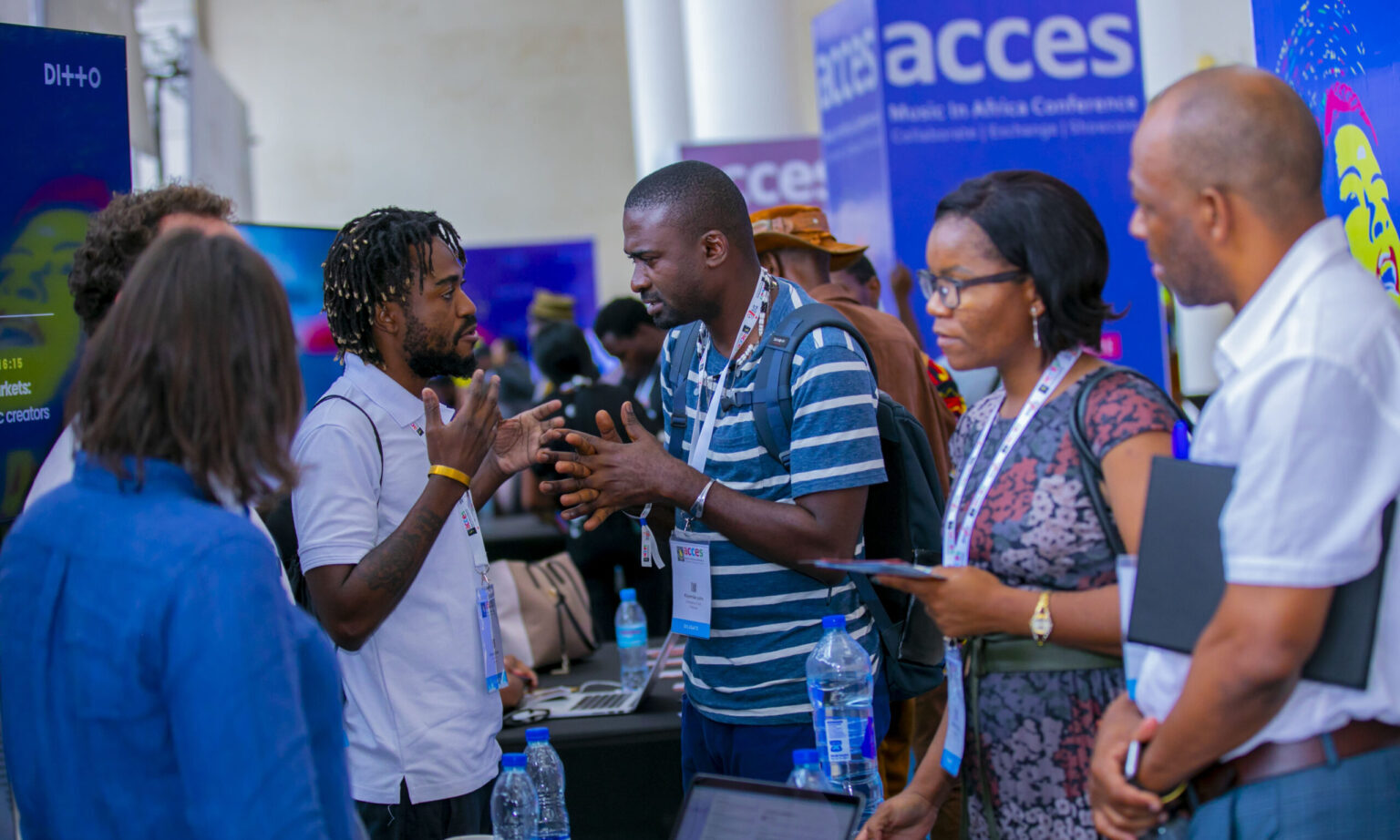
ACCES Conference and Showcase Festival is Africa's leading music industry gathering, bringing together the people shaping the future of the continent's music business. Artists, entrepreneurs, executives, investors, policymakers and cultural leaders from across Africa and around the world come to ACCES to build partnerships, exchange ideas, discover talent and create new business opportunities. Since its launch in 2017, ACCES has become the continent's premier platform for professional exchange and music market development. Combining a high-level conference with a curated showcase festival, networking, exhibitions and industry programmes, ACCES offers a unique space where creativity meets business and where African music connects with the global industry.

Gender@Work
Gender@Work

Music In Africa Gender @ Work is a three-year training programme aimed at upskilling and increasing the participation of female professionals in the African music sector. Launched by the Music In Africa Foundation (MIAF) in April 2019, the programme is connected to the MIAF’s ACCES music conference – a pan-African event held in a different African country every year. This connection enables the programme to reach new participants in a different African country every year. The programme marks the beginning of a more concerted effort by the Foundation to support the participation and inclusion of women in all facets of its programmes and the music sector in Africa as a whole. Over the three years, the programme will aim to address gender imbalances in the sector through training, lobbying, facilitating knowledge exchange and dialogues that foster the interest of women. The broader objectives of the programme are to: Provide industry training for women on critical music industry skills, focusing on: Stage management Electronic music production and recording Music business management Technical knowledge Provide an opportunity for both professional and aspiring women to benefit from the Music In Africa network and its broad range of activities in 2019, 2020 and 2021. Provide a solution-based platform in the form of a round table at ACCES with a view to identify challenges, discuss opportunities and lobby for the interests of female practitioners. Offer participants the opportunity to benefit from programmes offered by MIAF’s partners. Increase access to educational materials. Integrate participants in the broader ACCES programme to maximise experience and exposure to the industry. Record and present training materials on the www.musicinafrica.net, including but not limited to tutorials, templates and other best-practice materials. Communicate women-based themes that support the initiatives and messages of the programme. MAIN TRAINING ACTIVITIES Training in first country (Ghana): In the first year, participants will be trained on all aspects of stage management by a team of experienced stage managers from 10 to 17 November 2019. The programme will offer robust classroom training as well as practical, hands-on training in which participants will also be given the opportunity to manage various aspects of the ACCES performance programme. Training in second country: The second training iteration will take place at ACCES 2020 when the programme will diversify its course to include music production lessons and training on other music business topics. A round-table platform will also be introduced to coincide with the ACCES programme. Training in third country: The third training iteration will take place at ACCES 2021 in a different country, offering an advanced course. HOW DO YOU GET INVOLVED?  As a participant, facilitator or trainer: The programme enrolls up to 12 trainees every year. All opportunities are advertised publicly on this website, and will be added to this page. Please keep checking this page for new calls (below under UPDATES & CURRENT OPPORTUNITIES). As a partner Please contact Claire Metais at [email protected]. APPLY The call for applications for 2020 will be announced soon. The Music In Africa Gender @ Work programme is made possible with the support of the Prince Claus Fund, Siemens Stiftung and Goethe-Institut.

Sound Connects Fund
Sound Connects Fund

For cultural and creative practitioners and organisations operating in southern Africa, access to funding remains a major challenge. The COVID-19 pandemic has also had a massive impact on government policy, spending and the economy in general, and has seen spending on culture being moved further down the list of priorities. Further, the cultural and creative industries repeatedly cite four main areas where investment is needed for growth, which are increased visibility, mobility including access to new markets, finance and support structures.

Instrument Building And Repair Project

Experience the Vibrations African Instruments Exhibition online in 3D

#Phyno

Phyno’s overweight ‘The Playmaker’

23 Mar 2017 - 11:47

cc-img flag-img

By Kelvin Alaneme

On 2nd November, 2016, Phyno dropped his highly anticipated sophomore album titled after his long time moniker 'The Playmaker'. The album came two years after his 2014 debut album 'No Guts, No Glory' and spoke a great deal about the metamorphosis of one of the best indigenous rap acts in Africa.
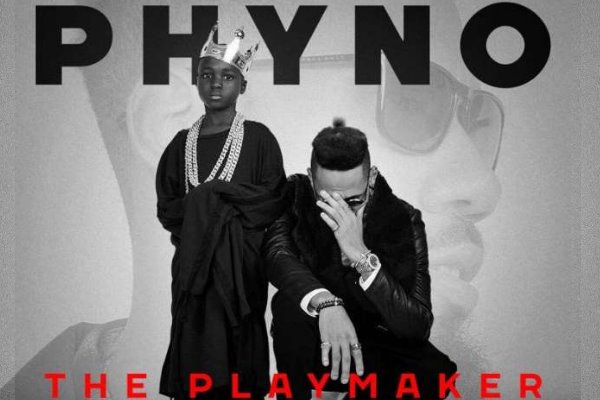
Cover art for Phyno's The Playmaker

A lot has changed since his first album. Phyno's sound had since gone international and together with Olamide, he made 'indigenous rap' appealing to a global audience especially Nigerians in diaspora. Phyno has also distinguished himself in collaborations, outdoing himself song after song.

'The Playmaker' brings to fore Phyno's long-time romance with singing, besides his signature rap. Phyno sang in most of the songs, making the album a fusion of indigenous hip-hop and Afro-pop.

In 'Connect', Phyno gave us a foretaste of what is to come: melodious vocals on a slow, danceable, feel-good beat. The Tspize-produced single was arguably Nigeria's biggest pop single in 2015. He followed it up with 'Ezege', a mid-tempo rap song produced by Del-B where he raps to a love interest, trying to win her over with his infectious flows.

'Fada Fada', his collaboration with Olamide, was one of 2016's massive hits. The Masterkraft-produced single deservedly won the 'Song of the Year' at the 2016 Headies Awards. The song billed as 'street gospel' set the tone for most of the songs on the album.

Five of the songs on the album were gospel-themed. In 'E Sure For Me', produced by Kezyklef, Phyno pleads for divine guidance on a Fela-style beat. The Tunex-produced 'Yes I Pray(Nwa Oge Nta) has a unique, fresh feel to it and is one of the beautiful tracks on the album. 'So Far, So Good', produced by Masterkraft, is a song of praise to God, thanking him for the journey so far. 'Joy Comes In The Morning' sees Phyno deliver a stellar motivational performance, telling stories of victory over adversity in each of the verses using different scenarios.

'The Playmaker' has many amazing songs, primarily due to the efforts of the solid production team and the guest acts. Major Bangz is the only producer from his first album that makes a return in this second one, producing five songs. Surprisingly, Phyno did not produce any of the songs in 'The Playmaker', unlike in his debut album where he got production credits for six songs.

There is an uncanny similarity between 'Abulo' and 'Alobam' from Phyno's debut album. Both tracks were produced by Major Bangz, whose genius shone throughout 'The Playmaker' album. In 'Abulo' which means 'my brother' in street lingua, Phyno attacks a false friend, baring the friend's two-timing nature for all to see. It is one of the singles in the album, in which Phyno rapped, as though to prove that he is still on top of his game.

Major Bangz also produced 'Okpeke', a rap single made memorable by the hook shared by 2Baba and Flavour. In 'Best Rapper', Phyno lays claim to being the best and explained his preference for cash over awards. Major Bangz also produced 'Ino Mma', one of the average songs on the album.

In addition to 'Fada Fada', Masterkraft produced 'Obiagu', a high-tempo song with a local flavour, heavily influenced by the streets of Enugu in Eastern Nigeria where Phyno grew up . He also produced 'Link Up' ft. Burna boy and MI. Burna boy delivered flawlessly in his signature style. MI's verse left a lot to be desired. 'Ochie Dike' ft. Onyeka Onwenu' is a classic song for mothers and the female legend delivered a soul-stirring speech at the end.

Benjamz produced the love-themed 'Pino Pino', featuring a guitar sample by the Oriental Brothers, an Eastern highlife band from the 70's. Here, Phyno goes the highlife route, singing throughout. In 'Mistakes', Phyno offers a soulful apology to his lover and begs her to take him back. 'I am a fan' ft. Decarlo and Mr. Eazi had the three of them singing and Decarlo's voice leaves a lasting impression.

'Financial Woman ft. P-Square', produced by Chris String, is arguably the twins' best collaboration in recent times. 'Mkpotu ft. Zoro and Tidinz' produced by Tunex had the three top indigenous rappers in Eastern Nigeria lay bars on an upbeat track. Burna boy makes a second appearance in 'No be my Style' in which Phyno raps about how he overcame obstacles by sheer hard work.

In 'The Playmaker', Phyno steers the ship like an African Drake, rapping and singing effortlessly, switching between melodies, blending language and art into magic.

The average songs in 'The Playmaker' are few and far between. The album is littered with gems and represents a complete body of work.

It is unarguably one of the best Nigerian albums of 2016.


Please log in to post a comment.

Most popular

Disclaimer: Music In Africa provides a platform for musicians and contributors to embed music and videos solely for promotional purposes. If any track or video embedded on this platform violates any copyrights please inform us immediately and we will take it down. Please read our Terms of Use for more.

newsletter banner

Subscribe to our monthly Newsletter

Follow us on social media