




















































By Zara Tewolde-Berhan
This text provides an overview of popular music in Eritrea.
Eritrea’s popular music scene is widely regarded as starting in the 1960s. The Eritrean music scene boomed with the arrival of Kagnew Station, a US army radio installation in the capital Asmara, which aired American music to the public. The sounds of 1960s western pop had a profound effect, and from that time on, stars such as Bereket Mengisteab helped cement Eritrea as a musical force in the region.
Popular music of the 1960s consisted of love and socio-political messages that were often veiled in metaphors that Eritreans understood well[i]. For example, Tewelde Redda’s ‘Shegai Habuni (‘Give me my torch’) is a timeless classic that talks about freedom.
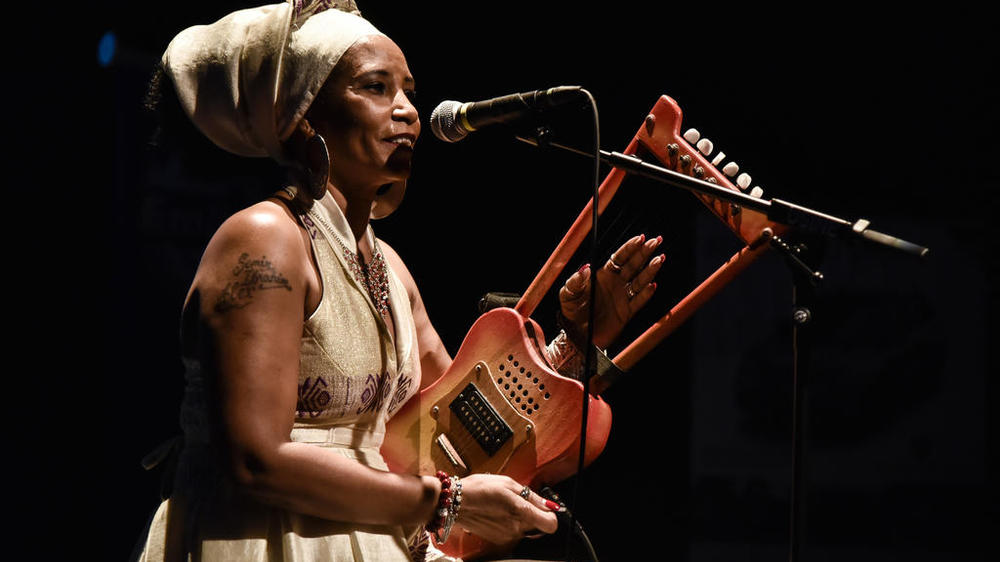
Tewelde Redda is regarded as one of the first people in Africa to start playing an electric guitar back in the 1960s. Redda’s unique music was very popular during this period. A superb guitarist, his skills were unmatched during his time. His popular songs included ‘Milenu’, ‘Momona’, ‘Ab Teqay Qerebi’ (Come near me) and ‘Misaki Fikri Aleni’(I’ve got love for you). He was one of the most important figures in the modernisation of Eritrean music in the 1960s and 1970s. In fact he is still modernising it today, spending his time crafting electric versions of the traditional Eritrean/Ethiopian Krar.[ii]
Like many artists in his generation, Osman Abdelrahim started his career in the Mahber Theatre Asmara in the 1960s. As a fledgling artist, Osman released phenomenal love songs such as ‘Ab ketema mitsiwa’ (In the city Mitsiwa). This famous song is about a love story in Massawa, where Osman declares: "Near the beach remembering where I called her in the city, I remembered the love that passed". This romantic song is one of Osman’s most memorable songs and is still popular today, decades later.
Like many young singers of his generation, Osman’s music alternated between messages of love and social consciousness, often crossing over. For example, ‘Adey weladitey’ (roughly translated as ‘My dearest mother who brought me into this world’) was released at a time when young Eritreans were separated from their mothers as they either went to join the armed struggle for independence or fled to neighbouring countries to find safety from repression. Such a poetic expression describing his mother had veiled meanings but often captured the hearts of many Eritreans. His other songs include ‘Libey midrebeda’ (‘My heart is barren’). ‘Ti’ neber nera’ (she was living), ‘Toblah’ta’ (impression) and ‘Ayfalkin Gherhinetey’ (Your wrong, my innocence).
1990s: A shift in popular music after independence
Following independence in Eritrea in 1991, a transition occured in Eritrean music. There was a rise in the use of the krar (a traditional instrument) combined with electric guitar, piano and saxophone. There was also a noticeable decline in the traditional backing singers that had been common in the earlier years. Just like the earlier years, however, romantic songs continued to flourish as Eritreans began to settle into life after war.
Abraham Afwerki rose to fame in the 1990s with his popular love songs, which provided an alternative to the patriotic songs during the struggle for independence and its immediate aftermath. He was one of Eritrea’s most beloved singers. He often sang romantic as well as patriotic songs that captured the hearts and minds of his many fans. One of his songs, ‘Abela’ (meaning ‘where is she?’) was released shortly after independence and illustrates the euphoria at the time. His most famous song, ‘Semai’ (‘Sky’) - also the name of his last album - was a major hit. It carried a message of hope as he sang that the sky is the limit, urging people not to give up in life. Love, hope and pride were common themes in Abraham’s songs. He was known to be a great lyricist and was constantly adapting the style of Tigrinya music until his tragic death in 2006, in Massawa. Today, a decade after his death, Abraham has inspired the next generation with his poetic lyrics and style of music.
Popular music today
In a country where the median age is just 19, the appetite for pop songs and ballads is considerable. Robel Michael’s ‘Shikor Shikor’ (Sweet Sweet) was undoubtedly the big hit of 2014. In Asmara, it seemed to be played everywhere.
Yohannes Tikabo, most commonly known as ‘Wedi Tikabo’, is another popular singer, currently residing in the US. His unique voice combined with the krar adds to his authenticity, and he often sings songs that define his generation. His style has parallels with Tewelde Redda. Unlike his counterparts, he has also sung a few lyrics in English, which is fairly unique as most artists sing only in their mother tongues. Though he has released many love songs, Tikabo is remembered most for his patriotic songs. Songs such as ‘Zemen’ (the times), ‘Hagerey’ (my country), ‘Fikre Teasiru’ (love got arrested) and ‘Ab Mintayu Hailu’ (where is its strength?) are songs that have earned him the title of ‘The voice of his generation’. His powerful lyrics that reflect on his society have made him popular with Eritreans, particularly the youth. His much-loved song ‘Gue Leminey’ was re-made in Amharic by Selamawit Gebru, which broadened his popularity abroad.
Helen Meles is another of the many young Eritrean singers who emerged during Eritrea’s early post-independence years. Her songs are mostly about love or patriotitism. Meles is well-known for her pitch-perfect vocals and her romantic lyrics, earning her popularity with Eritreans. Her songs include ‘Nuisey’, ‘Fir Fir’, ‘Warsay’, ‘Seare’, ‘Tedanagire’ and ‘Hadia ala’. She performs live regularly at Eritrean festivals and on national holidays. Meles established herself as a talented singer, songwriter and bonafide diva during her musical career of two decades. With six albums to her name, she has become one of the biggest selling Eritrean artists of all time and has captured the hearts and minds of Eritreans, also earning fans in neighbouring African countries. She takes Tigrinya music to another level by mixing traditional and modern music, drawing on European, Arabic and African influences.
Various other Eritrean artists - like krar player Dawit Shilan, Dahab Faytinga, Asmara All Stars and Temesgen Gebreselassie - continue to incorporate the core elements of indigenous Eritrean music into their modern popular music. Imported styles of music from Europe, North America and elsewhere in the Horn region are also very popular in urban areas of Eritrea.


Most popular

Top Naija songs of 2026
31 Mar 2026

Top Afrobeats songs of 2026
19 Mar 2026

Ghana: Mr Eazi and MOLIY’s ‘Comfort’ earns Urban Music Awards nomination
21 Oct 2026

Top amapiano songs of 2026
16 Feb 2026
Open call: CANEX Music Business Lab and Songwriting Camp
15 Oct 2026
Nigeria: CANEX WKND unveils 2026 programme
21 Oct 2026
Disclaimer: Music In Africa provides a platform for musicians and contributors to embed music and videos solely for promotional purposes. If any track or video embedded on this platform violates any copyrights please inform us immediately and we will take it down. Please read our Terms of Use for more.

Subscribe to our monthly Newsletter
Follow us on social media


Please log in to post a comment.