






























































By Moses Asiimwe
Rwanda is a small, land-locked country located in East Africa. Bordered by Uganda, Tanzania, Burundi and DR Congo, Rwanda has a population of over 12 million people. The three official languages are Kinyarwanda, English and French. This overview text tracks the historical development of popular music in Rwanda and looks at some of the key genres that currently dominate the nation’s airwaves.
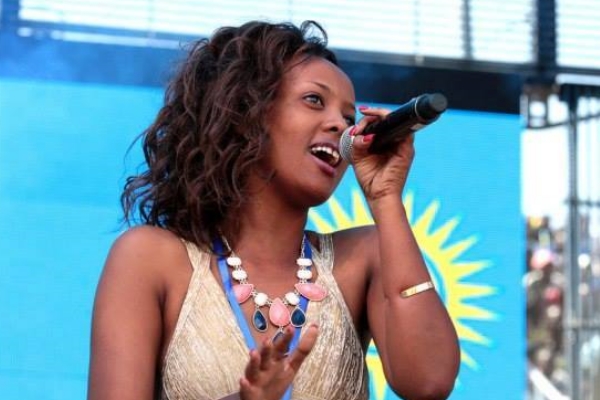
In the pre-colonial era, Rwandan music was dominated by traditional dances commonly known as amaraba and intore combined in what is called Itorero, which is a Kinyarwanda word meaning ‘a group of people gathered for a specific purpose’ (usually a good purpose!). When Rwanda was colonized by Belgium, Rwandan music took on Belgian influences. Musical instruments like guitars and pianos started to be used and the imported music favoured by the elite who patronized dancehalls and big hotels found its way into everyday life in Rwanda. With the exit of the Belgians in 1961, independent Rwanda formed a closer relationship with France. Rwandan music continued to go west. Much would have been lost, had it not been for traditional musicians who kept local music forms alive.
In the post-colonial period, Rwanda produced popular local bands like Imena, Nyampinga, Les 8 Anges, Les Fellows, Impala, Abamarungu, Los Compagnons de la Chanson, Bisa, Ingenzi and Isibo y'Ishakwe. These bands drew influences from across Africa, especially the Congo, as well as Caribbean zouk and reggae.
The genocide against the Tutsi that came to a head in 1994, but which had started in the 1980s, disrupted music production within Rwanda. Many musicians died, while others move overseas, bringing their country's music to cities like Brussels and Paris. For many years, Rwandan-Belgian Cécile Kayirebwa was arguably the most internationally acclaimed Rwandan musician, until the arrival in the late-1990s of Rwandan-Canadian Corneille and Jean-Paul Samputu.
In recent years, music production has gradually returned to where it was, the rebirth largely spearheaded by Rwandan youth. A crop of new stars have emerged, including Kamichi, Mani Martin, Tom Close, Urban Boyz, King James, Knowles, Dream Boys, Riderman and Jay Polly. Many more musicians have emerged in the the past 5 to 10 years, including Senderi International Hit, Jule Sentore, P-Fla, Bull Dog, Fireman, Active, Diana Teta and many more.
The music industry in Rwanda is growing and becoming more professional. An increasing number of companies are investing in the development of new talent, including major music festivals like Kigali Up! And competitions like Primus Guma Guma Super Star (PGGSS) and Ishusho K'umuziki Nyarwanda. The launch of Primus Guma Guma Super Star, a local music contest organized by a local brewing company called Bralirwa Ltd over the last three years, has brought to the fore a new crop of young musicians such as Christopher, Amag The Black, Bruce Melodie, Young Grace and others. Some might even argue that the Rwandan music scene is growing congested. Some of the stars of recent years have already faded from the local scene, such as Kitoko, Miss Jojo, Miss Shanel, The Ben and Meddy. However, The Ben and Meddy have been making a name for themselves in the USA.
Today music is one of the emerging sectors in Rwanda’s economy. Rwanda has a growing popular music industry, influenced by East African, Congolese and American music. The dominant genres in Rwanda today have come into existence after the 1994 genocide, specifically hip-hop and R&B, often blended with ragga and pop, as well as gospel and Afrobeat.
Hip-hop
Hip-hop music has been popular among local youth in Rwanda since the early 1980s due to widespread American influence. Local hip-hop musicians imitate the style of musicians from the West, like Eminem and Lil’ Wayne. Male artists wear oversized clothes accentuated with heavy necklaces and huge fingerings. As for the ladies, they prefer extremely tight, revealing clothes, all in the name of fame. Some female rappers even prefer men’s clothes, sporting trousers adorned with holes commonly known as ‘damages’.
The first major hip-hop hit was released in the early 1980s by the most prominent figure in the early Rwandan scene, DJ Berry (Nsabimana Abdul Aziz)[i], a DJ with Kigali Night and Cosmos and a presenter with Radio Rwanda, in addition to being an early rapper and breakdancer. Because hip-hop in Rwanda was not very popular initially, DJ Berry moved to the DR Congo and later Germany. He recorded one the region’s hits, ‘Hey You’, while abroad. After returning to Africa in 1990, DJ Berry continued to promote hip-hop in Rwanda until he died of AIDS complications in 1996. He was succeeded by artists like Diplomat, who gained massive fame in the country in the 2000s. For a while he disappeared from the scene, however, leading to the emergence of younger stars like Jay Polly, Riderman, Bull Dog, Green P, Fireman, P-Fla and Ama G The Black. Riderman showed his star power when he scooped the prestigious Primus Guma Guma Super Star award. Many of these mainstream artists blend rap with ragga, R&B and pop influences.
R&B
R&B is another popular genre dominating Rwandan music. It was brought to life in Rwanda by musicians like Tom Close, The Ben, Meddy and Miss Jojo, among others. Meddy and The Ben were the best-known pioneers of the genre before they moved to the US. The current stars of the genre include King James, Knowless and Christopher.
King James (born James Ruhumuriza) is a leading performer of R&B and Afrobeat music. He is known for his energetic and entertaining live performances, and for releasing albums such as Umugish (2010) and Umuvandimwe (2011) and hits like ‘Buhoro Buhoro’ and ‘Intinyi’. He has won several awards, including being voted Artist of the Year at the 2011 Salax Awards and winning the prestigious Primus Guma Guma Super Star 2 in 2012. He has performed in the UK, France and Belgium[ii]. Knowless Butera is currently the top female artist in Rwanda. In 2013 she scooped a Salax Award, one of the most prestigious music awards in the country, organized by Ikirezi Group. In 2014 she launched her latest album, Butera, following the success of her earlier release, Uwo ndiwe. Christopher, a nominee at the 2014 Kora Awards, is another Rwandan R&B sensation. He has released hit songs like ‘Byanze’, ‘Irijoro’, ‘Ishema’, ‘Uwo munsi’, ‘U wo ni nde’, ‘Habona’, ‘Birahagije’, ‘Ndabyemeye’ and ‘Babyumva’. Other Rwandan R&B stars include Bruce Melodie, Dream Boys and Tom Close. Most of these R&B artists produce their music at Kina Music.
Gospel
Gospel music has been in Rwanda since colonial times and the coming of missionaries. It has remained popular in the country since then. Gospel music has been popularised mostly by choirs from various churches. The most dominant choirs are Ambassadors of Christ, Rehoboth and JV. Later, artists like Gabby Kamanzi, Liliane Kabaganza, Alex Dusabe and Theo (aka Bosebabireba) also emerged on the scene. Some musicians are at the same time songwriters and praise and worship leaders. Aline Gahongayire fits in this categorization. She has released albums like Nzahora Mbyibuka, Thank You Jesus, Reka Nkuvuge Imyato and Umukiza Wanjye Ariho. And although Rwanda has gospel singers who are wholly committed to the genre, occasionally secular artists also release hit gospel songs, for example Meddy’s ‘Ungirirubuntu’ and ‘Holy Spirit’.
Currently, the gospel music scene in Rwanda is dominated by a mix of choirs and solo artists. Some of the best-known choirs include Ambassadors of Christ, Rangurura and others. Other popular solo musicians include Eddy Muco, Serge Iyamuremye, Dominic Nic, Alphonse Bahati, Patiant Bizimana and Emmy Uwimana among others.
Afrobeat
Some popular Rwandan artists choose to make music that is less influenced by American sounds and more by African music. This style, known as Afrobeat, has been one of the most popular genres in Rwanda for years. One of the first Afrobeat stars was Kitoko, who released his debut album Ifaranga in 2010. He is known for hits like ‘Akabuto’, ‘Ko wanyanze’ and ‘Yegwe’, among others. Lately, however, he has been rather quiet, hardly releasing any new music for the past year. In recent years, Afrobeat musicians like Rafiki, Urban Boyz, Dr. Claude, KGB, Miss JoJo, Miss Allay and the Trinity have been hugely popular. Some of them are slowly turning into legends, although others, like Miss Jojo, have gone quiet in recent years.
In all of the above popular genres, new stars are constantly emerging, and the future of Rwanda’s popular music industry looks bright.[iii]
[i] Mbabazi, L. 2008. “Rwanda: Hip hop dominating music industry”.
[ii] Munyaneza, E. 2012. "Up close with King James, Rwanda’s king of R&B". The Independent (Uganda).
[iii] Karemera, D. 2014. ‘Rwanda’s rising music artistes’. The New Times


Most popular

Top Naija songs of 2026
31 Mar 2026

Top Afrobeats songs of 2026
19 Mar 2026
Ghana: Mr Eazi and MOLIY’s ‘Comfort’ earns Urban Music Awards nomination
21 Oct 2026

Top amapiano songs of 2026
16 Feb 2026
Open call: CANEX Music Business Lab and Songwriting Camp
15 Oct 2026
Nigeria: CANEX WKND unveils 2026 programme
21 Oct 2026
Disclaimer: Music In Africa provides a platform for musicians and contributors to embed music and videos solely for promotional purposes. If any track or video embedded on this platform violates any copyrights please inform us immediately and we will take it down. Please read our Terms of Use for more.

Subscribe to our monthly Newsletter
Follow us on social media


Please log in to post a comment.