






















































By John Grinling
Reggae music swept around the world in the 1970s and then ebbed slightly in most places. In Ethiopia, the situation wasn’t any better: reggae was considered 'underground' and therefore did not feature on the Ethiopian airwaves, nor did it receive much attention in the live music venues in Addis Ababa. Despite the lack of proper promotion, reggae's hypnotic rhythms and conscious message engulfed the hearts of a few artists who were keen on promoting the genre. This text provides an overview of Ethiopian reggae and the artists who have kept it alive.

Ethiopia remains at the heart of many reggae enthusiasts around the world as it features in several songs by legendary Jamaican artist Bob Marley, the genre's biggest star. For example, in the song ‘Exodus’, Marley sang: “Exodus, movement of Jah People! We know where we are from. We are leaving Babylon, we going to our Fatherland”. A central theme in Marley’s songs was indeed the repatriation of black people to Zion, which in his view was Ethiopia, or more generally, Africa.
Emperor Haile Selassie I’s visit to Jamaica in April 1966 fuelled the influence of the Rastafarian movement in Ethiopia, paving the way for the development of Roots Reggae. Further, during his visit, the emperor encouraged Rastafarians to repatriate to Ethiopia. Heeding the call, more than 2000 Rastafarian immigrants from Jamaica gradually arrived in Ethiopia, with most settling in the city of Shashamane, about 250km south of the Ethiopian capital, Addis Ababa.
Key reggae artists in Ethiopia
One of Ethiopia’s first homegrown reggae artists was Yohannes Bekele, popularly known as Jonny Ragga. Born in 1977 in Addis Ababa, Jonny’s love affair with music began taking shape while attending Bole High School. He got the opportunity to practice his singing and DJing at a venue called Ram Jam[i], one of the most popular reggae clubs in Addis at the time. At the age of 17, Jonny joined the Medina Band and started performing live. In 2005 he released his first critically acclaimed reggae album, Kulfun Sechign (Give me the Key), which received massive attention and introduced him to the international reggae scene. Recently, Jonny performed alongside Jamaican star Chronixx at a concert in Ethiopia’s Bole Fana Park.
Tewodros Kassahun - better known as Teddy Afro - is one of Ethiopia’s best-known artists. His reggae anthems have made him the darling of Ethiopians worldwide - none moreso than 'Yasteseryal', the title track of his third album, released in 2005. Yasteseryal included politically and socially inspired songs and caught the government's attention, subsequently landing the artist in trouble. It did not help matters that the album was released at the time when the country was holding its general elections. While the album is said to have sold more than a million copies, the government banned some songs. Tensions with authorities arguably grew even worse with his next release, Tikur Sew, which seemed to rock the regional balance of powers in Ethiopia. Teddy then got arrested in connection with an alleged hit-and-run manslaughter case and was sentenced to six years imprisonment in April 2008. Following an appeal, the famous singer was released in August 2009.
Teddy’s second album, Abugida (named after the distinctive Ethiopian syllables) contained hits such as ‘Haile Selassie’, in honour of the overthrown emperor; ‘Mona Lisa’, a song about beauty; as well as ‘Haile Haile’, a tribute to world-renowned Ethiopian long-distance runner Haile Gebreselassie.
Haile Roots is another Ethiopian star whose unique blend of Ethiopian culture with reggae sounds has earned him a loyal fanbase. His album Chiggae is so named by connecting the term for the tell-tale triplet rhythm of Amharic music, chik chika, with reggae. Jah Lude’s 2013 hit ‘Fayamo’ provided a new approach to reggae music in Ethiopia. The word fayamo, which exists in a number of Ethiopian languages, roughly translates to 'beautiful'. In the tune, Jah Lude talks about the beauty of language and sings in various Ethiopian languages[ii].
Zeleke Gessesse is an artist whose contribution to Ethiopian reggae is more than simply beautiful rhythms. The artist has been instrumental in two large showcases that celebrate reggae music in Ethiopia. The first was on the occasion of Bob Marley's 60th birthday in 2005. Alongside Marley’s widow Rita and in collaboration with the African Union and UNICEF, Zeleke helped organise the $1million extravaganza in Addis dubbed 'Africa Unite'. The second showcase was 10 years later, on what would have been Marley’s 70th birthday. The free concert featured local reggae artists such as Jalud Awol, Abenet Agonafer, Kenny Allen, Sydney Salmon and Ras Jani, among others. During the celebrations, Ethiopian authorities also inaugurated a bronze statue of Bob Marley, sculpted by Bizuneh Tesfa. The statue was commissioned by Zeleke and his brother Addisu as well as the businessman Awad Mohamed. He released his fourth album Ayzone in August 2015.
Newcomer Sami Dan is another emerging talent on the Ethiopian reggae music. In early 2016, Sami released his new album Keras Gar Negeger, which earned him numerous nominations at the 2016 Leza Awards.
Zion Vibration is another popular reggae crew. They first emerged out of Ethiopia’s Hawassa region in 2013 with the release of their single 'Mela Mela'. [iii]
Other than Ethiopia's homegrown reggae talent, Jamaican-born Sydney Salmon moved in 2001 to Ethiopia with a desire to contribute to Ethiopia’s growing reggae scene. Since his formal repatriation, Sydney founded the Imperial Majestic Band and through hard work has built up a sizable following for authentic Reggae music in Ethiopia. The Imperial Majestic Band features Trinidadian Ras Kawintseb on guitar, Jamaican Alton Ricketts on drums, Ma’an Judah from the Philippines on keyboards and Ethiopian trumpeter Salomon 'Bajaj' Betremaryam. The group was later joined by Italian percussionist Nikko Masolini, guitarist Andy Bete Zema as well as singers Pat Joseph from Jamaica and 'Little' Helen Legesse from Ethiopia.[iv]
Events and venues
Around 2011, quite a few venues in Addis Ababa featured reggae music every week. Club Alizé, Club Illusion and the Sheraton were some of the venues where one could listen to live reggae. Vibration Cocktail Bar is another venue that organised reggae sessions over the weekends featuring mainly local artists[v]. In 2014, the Imperial Majestic Band could be heard on weekends at the JazzAmba, a large concert hall alongside the Itegue Taitu Hotel. But this venue sadly burnt down in January 2015. At that time, live reggae was also being played at the Smokey Blues Café.
It has become very challenging for reggae lovers to find a venue that consistently showcases live reggae in Ethiopia. Sydney Salmon and the Imperial Majestic Band drew large crowds every weekend at Jams, a good setting in the vicinity of Bole Airport, but the place has since closed down.
By early 2016, it was no longer easy to experience a live performance by Ethiopian reggae artists. However, reggae fans have some reason to smile as Sydney Salmon and the Imperial Majestic Band have recently resumed playing every Saturday at the African Jazz Village on the grounds of the Ghion Hotel, where Bob Marley himself is said to have sung 'No Woman No Cry' during a short visit to Ethiopia in 1979.
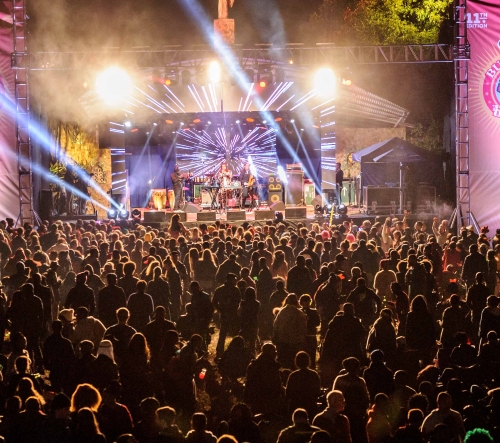
The city of Shashamane, which hosts a large community of Rastafarians, hosts an annual two-day concert on the occasion of Bob Marley’s birthday in February called Reggae in the Rift Valley with the participation of numerous local and international reggae musicians.
Challenges
Ethiopia's lack of live music venues is not the only problem that reggae artists have to endure.
Fees for hiring out venues are not consistent. If performances are successful and the audiences large, owners tend to inflate their prices for hiring the venue. On the contrary, if concerts fail to attract enough people, venues will be quick to look for an alternative group - and the choice is large.
It must be said that the music scene in Addis Ababa is particularly unstable. Over 20 excellent music bands can be heard in the capital at any given time, featuring diverse styles ranging from traditional to Ethio-jazz. Numerous large groups - such as Zemen Band, Zagol Band, Lubac Acoustic Band, Admas Acoustic Band, Express Band or Hasset Band - perform weekly in numerous venues, playing a mix of popular Ethiopian music, international hits and some reggae.


Most popular

Top Naija songs of 2026
31 Mar 2026

Top Afrobeats songs of 2026
19 Mar 2026

Top amapiano songs of 2026
16 Feb 2026

Ghana: Mr Eazi and MOLIY’s ‘Comfort’ earns Urban Music Awards nomination
21 Oct 2026
Open call: CANEX Music Business Lab and Songwriting Camp
15 Oct 2026
Nigeria: CANEX WKND unveils 2026 programme
21 Oct 2026
Disclaimer: Music In Africa provides a platform for musicians and contributors to embed music and videos solely for promotional purposes. If any track or video embedded on this platform violates any copyrights please inform us immediately and we will take it down. Please read our Terms of Use for more.

Subscribe to our monthly Newsletter
Follow us on social media


Please log in to post a comment.