



























































Remembering Pat Mokoka of the Malopoets – seminal South African music
15 Jun 2021 - 11:46


By Gwen Ansell
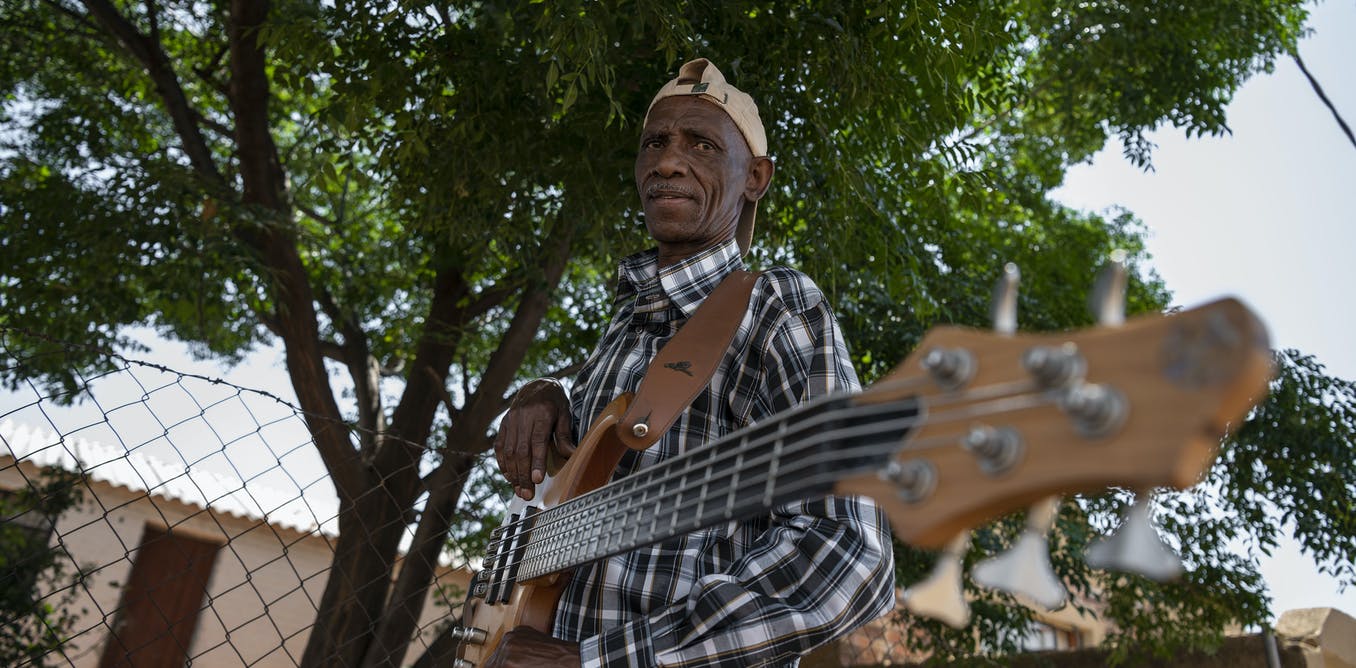
The lack of archive around the life and music of bass guitarist Patrick Thabo ‘Pat’ Mokoka is emblematic of how little South African cultural history has really been preserved. Mokoka, a founder member of the radical, influential 1980s musical outfit the Malopoets, died last week.
I did not know Mokoka well. I interviewed him once in 2019 for a story tracing the history of the Malopoets, when it appeared possible that their first album, the 1979 Rebirth, might be reissued. That album had been ‘lost’: probably buried by an apartheid-era record industry unwilling to handle its risk-taking fusions, deliberately unpolished sound and radical messages. Although an intact master tape was discovered by independent label Matsuli Music, one of the surviving rights holders withheld permission for its rerelease.
Mokoka hoped that mind might change: “I still believe we might hear one of those songs one day. A beautiful, raw African sound … it had our touch; who we are. You’d hear it and say. this is Malopoets [especially in] Duze (Mahlobo)’s deep African touch on the guitar.”
The roots of the Malopoets, and of Mokoka – like the roots of so much innovative South African jazz – lay in the Tshwane region, just north of Johannesburg, and malombo music.”
Starting out
Mokoka studied with legendary Mamelodi guitarist Lawrence Hendrick Mampya Moloisi, who died in 2020. Moloisi had taught himself guitar on a self-made oilcan instrument and co-founded black consciousness performance group Dashiki with artist Lefifi Tladi and others in the early 1970s. Integral to the group’s politics was spreading and sharing knowledge, so he taught too. In Moloisi’s classes, Mokoka met pianist Don Laka: the start of another long friendship.
Mokoka then joined Afrika, the band founded by reedman Abbey Cindi, which included multi-instrumentalist Pat Sefolosha. At a Durban festival, Afrika encountered the band Third Generation, including drummer Bruce ‘Madoda’ Sosibo and guitarist Duze Mahlobo. Journeys, collaborations and intense political conversations between the KwaZulu-Natal and Pretoria musicians led to the founding of the Malopoets (malopo referencing a practice of spiritual healing) on 7 July 1978. The date was chosen because it was the birth date of US jazzman John Coltrane.
The Malopoets
In multiple ways, the Malopoets challenged current debates about South Africa’s separatist ideology apartheid. They also prefigured the new visions of tradition heard today in work from musicians as varied as Sibu Mashiloane, iPhupho L’Ka Biko, Sibusile Xaba and more.
Apartheid sought to divide people by race – and by region and tribe. The Malopoets crashed these divides. Mokoka recalled: “We were two Pedis, two Zulus and a Shangaan. And in those days, that was important – that we were together.”
They mashed up genre boundaries with an explicit Africanist orientation, and a sound that deliberately eschewed the smoothness of commercial music. Mokoka said: “We were listening to Manu Dibangu, Fela [Kuti], Osibisa. We thought, no, if we can combine something from malombo [jazz tradition], and poetry, it can sound a bit different. So we made researches. We listened to Pedi music, Zulu music, Shangaan music and that’s where we got new ideas. We thought, if we can work around all these tribes together we can make something that reflects us.”
Malopoets’ lyrics reflected the experiences of working people in struggle, of hungry children, absent fathers and harsh conditions in the mines. The band’s practice was equally challenging. They played solidarity concerts for strikers and protest movements, and adopted a collective working style.
All this came at a personal cost. The band ate little, slept on floors or camped clandestinely in deserted buildings on their travels. Sefolosha, by then in a relationship with a Swiss woman he later married, was harassed wherever they went. Percussionist Eugene Skeef was hunted for his political activities. The band’s first manager, student organiser Ben Langa, would be murdered by apartheid agents in 1984. Police sabotaged concerts.
The Malopoets cut a second album, Fire, in 1982, with the first still mysteriously absent. By then some members had already left South Africa for exile and a new management was trying to soften the radical image. In 1983, the band left for a European tour, where they faced further attempts from promoters to remould the sound into what overseas audiences stereotyped as ‘African pop’: electric keyboards, self-consciously exotic attire and more. If they didn’t conform, they were told, they would be sent home.
Mokoka was part of some of the tours, but also returned to South Africa intermittently, featuring, for example, on the band Ozila’s 1984 hit ‘I’m Suffering’. In 1985, torn apart by the pressures and disheartened by Langa’s murder, the Malopoets split. Some members stayed in Europe, Sefolosha settled in the US, others, including Mokoka, came home. He was back in Europe for a 1989 promotional tour with a new-incarnation Malopoets album Life is for Living. But under the multinational Virgin label, a very different ethos prevailed.
Mokoka told me: “The spirit, the communication couldn’t be the same as it was, because of this thing of [somebody] being ‘the bandleader’ … We had sacrificed our lives and stayed away from our families to be with this band back then … It was very sad, the way it ended.”
Those solid bass grooves
Back in South Africa he continued playing bass. For 25 years he was Don Laka’s regular bassist. He also played with Blondie and Pappa, Vusi Mahlasela and many others as well as countless sessions, often uncredited. When we met, it was clear hard economic times were never far away.
In a heartfelt Facebook tribute, Laka recalls Mokoka’s final concert with him, on 30 May this year: “Pat played some serious bassline that brought tears to my eyes. Those solid bass grooves … will ring in our ears for decades. Transit well, dear brother, you will be missed.”
We rarely consider how important the sound of the bass is to a band’s identity. Mokoka’s bass voice was one such shaping sound. Yet there are no histories recording those vital chains of community, creativity and inspiration from Dashiki to Afrika to the Malopoets to Mahlasela and Laka, that music students can consult. There is no biography of the hugely influential teacher Moloisi, mentioned by almost every Pretoria musician I have ever interviewed.
Robala ka khotso (rest in peace), Patrick Mokoka. May your library of memory and creativity not have burned in vain.
Gwen Ansell is an associate of the Gordon Institute for Business Science at the University of Pretoria. This article first appeared on The Conversation.


Most popular

Top Naija songs of 2026
31 Mar 2026

Top Afrobeats songs of 2026
19 Mar 2026

Top amapiano songs of 2026
16 Feb 2026
Open call: CANEX Music Business Lab and Songwriting Camp
15 Oct 2026

Ghana: Mr Eazi and MOLIY’s ‘Comfort’ earns Urban Music Awards nomination
21 Oct 2026

Nigeria: CANEX WKND unveils 2026 programme
21 Oct 2026
Disclaimer: Music In Africa provides a platform for musicians and contributors to embed music and videos solely for promotional purposes. If any track or video embedded on this platform violates any copyrights please inform us immediately and we will take it down. Please read our Terms of Use for more.

Subscribe to our monthly Newsletter
Follow us on social media


Please log in to post a comment.