































































The opening track on Harmattan and Winter, the English side of Brymo’s latest bipartite album 9, is calm and reflective. ‘Akoko’, the opening track on Èsan, the Yoruba part of the album, is an exultation of victory. Both songs are a splendid summary of the albums, which are pleasant musical projects with sheer variation in concept and melody.
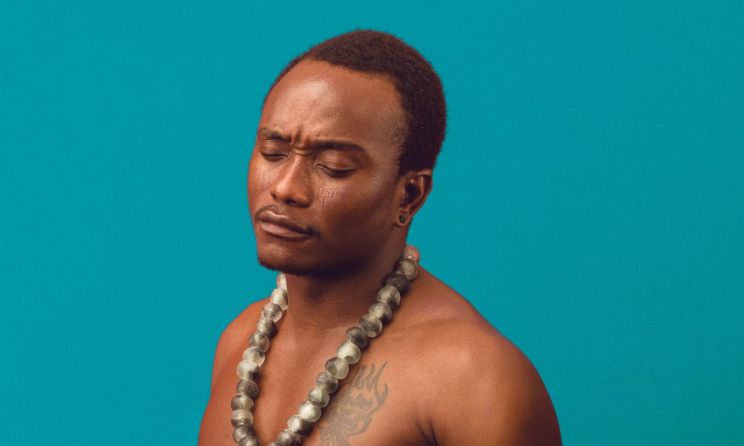
The albums are made up of nine tracks each. Brymo explained via Twitter that Èsan, slightly altered by a diacritic, translates to English as ‘revenge’, instead of the expected Esán, which means ‘nine’, while Harmattan and Winter symbolise the transition from insufficiency to abundance.
More than a decade in his career, Brymo’s sound keeps evolving and now seems to have reached a tipping point of its own. His earlier albums are filled with R&B and pop, reggae and hybrid-fuji. These days he experiments with alternative and fusion rock, darkly humorous folk and sui generis folk ballads, each one esoteric, weirder, and more ascertained than the last. Projects 9 and Èsan are a beautiful departure from the subtle denial and sarcasm of Libel, and the hedonistic perspective of Yellow. Sonically, the albums create a calm, soothing musical journey compared to the positivism of Libel and the electronic, sophisticated pop of Yellow. The albums are garnished with fusion-rock, alternative folk and folk ballads. They are woven together by European and Yoruba effects.
Unlike in Libel where he featured the singer Deborah Prest on ‘Time’, and the pseudo-collaboration on Yellow, where he allotted ‘Abu Ya’ to the songstress Lindsey Abudei, Brymo wrote and performed all the songs on these projects. His longtime friend and collaborator Mikky Me Joses produced and mastered all the tracks in Èsan. Ezenwa ‘Bigfootinyourface’ Ogbonna helmed production and mastering on Harmattan and Winter.
As with his older projects, Brymo sings about love and heartbreak, society and politics on these albums, albeit via a fresh and more affecting delivery. His outstanding vocal and melodic phrases add to the albums’ irresistible beauty. On the grim but succinct ‘The Dark’ and ‘Okunkun’, Brymo latches on to a streak of mortality, where his emotional instability translates to a tonal ambiguity, tinged with a creeping note of existential dread and tears. According to the album’s producer, Brymo cried at the end of the song. And when a curious fan on Twitter asked Brymo about the length of the song, the singer replied that he didn’t think it humane to make anyone listen to their imminent mortality for more than two minutes.
‘Emotions and Limbs’ gives a subtle account of his temporary separation from his wife Esse. The first verse provides a brief picture of the wrecked emotions that led to the temporary breakup; the second verse talks about his sexual activities with other ladies, and how empty he felt within after seeking pleasure instead of love. ‘Fura Sara’ highlights the importance of privacy. The song is a cautionary tale in which Brymo admonishes his lover to be watchful of backbiters, whose sole intention is to destroy their relationship. The song is parallel to ‘Banuso’, from 2018’s Oso, in which Brymo preaches the importance of keeping secrets to oneself, instead of confiding in other people.
Matters of the heart, as beautiful and sweet as they are, run the risk of turning ugly and bitter. On ‘I Don’t Have A Heart’ and ‘Okan Mi Ti Fo We we’, Brymo shares of his brief depression during his temporary separation from his wife, and his effort to protect his marriage from crumbling. Both songs are the same, just as ‘Okunkun’ and ‘The Dark’. Despite their difference in language and style, the messages in the songs are not lost in translation: they retain their auras and intent. That’s a clever and unusual feat to pull off.
‘Áarè (The President)’, ‘Áléluyá Méjéméjé’, and ‘There’s a place’ give snappy dissections of a chaotic Nigerian society and its politics. ‘Áarè’ provides a satirical account of the disturbances that happen before and after the President visits a state. ‘Áléluyá Méjéméjé’ has a religious undertone, and ‘There’s a place’ discusses accepting responsibility instead of shirking it.
Family is an integral part of Brymo’s music. In ‘1986’, the opening track from his sophomore album The Son of A Kapenta, he reminisces about the sacrifices of his mother since his birth. On ‘Dear Child’, off Tabula Rasa, Brymo celebrates his wise grandma, who warns him that “life is nothing but vanity.” He dedicates ‘Naked’, from the percussion-heavy Klitoris to Esse. In Oso, he inscribes the aptly titled ‘Mama’ to his mother. ‘Olarenwaju’, also from Oso, and ‘Adedotun’ from Yellow are respectively dedicated to his sons. Now, on the soulful ‘Winifred’, he sings about the kindness and resilience of his mother-in-law. “Give it all for Winifred, she knows, her heart is made of gold,” Brymo pours in the song’s first verse. “Give it all for Winifred, she knows, the world may turn so cold, no one wants to eat alone.”
Brymo’s music is surreal. It's impressive how he juxtaposes words with images to create a haunting sense of absurdist pleasure, existential horror, and latent eroticism. The instrumentation on ‘Harmattan and Winter’, coupled with Brymo’s emotionally wrecking lyrics provide a feeling that’s hard to neglect. Although the song seems abstract, the video provides a clearer picture of the story; characterised by visual tics and interpretive dancing, like we see in ‘Stripper + White Wine’, from 2020’s Yellow.
The reason Brymo divides the project into two different languages and styles is, perhaps, to ensure flow and clarity. Still, the move risks sending mixed messages, especially in the streaming era, where people are more inclined to consume albums in a strip. Also, the absence of songs in Nigerian pidgin somewhat deprives the albums of their wholesome attitudes.
Ultimately, Harmattan and Winter is a compelling portrait of an artist devoted to good music. Èsan is an exemplary Yoruba album that tells outstanding stories with panache and detail. Unrushed and reflective, both albums are delightfully philosophical and entertaining entries into Brymo’s oeuvres.
Artist: Brymo
Album: 9
Label: Independent
Year: 2021


Most popular

Top Naija songs of 2026
31 Mar 2026

Top Afrobeats songs of 2026
19 Mar 2026

Ghana: Mr Eazi and MOLIY’s ‘Comfort’ earns Urban Music Awards nomination
21 Oct 2026

Top amapiano songs of 2026
16 Feb 2026

Open call: CANEX Music Business Lab and Songwriting Camp
15 Oct 2026

Nigeria: CANEX WKND unveils 2026 programme
21 Oct 2026
Disclaimer: Music In Africa provides a platform for musicians and contributors to embed music and videos solely for promotional purposes. If any track or video embedded on this platform violates any copyrights please inform us immediately and we will take it down. Please read our Terms of Use for more.

Subscribe to our monthly Newsletter
Follow us on social media


Please log in to post a comment.