
































NEFCISA
NEFCISA

The Music In Africa Foundation (MIAF) is proud of its partnership with the Industrial Development Corporation (IDC) as a Strategic Implementing Partner (SIP) for its Social Employment Fund (SEF). Through this collaboration, MIAF is running a national programme that is creating jobs, addressing skills gaps, and strengthening South Africa's creative industries — in line with the SEF's overarching goal to generate work for the common good and build community value through employment, social contribution, and inclusive economic participation. Operating under the banner NEFCISA (National Employment Facility for Creative Industries in South Africa), the initiative is recruiting and training participants, matching them with host organisations, and has already placed 1 500 workers across the country — surpassing its original target of 1 000. NEFCISA is delivered through a network of 20 host organisations spanning five provinces, who are actively hosting participants and contributing to work for the common good across South Africa's creative and cultural industries. Key Objectives: Support employment and entrepreneurship in the creative industries. Offer skills development and training programmes. Foster partnerships between public and private creative sectors. Promote South African creativity at both provincial and national levels Foster community development through social contribution.

ACCES
ACCES

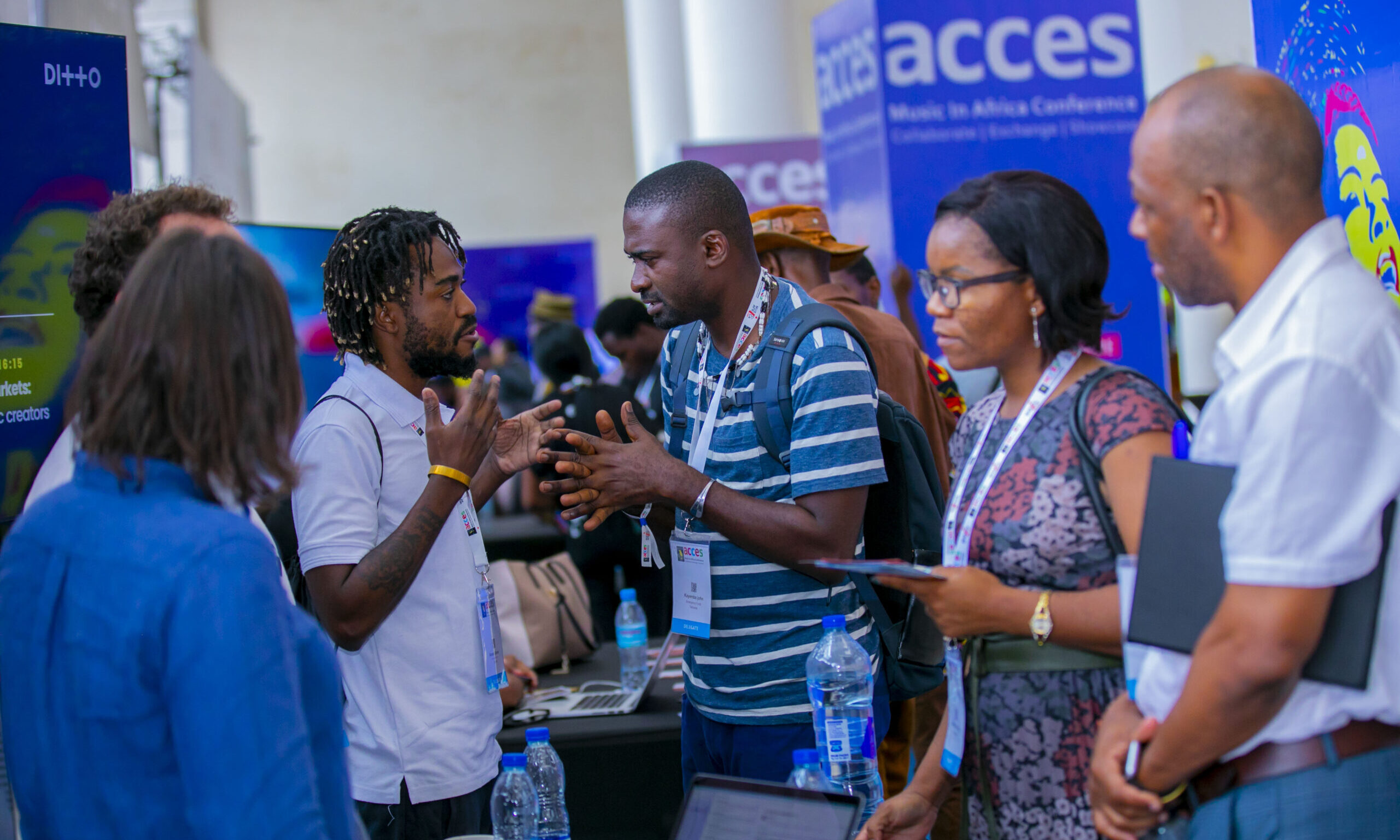
ACCES Conference and Showcase Festival is Africa's leading music industry gathering, bringing together the people shaping the future of the continent's music business. Artists, entrepreneurs, executives, investors, policymakers and cultural leaders from across Africa and around the world come to ACCES to build partnerships, exchange ideas, discover talent and create new business opportunities. Since its launch in 2017, ACCES has become the continent's premier platform for professional exchange and music market development. Combining a high-level conference with a curated showcase festival, networking, exhibitions and industry programmes, ACCES offers a unique space where creativity meets business and where African music connects with the global industry.

Gender@Work
Gender@Work

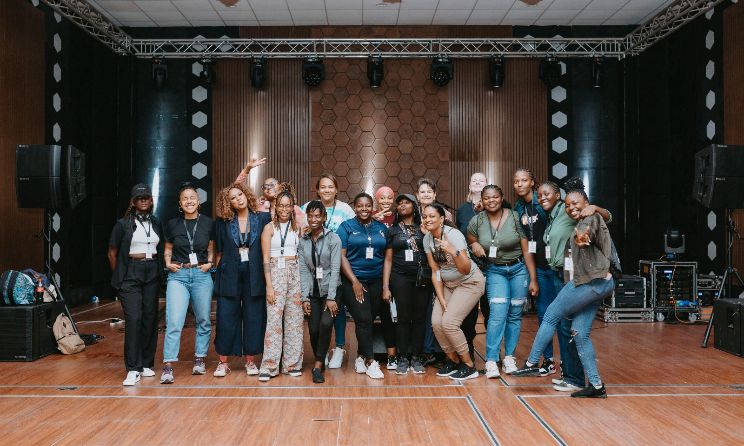
Music In Africa Gender @ Work is a three-year training programme aimed at upskilling and increasing the participation of female professionals in the African music sector. Launched by the Music In Africa Foundation (MIAF) in April 2019, the programme is connected to the MIAF’s ACCES music conference – a pan-African event held in a different African country every year. This connection enables the programme to reach new participants in a different African country every year. The programme marks the beginning of a more concerted effort by the Foundation to support the participation and inclusion of women in all facets of its programmes and the music sector in Africa as a whole. Over the three years, the programme will aim to address gender imbalances in the sector through training, lobbying, facilitating knowledge exchange and dialogues that foster the interest of women. The broader objectives of the programme are to: Provide industry training for women on critical music industry skills, focusing on: Stage management Electronic music production and recording Music business management Technical knowledge Provide an opportunity for both professional and aspiring women to benefit from the Music In Africa network and its broad range of activities in 2019, 2020 and 2021. Provide a solution-based platform in the form of a round table at ACCES with a view to identify challenges, discuss opportunities and lobby for the interests of female practitioners. Offer participants the opportunity to benefit from programmes offered by MIAF’s partners. Increase access to educational materials. Integrate participants in the broader ACCES programme to maximise experience and exposure to the industry. Record and present training materials on the www.musicinafrica.net, including but not limited to tutorials, templates and other best-practice materials. Communicate women-based themes that support the initiatives and messages of the programme. MAIN TRAINING ACTIVITIES Training in first country (Ghana): In the first year, participants will be trained on all aspects of stage management by a team of experienced stage managers from 10 to 17 November 2019. The programme will offer robust classroom training as well as practical, hands-on training in which participants will also be given the opportunity to manage various aspects of the ACCES performance programme. Training in second country: The second training iteration will take place at ACCES 2020 when the programme will diversify its course to include music production lessons and training on other music business topics. A round-table platform will also be introduced to coincide with the ACCES programme. Training in third country: The third training iteration will take place at ACCES 2021 in a different country, offering an advanced course. HOW DO YOU GET INVOLVED?  As a participant, facilitator or trainer: The programme enrolls up to 12 trainees every year. All opportunities are advertised publicly on this website, and will be added to this page. Please keep checking this page for new calls (below under UPDATES & CURRENT OPPORTUNITIES). As a partner Please contact Claire Metais at [email protected]. APPLY The call for applications for 2020 will be announced soon. The Music In Africa Gender @ Work programme is made possible with the support of the Prince Claus Fund, Siemens Stiftung and Goethe-Institut.

Sound Connects Fund
Sound Connects Fund

For cultural and creative practitioners and organisations operating in southern Africa, access to funding remains a major challenge. The COVID-19 pandemic has also had a massive impact on government policy, spending and the economy in general, and has seen spending on culture being moved further down the list of priorities. Further, the cultural and creative industries repeatedly cite four main areas where investment is needed for growth, which are increased visibility, mobility including access to new markets, finance and support structures.

Instrument Building And Repair Project

Experience the Vibrations African Instruments Exhibition online in 3D

News

SA gospel star Sfiso Ncwane feels the heat from local media
30 Sep 2015 - 10:09

cc-img flag-img

One of the most popular gospel singers in South Africa, Sfiso Ncwane has been making headlines lately for all the wrong reasons…
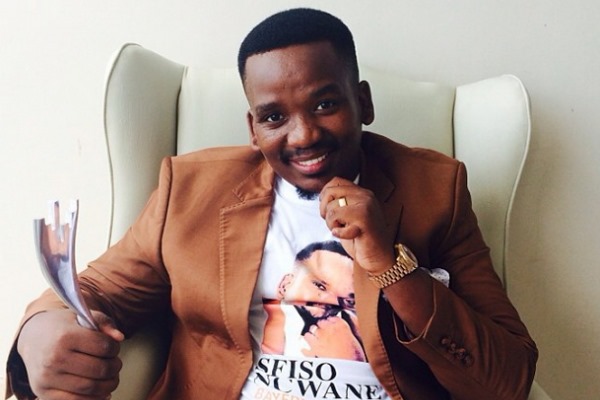
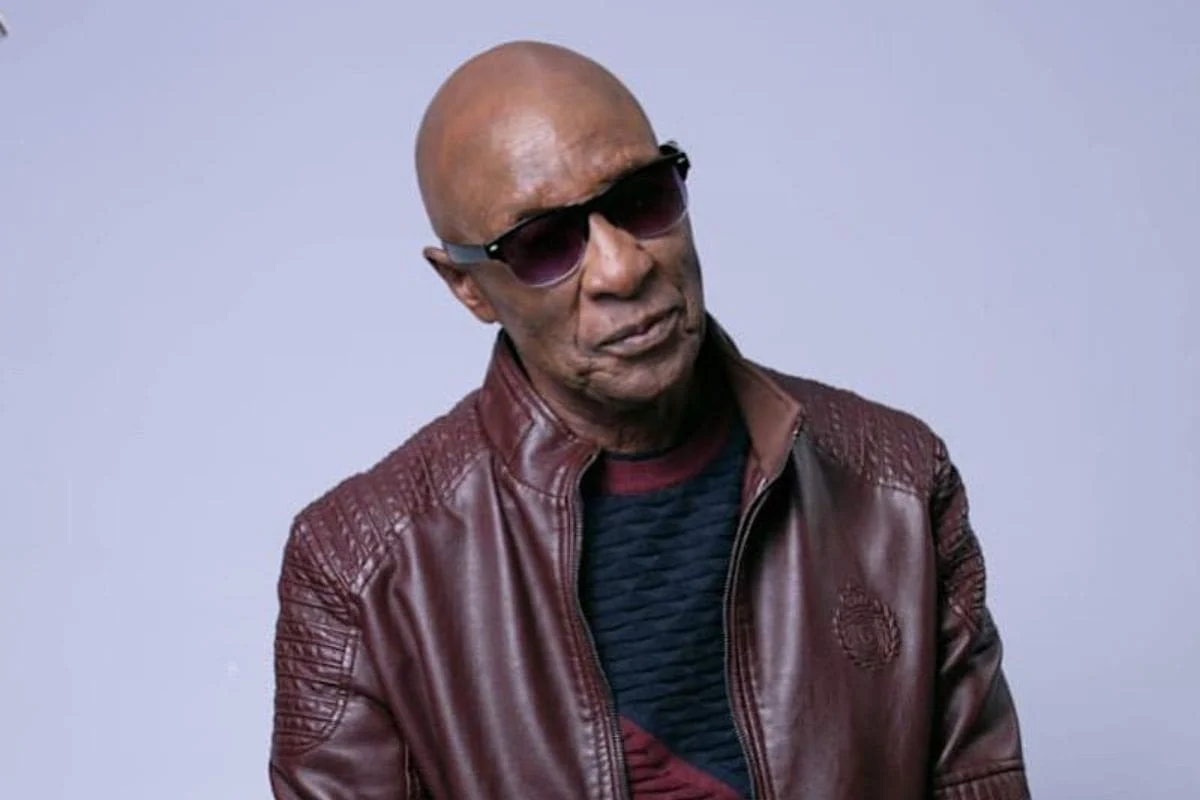
Sfiso Ncwane. Photo: www.macufe.co.za

A few weeks ago, in mid-September, the singer reportedly bought a V8 AMG Mercedes-Benz worth R1,9m (US$137 000) for his pastor, Reverend Francis Anosike of Rock of Victory Ministries church. The gift was apparently in appreciation of Anosike’s support and prayers while Ncwane had been ill. Ncwane credits the Johannesburg-based Nigerian pastor for leading him to become a born-again Christian in 2006.

A week later, after seeing the story on the cover of Daily Sun, South Africa’s largest daily paper, Ncwane’s mother Fikile said she almost fainted when she saw pictures of her son handing over the car, claiming her son and his wife Ayanda do not support her. “I have been starving. Sometimes I go to sleep without any food,” Fikile told Daily Sun. “This is my son, whom I carried for nine months, the son that I raised without support from his dad, that was giving another man a car.”

Ncwane promptly responded by apologising to everyone who was offended by his gesture, but affirmed that he did not regret buying the top-of-the-line car for the pastor. He told radio station Vuma FM that he had been taking care of his mother and had even built her a house and furnished it. Rubbishing the accusations of neglect, he blamed the media for twisting the story. As a public gesture he then filled his mum’s fridge with groceries to the tune of R2000 (US$144).

Just when it seemed the dispute between mum and son was resolved, earlier this week the gospel star dropped another bombshell when he alleged that Fikile is not his real biological mother and that he wanted to dump her surname and instead adopt Zikhali, the surname of his late father. “I don’t think she is my biological mother,” he told Drum. “She claims to be my mother, but there’s no proof of it - no one saw her giving birth to me. All I know is that she left me with some relative of hers when I was only two weeks old. She never raised me and she refused to show me my father.”

Apparently contradicting his earlier statement, the singer justified not supporting his mother by saying that she used the R3000 (US$216) monthly allowance he gave her to consult traditional healers. As a born-again Christian, Ncwane could not stand having his money spent on spiritual practices which he said were against his faith, like the consultation of sangomas. He claimed that his mom had “zombies” in her house. “This is the reason why I decided to stop going home and to not send my wife and kids there just in case they got sick. My mother is fighting with me because she wants me to consult traditional doctors, but I don't go to sangomas or inyangas,” he told Drum

Fikile (60) responded angrily with a warning that her celebrity son carry would face a life of bad luck. She told Daily Sun of her unhappiness on hearing that Sfiso wanted to change his surname. “He can change it if he likes, but he will suffer for the rest of his life!” she said. “Sfiso claims that I didn’t raise him, but that’s a lie. I worked from house to house as a domestic worker, and I earned only a little. I couldn’t take him with me to work so he had to stay with different families. But I made sure that I sent him the little that I earned. His father didn’t care. In fact, he ran away and returned only when Sfiso was famous,” she said.

In response to her son’s ‘zombie’ accusation, she told Daily Sun: “Yes, I do perform rituals in my house to protect it from thunderstorms and evil spirits… Maybe Sfiso doesn’t understand that as he is a born-again Christian.”

When contacted by the paper for comment, Sfiso apparently hung up his phone, and was not willing to respond to messages.

As if the public spat with his mom isn’t bad enough for the star’ image, on 30 September Ncwane was back in the headlines for another reason, after Times Live reported that a woman named Pinky Dlamini, had surfaced claiming the gospel singer is the father of her 11-year-old son and that “he has done nothing for his son”. Ncwane responded by denying that the child was his and offered to take a DNA test to prove it.

Ncwane is one of the biggest-selling artists in South Africa’s lucrative gospel market. His albums include Baba Ngiyavuma (2007), Kulungile Baba (2010) and Bayede Baba (2014). He has picked up numerous awards, including a South African Music Award (SAMA) in 2013 for Record of the Year, the first time in the history of awards that a gospel song was even nominated, and an award that is voted for by the public.

Earlier this month, on Friday 11 September, Ncwane was invited to be part of a panel discussion on the local gospel industry during the recent Moshito music conference, but showed up five minutes before the end of the two-hour session. One of the topics discussed during the panel was how, as an artist, the media can either make or break you...

Please log in to post a comment.

Most popular

Disclaimer: Music In Africa provides a platform for musicians and contributors to embed music and videos solely for promotional purposes. If any track or video embedded on this platform violates any copyrights please inform us immediately and we will take it down. Please read our Terms of Use for more.

newsletter banner

Subscribe to our monthly Newsletter

Follow us on social media