









NEFCISA
NEFCISA

The Music In Africa Foundation (MIAF) is proud of its partnership with the Industrial Development Corporation (IDC) as a Strategic Implementing Partner (SIP) for its Social Employment Fund (SEF). Through this collaboration, MIAF is running a national programme that is creating jobs, addressing skills gaps, and strengthening South Africa's creative industries — in line with the SEF's overarching goal to generate work for the common good and build community value through employment, social contribution, and inclusive economic participation. Operating under the banner NEFCISA (National Employment Facility for Creative Industries in South Africa), the initiative is recruiting and training participants, matching them with host organisations, and has already placed 1 500 workers across the country — surpassing its original target of 1 000. NEFCISA is delivered through a network of 20 host organisations spanning five provinces, who are actively hosting participants and contributing to work for the common good across South Africa's creative and cultural industries. Key Objectives: Support employment and entrepreneurship in the creative industries. Offer skills development and training programmes. Foster partnerships between public and private creative sectors. Promote South African creativity at both provincial and national levels Foster community development through social contribution.

ACCES
ACCES

ACCES Conference and Showcase Festival is Africa's leading music industry gathering, bringing together the people shaping the future of the continent's music business. Artists, entrepreneurs, executives, investors, policymakers and cultural leaders from across Africa and around the world come to ACCES to build partnerships, exchange ideas, discover talent and create new business opportunities. Since its launch in 2017, ACCES has become the continent's premier platform for professional exchange and music market development. Combining a high-level conference with a curated showcase festival, networking, exhibitions and industry programmes, ACCES offers a unique space where creativity meets business and where African music connects with the global industry.

Gender@Work
Gender@Work

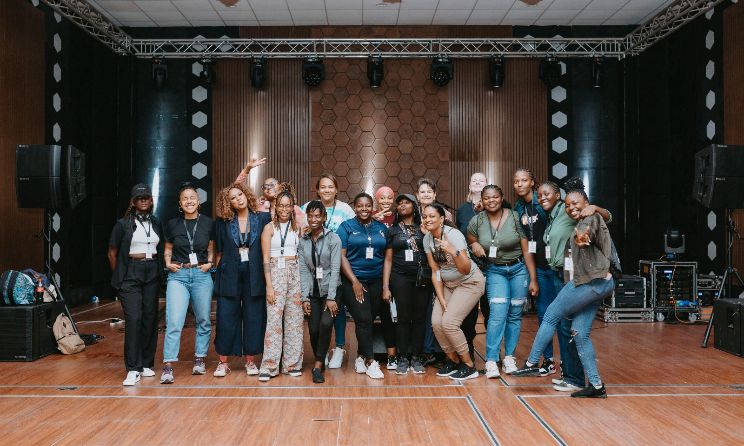
Music In Africa Gender @ Work is a three-year training programme aimed at upskilling and increasing the participation of female professionals in the African music sector. Launched by the Music In Africa Foundation (MIAF) in April 2019, the programme is connected to the MIAF’s ACCES music conference – a pan-African event held in a different African country every year. This connection enables the programme to reach new participants in a different African country every year. The programme marks the beginning of a more concerted effort by the Foundation to support the participation and inclusion of women in all facets of its programmes and the music sector in Africa as a whole. Over the three years, the programme will aim to address gender imbalances in the sector through training, lobbying, facilitating knowledge exchange and dialogues that foster the interest of women. The broader objectives of the programme are to: Provide industry training for women on critical music industry skills, focusing on: Stage management Electronic music production and recording Music business management Technical knowledge Provide an opportunity for both professional and aspiring women to benefit from the Music In Africa network and its broad range of activities in 2019, 2020 and 2021. Provide a solution-based platform in the form of a round table at ACCES with a view to identify challenges, discuss opportunities and lobby for the interests of female practitioners. Offer participants the opportunity to benefit from programmes offered by MIAF’s partners. Increase access to educational materials. Integrate participants in the broader ACCES programme to maximise experience and exposure to the industry. Record and present training materials on the www.musicinafrica.net, including but not limited to tutorials, templates and other best-practice materials. Communicate women-based themes that support the initiatives and messages of the programme. MAIN TRAINING ACTIVITIES Training in first country (Ghana): In the first year, participants will be trained on all aspects of stage management by a team of experienced stage managers from 10 to 17 November 2019. The programme will offer robust classroom training as well as practical, hands-on training in which participants will also be given the opportunity to manage various aspects of the ACCES performance programme. Training in second country: The second training iteration will take place at ACCES 2020 when the programme will diversify its course to include music production lessons and training on other music business topics. A round-table platform will also be introduced to coincide with the ACCES programme. Training in third country: The third training iteration will take place at ACCES 2021 in a different country, offering an advanced course. HOW DO YOU GET INVOLVED?  As a participant, facilitator or trainer: The programme enrolls up to 12 trainees every year. All opportunities are advertised publicly on this website, and will be added to this page. Please keep checking this page for new calls (below under UPDATES & CURRENT OPPORTUNITIES). As a partner Please contact Claire Metais at [email protected]. APPLY The call for applications for 2020 will be announced soon. The Music In Africa Gender @ Work programme is made possible with the support of the Prince Claus Fund, Siemens Stiftung and Goethe-Institut.

Sound Connects Fund
Sound Connects Fund

For cultural and creative practitioners and organisations operating in southern Africa, access to funding remains a major challenge. The COVID-19 pandemic has also had a massive impact on government policy, spending and the economy in general, and has seen spending on culture being moved further down the list of priorities. Further, the cultural and creative industries repeatedly cite four main areas where investment is needed for growth, which are increased visibility, mobility including access to new markets, finance and support structures.

Instrument Building And Repair Project

Experience the Vibrations African Instruments Exhibition online in 3D

News

Sacem distributes $1.69bn in 2025 as digital growth surpasses France
08 May 2026 - 13:04

cc-img flag-img

Sacem distributed €1.502 billion (about $1.69 billion) to authors, composers and publishers in 2025, a 9% increase compared with the previous year, as growth from international digital platforms continued to exceed domestic performance.

SACEM chief executive Cécile Rap-Veber.

The Paris-based collecting society said it paid royalties to 663 000 rights holders globally over the year, according to results published on 6 May.

International collections rose 13% to €845 million ($954m), driven primarily by digital platforms and overseas markets. Revenue collected within France was broadly stable at €859 million ($970m), slightly up from €852 million in 2024, with live performance cited as a supporting factor.

Overall revenue increased 21% year on year to €1.804 billion, compared with €1.487 billion in 2024.

Sacem said the figures reflect the continued dominance of streaming and global distribution in music consumption. The organisation stated that industry growth is “increasingly built on international expansion and digital initiatives”.

The company noted that around 40% of streaming royalties for its members are now collected directly from international markets.

Chief executive Cécile Rap-Veber said the results reflected both strategic investment and structural change in the industry.

“Our performance in 2025 is proof that the strategy we have adopted is a sound one, based not only on digital and international expansion, but even more so on the role we play in fostering creativity throughout France,” she said.

She added that technological investment had been central to operational improvements, pointing to systems designed to process large volumes of data more efficiently. “This momentum stems from major technological investments, such as the URights platform, which enable us to process ever-increasing volumes of data with greater speed, reliability and transparency,” she said.

Sacem also reported growth in its membership base, with around 13,500 new members joining in 2025. Of these, 27% were under 25, bringing total membership to just over 251,000. Approximately 12% of members are now based outside France.

The organisation said it also invested €17.8 million in cultural initiatives during the year, supporting festivals, live performances in smaller venues, and music education and outreach programmes in schools, care homes and correctional facilities.

Chairman Patrick Sigwalt said Sacem’s mandate had remained consistent over its long history. “Since its creation, its mission has never wavered: to protect creators, foster musical diversity and support all those who bring music to life across the country,” he said.

He added that the organisation had expanded significantly in scope. “Over 175 years, Sacem has grown in scale: from a society supporting around a hundred creators in France, it has become a global player in over 180 markets, remunerating 663,000 creators and publishers worldwide,” he said.

Sigwalt also highlighted Sacem’s role in local cultural funding, including support for small venues and municipal events, particularly in communities facing budget constraints.

The organisation’s results come amid broader comparisons with other major collecting societies. In 2025, the US-based ASCAP reported revenues of $1.945 billion, up 6%, while Germany’s GEMA recorded €1.34 billion, a 0.4% increase.

Sacem said its expense-to-revenue ratio stood at 9.8%, which it described as among the lowest globally. It added that operational efficiencies had reduced online royalty fees to 7% from 2026 and shortened distribution timelines.

The company also expanded its management of physical format rights across Europe, with Sony Music Entertainment, Warner Music Group and BMG joining Universal Music Group in mandating Sacem to administer their European rights.

Looking ahead, Rap-Veber identified artificial intelligence as a key challenge for the sector.

“Just as we did with streaming platforms over fifteen years ago, we have set our sights on partnering with AI providers to ensure a fair and protective framework for creators,” she said. “And 2026 will be a pivotal year in this regard, driven by ongoing legislative developments.”

Sacem said it has also contributed to industry discussions on AI copyright standards and participated in international policy forums, as collecting societies adapt to rapid technological change in the music sector.

Please log in to post a comment.

Most popular

Disclaimer: Music In Africa provides a platform for musicians and contributors to embed music and videos solely for promotional purposes. If any track or video embedded on this platform violates any copyrights please inform us immediately and we will take it down. Please read our Terms of Use for more.

newsletter banner

Subscribe to our monthly Newsletter

Follow us on social media