































































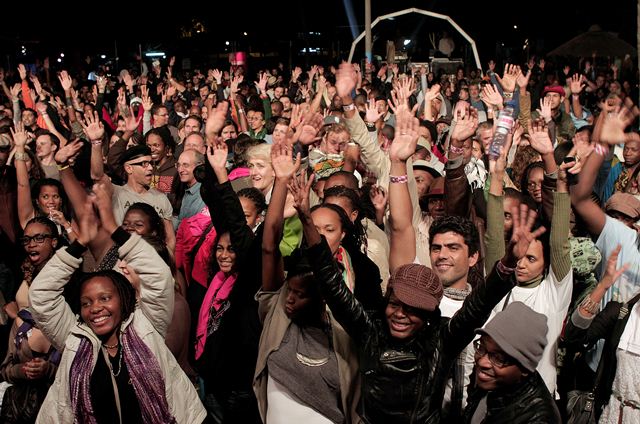
Festivals provide space for both emerging bands and established performers to showcase their talent. Without their support, the African musical landscape would look very different. As the continent's festival scene continues to grow and new festivals emerge all around, Music In Africa spoke to organizers of various African festivals on what it takes to put together an exciting programme for the audience and what artists need to do to earn a place at the various festivals.
Putting the audience first
Yusuf Mahmoud is the director at East Africa’s longest running festival, Sauti za Busara, which enjoys a reputation as one of Africa’s top music festivals and brings together 40 groups to perform in Zanzaibar each year (until the recent cancellation of its 2016 edition), all performing live. Mahmoud says a good festival programmer respects his audience as being intelligent, includes young and emerging talents alongside big-name artists, promotes diversity and thrills in taking risks. “Sauti za Busara strives to showcase a diverse programme of quality African-rooted music that is performed live (no ‘playback’). Our consideration when putting together the programme is the artistic quality, creativity and innovation of the act that is being lined-up and how the audience will appreciate the show,” says Yusuf.
On the other hand, Faisal Kiwewa the director of Uganda’s Bayimba Festival, says festivals have different concepts but what makes them all alike is the idea that they are organized for audiences to experience and be entertained. “Festivals have visions, carried in most cases by the programmers or festival directors," says Faisal. "For a programmer to be successful, he or she has to be able to communicate the vision of the festival to the team. Festivals are not a one-man show – the various components of a festival need several different skills and professions to bring to life."
Besides having the right acts and carrying forward the festival’s vision, being able to produce an exciting programme within the festival’s budget is paramount. “Know your budget and do not overspend on headliners, making it too risky to sell enough tickets to recoup your spend," says Jess White, director of Azgo festival in Maputo, Mozambique. "As new festivals emerge, it is crucial to not overspend to compete and to know your audience”. Held annually since 2011, Azgo is a contemporary celebration of arts and culture with a strong focus on artists from Mozambique and the rest of the continent. For each edition, usually in May, the organizers start programming discussions as early as July the previous year, and the line-up is finalized between February and March of the festival year. The sixth edition for Azgo will be held on 20 and 21 May 2016.
Artist applications and presentation
Even though artists have more options as new festivals continue to emerge, earning a place on any festival’s programme is never a given. To this end, artists usually have to submit applications for consideration. Besides filling out an online application, Will Jameson, the director of Lake of Stars festival in Malawi, says an artist needs to be exciting, passionate and play great music. “Have a well-produced CD and a good live set. Ideally an artist needs to be organized and have updated digital profiles that festivals can use to find out about them - Facebook, Twitter, YouTube and SoundCloud channels should all be active,” says Will. This is particularly important for festivals like Lake of Stars, which have an organising team that is dispersed between the UK, Malawi and South Africa.
Yusuf from Busara Promotions agrees that presentation is crucial, adding that many great musicians suffer from poor promotional materials. To have the possibility of selection for Sauti za Busara, for example, artists need to complete an online application and submit it before end of July of each year.
For Bayimba in Uganda, whose call for entries for the upcoming festival goes up immediately after the current festival ends, the quality of the application also matters. Faisal says it is not convincing for an artist to send a poor sample video when they want to be on a live stage. “Any artist applying for a live performance should submit their previous live performance recordings, as this helps programmers understand their capability as a live act,” notes Faisal.
Watch some highlights from Bayimba 2015 in the video below.
Listening to feedback
Selection is never an easy task for festival organizers. Festivals like Lake of Stars and Bayimba have witnessed a lot of criticism about their choice of artists, whether local or international. For Lake of Stars, agitated parties have further raised issues with the relatively high ticket prices.
For example, Bayimba Festival has been criticized for having controversial Ugandan singer Sheebah Karungi perform at their eighth edition in 2015. Reacting to this, Faisal says criticism is healthy. He says that it is never a mistake when a festival decides to host any given artist. “There is always a reason for such artists to perform at that given festival. It was not a mistake that Bayimba had Sheebah, a mainstream artist, perform at the last edition. I think if an artist is able to remodel themselves to fit on different platforms, that artist deserves credit. Sheebah is an artist who believes in her art. At Bayimba she was able to perform with a band on a live stage. This is not something many people would expect of her. For Bayimba, she represents the ability to innovate and it was important to present this other side of her to the audience,” explains Faisal.
For programmers to be successful, they need to listen to their public. “Feedback is important from artists and guests alike. Promoters cannot improve the festival unless we know what experience people have had. Whether an artist or audience, if something especially good or bad has happened to you, let us know," says Will.
Encouraging diversity
Faisal advises that festivals must offer a good programme but not give in to only what the audience wants them to offer. At a time when the music played on our TVs and radio is mostly commercial, bland and formulaic, programming for niche genres such as jazz or electronic music can be particularly challenging. Faisal says festivals need to introduce audiences to the best acts around and to encourage an interest in new music. “Sometimes audiences are not aware of certain acts. You have to stage them for the audience to experience these acts. At Bayimba, we strive to bring artists who the audience will not be able to find performing live elsewhere in Uganda,” he says.
Yusuf agrees that people need exposure to fresh and exciting music that is largely ignored by mass media. Festival programmers therefore have a duty to showcase diverse music styles that appeal to different audiences.
Programming is about understanding your audience - what they want, and when. According to Will, “There are plenty of amazing African artists, but bringing in an international act - especially one that you may not expect to play in Africa - does help generate interest in an event. The combination of global and African acts is what works for us - combining cultures and styles makes the programme feel truly global. Connecting Malawi to the world is our aim, but that doesn't need to be the format for other events.”
Watch some highlights from Lake Of Stars 2015 in the video below.
Getting it right
All festivals - whether successful or not - have had programming challenges, but what matters is how the programmer envisions the programme and the audience. Common mistakes for programmers including the following: booking too many artists from one particular genre, using venues that cannot accommodate a certain kind of act or audience, or having a relatively low budget for an overly ambitious programme.
For any festival programmer, getting the audience to trust their judgment remains a challenge. Getting an audience to discover artists they don't know and for them to approach the show with an open mind is not an easy task. It's often hard to get sponsorship for niche acts, yet these relatively unknown acts can often be the highlight of a festival. Balancing audience expectations, budgets and technical considerations make festival programming a particularly tough job, as does the need to find the right mix of established and unknown artists. But when programmers get it right, they are the ones we can thank for turning music festivals into unforgettable experiences.


Most popular

Top Naija songs of 2026
31 Mar 2026

Top Afrobeats songs of 2026
19 Mar 2026

Ghana: Mr Eazi and MOLIY’s ‘Comfort’ earns Urban Music Awards nomination
21 Oct 2026

Top amapiano songs of 2026
16 Feb 2026

Open call: CANEX Music Business Lab and Songwriting Camp
15 Oct 2026

Nigeria: CANEX WKND unveils 2026 programme
21 Oct 2026
Disclaimer: Music In Africa provides a platform for musicians and contributors to embed music and videos solely for promotional purposes. If any track or video embedded on this platform violates any copyrights please inform us immediately and we will take it down. Please read our Terms of Use for more.

Subscribe to our monthly Newsletter
Follow us on social media


Please log in to post a comment.