

















































The State of Traditional Music in DR.CONGO
06 Dec 2014 - 15:18


It is surprising to see that traditional music still has a significant place in contemporary Congolese society. The author gives a fairly complete overview of the areas of traditional music in all their varieties
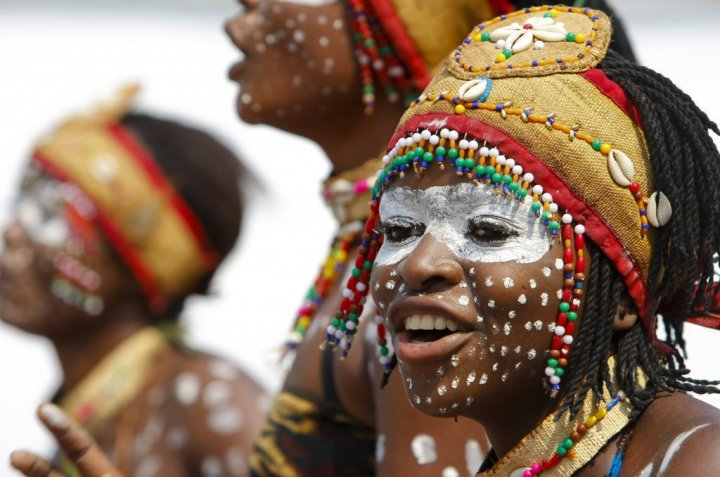
Traditional music: Concept and Controversy
In Francophone Africa, there is a controversy among experts regarding the definition of "traditional music" versus "folk music." Some experts believe that, in the name of a tradition which is dynamic by essence, traditional music belongs to a particular region but is in constant evolution because of the challenges of urbanization and modernity.
On the other hand, the term “folk music” designates ‘tribal’ music confined as is in its original terroir. Other specialists think just the opposite. To make things easier, we will refer to the latter meaning of traditional music.
Therefore, traditional music is synonym with "tribal" music in this text. Traditional music varies according to different life events: birth, including birth of twins, rites of passage, the dynastic rituals, planting and hunting, war, death and bereavement.
Research on traditional music
Traditional music has been extensively studied in conjunction with the vehicular and vernacular national languages because of the natural link between these languages and music.
So far, the most important themes addressed by scientists and academics from the Democratic Republic of Congo institutions (Faculty of Anthropology and the National Institute of Arts) are ethnomusicology (the study of "first peoples" music), ‘drumology’ (study of drums, tom-toms, and traditional instruments common in Africa, and their rhythmic function), organology (study of traditional instruments in general), anthropology of traditional music and their social function through its use, typology and diversity.
It is difficult to have a complete picture of DRC traditional music genres in all their varieties because new styles and rhythms are constantly being produced not only by the tribes, but also by the clans or even families. We can only pick the most representative areas indicating trends and recurring themes. We are therefore required to use the existing administrative and geographical distributions as points of reference.
Urbanization has been so rapid in the last twenty years due to rural exodus and conflicts that almost 60% of the population lives in cities. Urbanization has impacted more and more villages, and gradually transformed lifestyles.
It is therefore difficult today to listen or dance to traditional music that is ‘pure’.
Representative areas of traditional music in DR Congo
The table below is more indicative than exhaustive:
- Bas-Congo Province: This province includes four big ethnic groups: Yombe, Nyanga, Ntandu, Besingombe. The ‘masikulu’ music and dance show of the Nyanga’s is probably the most picturesque and the most well preserved. The music is performed and danced to the rhythm of elephants’ trumps.
- The Bandudu Province is home to tens of ethnic groups from north to south: Ekonda, Nkundo, Ntomba, Sengele, Sakata, Boma, Teke, Banunu,Mbala, Yansi, Mbuni, Pende, Yaka, Suku, Cokwe.. Dances and music of the Ekonda people are based mostly on the ‘bobongo’, a sort of carnival with successive exhibition showcasing royal inauguration hymns, acrobatics shows, and satiric songs denouncing social issues or even traditional leaders. The diversity of instruments and traditional sounds contribute to the frenzy of the ‘bobongo’. We can also mention the ‘mingazi’ music and dances of the Pende people in the south of the Bandudu province. Those music and dances are performed during initiation ceremonies along with games and masquerades.
- The province of Equateur includes mostly the Mongo, Mbuza, Ngombe, Akula, Ngbandi, Azande, Ngbaka. The ‘Engundele’ of music and dance of the Mbuza people are originally war and conflicts songs and dances; they are characterized by provoking guttural sounds and war dances.
- The province of Kasai with the Luba, Lulua, Songue, Tetela, Shilele, Kuba, Cokwe is located in the center of the country. Some of its most known music is the ‘kasala’, a poetic type of songs that is performed during mourning periods or during royal successions. Mourners or ‘griots’ recite the heroic acts of the deceased dignitary. We can also mention the ‘mutswashi’ which are lascivious dances and songs that honor fertility. Let’s also mention the specificity of the “bedibamiyenga”, mourners’ songs of the Luba people and the “lokombe” which are Tetela’s hymn praising local chiefs.
- The province of Katanga is inhabited by the Bemba, Hemba, Luba, Lunda and Tshokwe ethnic groups. The ‘Balubwilu’ are warriors’ songs and dances performed by the Luba people of Katanga. The performers wear impressive costumes made of animals’ skins and feathers; the males’ chants are accompanied by various drum instruments.
- The province-city of Kinshasa is cosmopolitan, with a rich multicultural dialogue. But there are active niches of indigenous Teke people. Their contact with and their immersion in the city has heavily influenced their lifestyle so much that their songs’ style and titles- such as ‘ban’odéon’, ‘zekete-zekete’, ‘sukuma’’ ‘kebo’- are largely urbanized and inspired by the rumba music.
- The greater Kivu region (North Kivu, South Kivu, and Maniema) is home to the Bashi, Rega, Hunde, Nande, Kusu, Twa. The ‘omunde’ is the Nande’s‘song and dance of the sparrowhawk’ imitating the bird singing for hunting purpose. ‘Matackyo’ of the Nande people is a song performed to celebrate newlyweds, it is usually sung by women. The ‘intore’ song and dance belong to the Bashi people, with influences from Hutus and Tutsi people of Rwanda.
- The Oriental Province is home to the Lokele, Wagenia, Azande, Lendu, Hema, Mangbetu, Basoko, Mingado and Topoke people. ‘Kponingo is a Zande song performed during joyful celebrations and accompanied with a xylophone made from a banana trunk.
Traditional music in urban areas
Some would think that traditional music has been long forgotten because of the success of modern music and its consequences on a consumer society. But it’s not the case. Traditional music is still relevant today. We’re talking here about the traditional music fundamentally rooted in a region while remaining open to evolutions of modern folklore.
Historic background
The trend of city-dwellers resorting to villages’ traditions is not new. Since the beginning of the urbanization process in the ‘20ies, the colonial administration had arranged for the ‘native’ people ( called ‘Indigènes’) dedicated spaces for entertainment and fun competitions in cities that were becoming more and more multiethnic.
For instance, the colonial city of Leopoldville (now the capital city of Kinshasa) was divided into five zones. 1) The city center -named Kalina- was an area reserved for ‘real whites’ (Belgian, French and American citizens). This residential area was spread along the Congo River and also included administrative offices. 2) The commercial area, situated in the south of the city beyond Albert I boulevard (today called Boulevard du 30 Juin), was reserved for the ‘semi-whites’ (Portuguese, Greeks and Israelites). Most of them were owners of clothes, appliances and disks shops. 3) A ‘no-man’s land separating the ‘European’ city and the ‘Indigène city’ (Natives city) included a golf course, the General Hospital of Kinshasa plus the zoological and botanical gardens. Between these two cities, the colonial authorities built a center for the ‘mulattos’ and an open space called ‘Place Ruwet’ (Ruwet Square). Every weekend, different ethnic communities gathered there and engaged in different games, singing and dancing exhibitions including traditional wrestling competitions.
During the ‘50ies, with the rise of folk music groups headed by autonomous and creative leaders such as Albert Mongita, Justin Dissassi, or ’Maitre Taureau’ (‘Bull Master’ aka Ngombe Baseko), popular itinerant shows were created. Every Saturday, trucks traveled through the different neighborhoods offering shows and attractions. These types of shows survived until the ‘60ies, when the then ruling party, called ‘Mouvement Populaire de la Revolution’ (Popular Movement of the Revolution) started to use them for its political purpose. They had to re-write their repertory to honor the ‘Guide of the Revolution’, the ‘Founder of the Nation’, the president Mobutu Sese-Seko.
Cultural and political animations
Between 1970 and 1990, the various expressions of the folklore of the different regions of "Zaire" (now Democratic Republic of Congo) were reworked, "re-created" so to speak, and popularized on a large scale under the exclusive label of the ‘Parti-Etat’ (State-Party). Basic rhythms were kept but variations were added with the contribution of traditional modern instruments. The themes were highly politicized. A song like "Djalelo", which was part of the ritual induction of the Baluba chiefs of North-Katanga was recomposed and dedicated to the "Guide" Mobutu.
Festive Animation of new urban generations
This tradition of popularizing folklore by mixing it with the rhythms of modern music has stayed even after the fall of the ruling party, but with original and new features. Nowadays at political rallies with regional connotation, during mourning ceremonies or weddings, animators use original folklore and adapt it to the context and regional origins of the guests or audience. Thus these performers have a stronghold in society and enjoy a huge success. Traditional bands or bands with semi-traditional repertories include: "Bayuda Congo" (of Luba origins in the Kasai Oriental), "Basokin" ("Basongue of Kinshasa) "Kintueni" (Yombe of Bas-Congo), "Kibandanzila" (Kwilu of Bandundu), "Engundele" (Mbuza from Equateur), Lokombe (Tetela from Kasai Oriental) Ban'Odeon "(Teke, Kinshasa)," Mabele Elisi "(Mongo, Equateur," Minganzi "(Pende 0f Bandundu), etc..
Even Gospel bands draw inspiration in the traditional rhythms of their terroir. For example, the gospel singers Thomas Lokofe is inspired by the Mongo culture; Micheline Shabani by the Ekonda people and Mike Kalambayi by the Luba people. Furthermore, the repertoire of Congolese Rumba artists is heavily influenced by the local ethnic folklore. Papa Wemba has made famous the "Lokombe" rhythms of the Tetela people. Similarly, Tshala Muana and Nyoka Longo have respectively made famous the "mutuashi" of the Lulua of Western Kasai and the rhythms of the Bakongo from the Bas-Congo provinve.
By Lye M. YOKA


Most popular

Top Naija songs of 2026
31 Mar 2026
Ghana: Mr Eazi and MOLIY’s ‘Comfort’ earns Urban Music Awards nomination
21 Oct 2026

Top Afrobeats songs of 2026
19 Mar 2026

Top amapiano songs of 2026
16 Feb 2026
Open call: CANEX Music Business Lab and Songwriting Camp
15 Oct 2026
Nigeria: CANEX WKND unveils 2026 programme
21 Oct 2026
Disclaimer: Music In Africa provides a platform for musicians and contributors to embed music and videos solely for promotional purposes. If any track or video embedded on this platform violates any copyrights please inform us immediately and we will take it down. Please read our Terms of Use for more.

Subscribe to our monthly Newsletter
Follow us on social media


Please log in to post a comment.