































































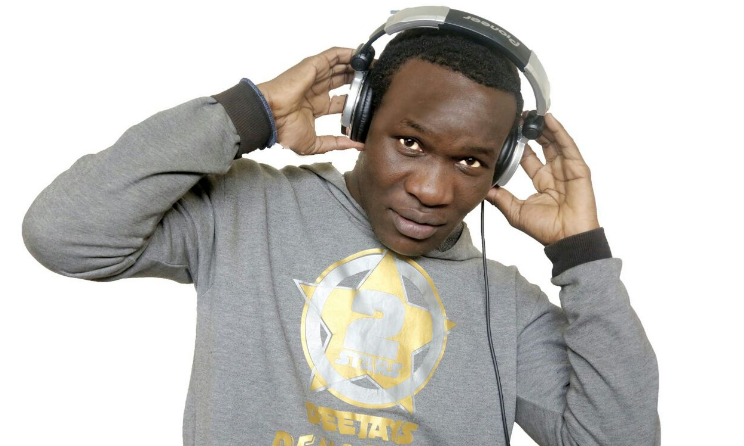
He is ‘The Street King’ of Nairobi and arguably Kenya’s top street DJ, leading a pack of tastemakers who are unique to the East African country’s market. Though radio and TV DJs influence trends the world over, in Kenya it’s the street DJs who decide what’s hot. They have taken over the industry by tapping into the vibrant matatu (minibus taxi) culture in Nairobi and the unique way Kenyans consume music. With unmatched street cred, DJ Demakufu is now looking to commercialise his brand with an innovative product – DJ Demakufu Free WiFi.
Nairobi has many peculiarities. It is the only Kenyan city with a game park right next to it, and possibly the only city with public service vehicles that have redefined popular culture. They are called matutus – 15- or 24-seater vans that transport 70% of Nairobi's workforce. In Lagos, they are called danfos and painted in bright yellow. In Addis Ababa they are known as “blue donkeys”.
In Kenya, however, these vans are a form of self-expression, coloured and decorated with messages, slogans and portraits of popular people. Inside is where the real party goes on. Many of them have loudspeakers, disco lights, screens and all manner of interior decoration. At the very top of the matatu hierarchy are the nganyas – the ‘Lamborghinis’ of the matatus – which are often fitted with state-of-the-art sound systems and customised with outrageous designs.
Because most matatus’ play music all the time, the drivers have become influential in the Kenyan music marketing chain. The average Kenyan spends between one and four hours a day in a matatu, listening to whatever the driver decides to play. With time, DJs realised that the drivers needed a decent selection of music so they started making mixes for the drivers with references to their stage names. The DJs would give their mixes to the drivers for free in exchange for free marketing. With time, middlemen with extensive networks of matatu drivers emerged, dealing in DJ mixes and selling them to the drivers.
These middlemen also distribute mixes to shop owners who utilise loudspeakers to attract business on the streets. The net effect is a unique form of music distribution where Kenyans discover new music in matatus or while walking down the street. As a result street DJs have become more influential than their radio counterparts. The rationale is simple: in order to listen to a radio DJ, one has to tune in and stay tuned, but a street DJ’s mix will get to you whether you like it or not. Numerous hitmakers in Kenya have made a name on the streets, with radio and mainstream media often playing catch-up.
Though DJs like Bunduki, Lyta and Mantix were trailblazers in this sector, DJ Demakufu is the undisputed king of the streets. Drivers all over the city anticipate his latest mixes with bated breath, and several commuters have missed their stops while listening to them.
“In the morning the drivers want R&B, then around lunchtime most of them want reggae or [Tanzanian] bongo,” Demakufu tells Music In Africa. “Of course in the evening people are tired so most drivers prefer to play cool music. Kenyans also love new music so I always throw in a new song in every new mix. Before I do a mix, I always do my research – I watch crowd reactions in clubs and try and figure out what people will groove to. That is why my mixes give people – a club experience on their way to work.”
The success of Demakufu’s mixes can be attributed largely to his taste, and at one time media outlets were scrambling to reveal his identity because no one knew what he looked like. Demakufu has noticed that residents in every neighborhood in Nairobi prefer a specific genre, which lets him tailor his mixes accordingly.
“People from Westlands and Rongai like Afrobeat and hip hop, Buru Buru listens to a lot of hip hop but reggae also works,” he says. “In Kitengela people like bongo, reggae and a little bit of hip hop while those from Madaraka are big reggae fans. Umoja people are extremely eclectic and in Dandora they’re into reggae with a little bit of hip hop. In Kasarani hip hop works best while reggae is big in Kikuyu.”
Demakufu’s journey began in 2012 when he joined a DJ academy on a one-year course. Paying school fees was a struggle but he pushed through. After graduating, prospects for a stable DJ job were low and his father got him a low-wage job in Nairobi’s industrial area, which he pursued until 2014. When his contracted ended, his father offered to buy DJ equipment but realised it was above his budget.
About the same time a friend of his had bought decks but didn’t have a mixer, so Demakufu asked his father to put up money for the mixer, which he did. With the decks in place and a partnership with his new colleague, Demakufu began his deejaying career. His first order of business was to market himself by releasing street mixes with “drops” of his name. Soon his entire neighbourhood of Kayole knew his name. His next move was to expand to other areas in Nairobi. Soon he made connections with all the middlemen from across the city and began spreading his mixes all over town.
“As a DJ it’s very hard to get direct access to drivers, so these middlemen act as our distributors,” he said. “We give them our mixes for free and they sell them to drivers for about 200 Kenyan shillings [$2]. These guys work in shifts distributing our mixes day and night. Some sell to as many as 50 matatus a day.”
The frequency of purchase usually depends on the class of the matatu. Those who drive the top-end nganyas change their mixes every week while regular matatus can use a single mix for a whole month. For this reason, nganyas are a major component of pop music marketing in Kenya; everything that is hot is played in an ngaya first.
To commercialise his brand, Demakufu has now come up with a unique product: Demakufu Free WiFi.
“I am installing free WiFi in every ngaya in Nairobi. My fans have supported me from day one so I want to give back to them. So far we have 20 matatus but we are working to increase that number. Once we have increased our reach we will be selling adverts to corporate partners to make the project sustainable.”
Demakufu has shaped the musical landscape of Nairobi one mix at a time. By simply tapping into the unique realities of Nairobi and its music culture, it seems there’s no stopping The Street King of Nairobi just yet.


Most popular

Top Naija songs of 2026
31 Mar 2026

Top Afrobeats songs of 2026
19 Mar 2026
Ghana: Mr Eazi and MOLIY’s ‘Comfort’ earns Urban Music Awards nomination
21 Oct 2026

Top amapiano songs of 2026
16 Feb 2026
Open call: CANEX Music Business Lab and Songwriting Camp
15 Oct 2026
Nigeria: CANEX WKND unveils 2026 programme
21 Oct 2026
Disclaimer: Music In Africa provides a platform for musicians and contributors to embed music and videos solely for promotional purposes. If any track or video embedded on this platform violates any copyrights please inform us immediately and we will take it down. Please read our Terms of Use for more.

Subscribe to our monthly Newsletter
Follow us on social media


Please log in to post a comment.