


















































Dance occupies a crucial place in Zimbabwean culture. There are about 12 prominent traditional dances in Zimbabwe, namely Shangara, Mbira dance, Dinhe, Mbakumba, Muchongoyo, Jerusarema, Mhande, Isitschikitsha, Amabhiza, Ingquza, Chinyobera and Ngungu. The Jerusarema dance and the Muchongoyo are widely regarded as the most important and distinctive dances of Zimbabwe.
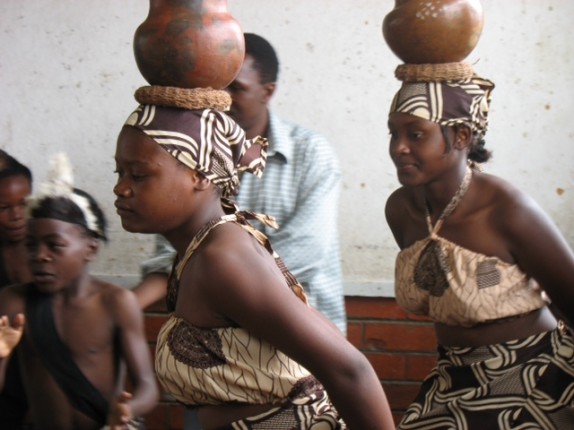
Zimbabwean dances are communal and largely performed in the rural areas, where about 75% of Zimbabwe’s population lives. Although the traditional purposes of the dances tend to change over time, their meaning and significance is often preserved. Zimbabwean dances are performed for three main purposes; religious, social and ceremonial. They are also used to teach social values, recite history, encourage people to work, aid in funeral proceedings, celebrate festivals, praise or criticize members of the community and more importantly, help communities connect with the ancestors. The Zimbabwe National Traditional Dance Association (ZNTDA) and other cultural institutions organize various events that celebrate the country’s traditional dances, including the Jerusarema Dance Festival, the Chibuku Neshamwari Traditional Dance Festival and the Murewa-Uzumba Cultural Festival (Mucuf). Traditional dance is also taught in most primary and secondary schools across the country.
Zimbabwe’s traditional dances are mostly participatory, and often invite spectators to be part of the performance. With the exception of a few spiritual, religious or initiation dances, there are traditionally no barriers between dancers and onlookers. Even ritual dances often have a time when spectators participate. In natural settings, dances usually take very long hours, up to twelve hours or even days. This is common especially for religious dances such as the Mbira dance.
Rhythm is an important aspect of Zimbabwean traditional dances. Like most African dances, Zimbabwean dances employ polyrhythm, which is usually complemented by body articulation. The most common musical instruments used in the dances are mbira, hosho (rattle), ngoma (drum), magavhu (leg rattle) and the human voice. The mbira is perhaps the most widely used instrument in traditional Zimbabwean music. It is plucked with the fingers to produce the melody, and is often used during religious rituals by spirit mediums in order to communicate with ancestral spirits. Another important aspect of traditional dance is the clothing. Most of the costumes are made from natural materials such as grass and animal skin.
Dances of the Shona
Jerusarema dance, Shangara, Dinhe, Mbakumba, Mbira dance and Mhande are popular dances among the Shona people who constitute about 76% of the Zimbabwean population. Jerusarema, also known as Mbende, is perhaps the most celebrated dance of the Shona people. It is practiced by the Zezuru Shona-people living in the Murehwa and Uzumba-Maramba-Pfungwe (UMP) districts in eastern Zimbabwe. Because of its sexual movements, the dance was originally performed exclusively during the marriage ceremony of a chief's daughter but it is now open to all men and women. Jerusarema is characterized by a single polyrhythmic drum sound accompanied by woodblock clapper sounds, handclapping, yodeling and blowing whistles. Unlike most dances, Jerusarema does not rely on intricate foot stamping or many drummers. Instead, the music is performed by one master drummer. In the course of the dance, men often crouch while jerking both arms and vigorously kicking the ground with the right leg in imitation of a burrowing mole. Before colonial rule, this ancient fertility dance was called Mbende, the Shona word for “mole”, which was regarded as a symbol of fertility, sexuality and family. In modern Zimbabwe, Jerusarema can be performed at funerals, festivals, celebrations and even recreational competitions.
Mbira dance is perhaps the most religious of all Shona dances. It is usually performed by community elders at important ancestral ceremonies such as the Bira. The dance is accompanied by Mbira music and used as a medium to invite ancestral spirits into the midst of the community. Mbira dance and music therefore play a significant role in bringing the spirits of the ancestors into the community. Mbira dance is regarded as unique for its intricate foot movements, graceful pauses and high-energy jump bursts. While Mbira dance is performed in community with others, it can also be a solo dance for purposes of entertainment and building physical strength.
The Dinhe dance is a religious dance that is also performed to praise and invite the ancestors to speak to the community. A lot of war movements and movements of joy are used in this dance. Dinhe also exhibits the agricultural aspect of life, and such props reflecting these themes may also be used. The Dinhe dance uses different songs to accompany the dance, and the mood is critical in inviting the ancestral spirits. The Mbakumba dance is a polyrhythmic dance that is traditionally performed after harvest and is still used today for entertainment.
Mhande dance is mostly popular among the Karanga people of Zimbabwe. The dance uses indigenous ritual context or spirituality (known as chikaranga). It is characterized by distinct rhythms and melodies, slow and dignified foot movements and the use of handheld objects and substances such as snuff and ceremonial beer, which symbolize interaction between the community and the ancestors. Mhande dance is commonly performed at the popular kurova guva ceremony, which is done by Shona people to welcome the return of a deceased family member’s spirit (known as mudzimu).
Ndebele dances
Popular dances among the Ndebele include Mushongoyo, Isitshikitsha, Amabhiza and Ingquza. Historically, Muchongoyo dance was performed by men in preparation for war or after war, and especially when the Ndebele warriors were victorious. The dance is typically performed with a stick and a shield. Men do the dancing and women are responsible for the singing. It is also a social and recreational dance, and does not have a religious feature; instead it highlights the events of the society. The signature movement is stamping, and dramatic gestures as well as a mimetic element are essential.
Another important dance for the Ndebele is Isitshikitsha - a ceremonial dance, historically performed for the King’s pleasure. Isitshikitsha was also commonly performed at the injelele, a rainmaking ceremony held during drought seasons by the Ndebele people of Matabeleland Province in Zimbabwe. The dance routine employs a unique brand of rhythm and style. In contemporary times Isitshikitsha is performed at social gatherings, weddings or first fruits ceremonies. It is accompanied by singing, clapping, ululation and whistling.
The above text provides a brief introduction to some of the key features of traditional dance in Zimbabwe. For more information please see the links below.
References
- Kurova guva ceremony http://www.zambuko.com/mbirapage/resource_guide/pages/culture/shona_religion.html
- Plumtree dance makes waves in the country http://www.chronicle.co.zw/plumtree-dance-makes-waves-in-country/
- Mbira music http://en.wikipedia.org/wiki/Mbira_music
- Chibuku fest dates released https://www.southerneye.co.zw/2014/02/21/chibuku-fest-dates-released
- Mbira http://www.mbira.org/


Most popular

Top Naija songs of 2026
31 Mar 2026

Top amapiano songs of 2026
16 Feb 2026

Top Afrobeats songs of 2026
19 Mar 2026

Call for applications: ACCES 2026 Emerging Artist Spotlight Competition
01 Oct 2026
AFRIMA 2026: All the winners
12 Jan 2026
CAPASSO backs global principles for fair generative AI music licensing
06 Oct 2026
Disclaimer: Music In Africa provides a platform for musicians and contributors to embed music and videos solely for promotional purposes. If any track or video embedded on this platform violates any copyrights please inform us immediately and we will take it down. Please read our Terms of Use for more.

Subscribe to our monthly Newsletter
Follow us on social media


Please log in to post a comment.