











































Twerking in Lagos or who is the average Afropolitan Vibes goer?

13 Mar 2017 - 07:13


By Ettobe David Meres
The Lagos concert Afropolitan Vibes celebrates its 4th anniversary tonight. Music in Africa republishes a classic piece on the monthly event.
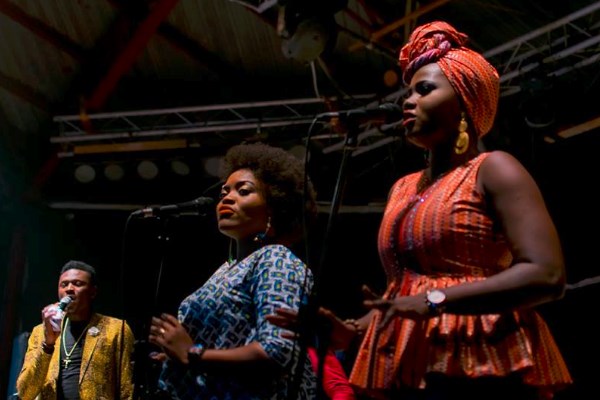
The third Friday of every month sees the grounds of Freedom Park Marina animated by the cavorting feet of lovers of Afropolitan Vibes. Afropolitan Vibes is a live music concert with a predilection for alternative African music: afro-beat, afro-funk, afro-pop, afro-jazz, highlife. Judging by the number of people at the 18th edition of the show held last week, the Agbero band and their guest artistes are gradually building a following.
Rapper Vector tha Viper, singer Seyi Shay, and Adeniji Heavywind were last week’s guest acts. Daddy Showkey had a cameo at the end of the show. Although not billed to perform, Showkey took to the stage to honour a suppliant Ade Bantu, co-producer of Afropolitan Vibes.
"Showkey show your face," he urged.
Daddy Showkey not only showed his face, he thrilled the crowd with refrains from old hits. He had been away from the music scene for a long time—though he headlined an edition of Afropolitan Vibes—so it was apt to start with a chorus to remind the audience of the entertainer he once was. No surprise he started-off with "somebody call my name..." the frenzied crowd, in unison with the drums, supplied the moniker "Showkey!"
Next he sang "fire, fire in our country/Give me plenty water make I quench the fire" then he altered a line to tune of the times with "fire burn Boko Haram them. Then came, "if you see my mama, hosanna/tell am say, hosanna/I dey for Afropolitan hosanna, I no get problem/if you no get problem hosanna, throw away Ebola hosanna." Clearly nostalgic, the crowd got into the groove, and over half of them could be seen dancing galala, the onetime dance-hall ghetto rave. How they managed to achieve the intricate galala dance steps within such cramped space is a testimony to the skill of average Afropolitan Vibes goer.
Said an equally nostalgic Showkey: "The time when I play these songs, I no know say I go take am make money…People like me so."
The crowd did. And his performance put earlier ones by younger artistes in perspective. Or maybe the crowd was enthralled because of the memories the songs evoked, about a bygone era in their lives or that of their country. If he only needed to tweak a line or two to make it apt for this era, one wonders how much has truly changed.
The concerns for artistes may have changed. Artistes doubtless fed by the audience are seldom concerned with social causes. Fame is sought and gotten singing about sex and making money.
The band was playing a rhythm influenced by rumba or calypso. And Ade Bantu was sonorously singing "wave your weaves in the air/show the world you’re a Lagos Barbie" when a lady from the audience climbed the stage. She backed the crowd and shook her hips. Someone from the crowd shouted "I love you Lola! Go Lola!" Only then, did it become clear that what was on show is a rarity—a novelist dancing with grace. Each turn, each twist showed-off her skill. Her adroit coordination supplied the verb—Lola Shoneyin twerks.
If there’s a place to find a twerking novelist in Lagos, it is in Freedom Park on an Afropolitan Vibes night. This is an indiction of the kind of people who attend the event. Yet those who seek a summarized census will want to know: Who does one find at Afropolitan Vibes? In other words, who is the average Afropolitan Vibes goer?
More often than not, average is deployed to a motley of curious usage. Because of such phrases like ‘on the average’, ‘the average Lagosian’, ‘average life’, ‘average up’, ‘average down’, or ‘average out’ it may be prudent to strip the word of its vague appeal. One way to do is, is to employ the perfect language of mathematics. In which case, average is the statistical measure of central tendency that indicates the mean, mode, or median of a set. This should make it easy to answer the question: who is the average Afropolitan Vibe goer?
To calculate the mean, median, or mode one has to arrange the Afropolitan Vibes crowd into groups. Dami Ajayi, a poet and medical doctor, said of the Afropolitan Vibes crowd: "Everybody who is anybody in the Lagos literati is here. Poets, novelist, aspiring writers, social media capitalist, Twitter divas, professional dancers, OAPs, musicians, engineers, actors, academics, journalists, even medical doctors."
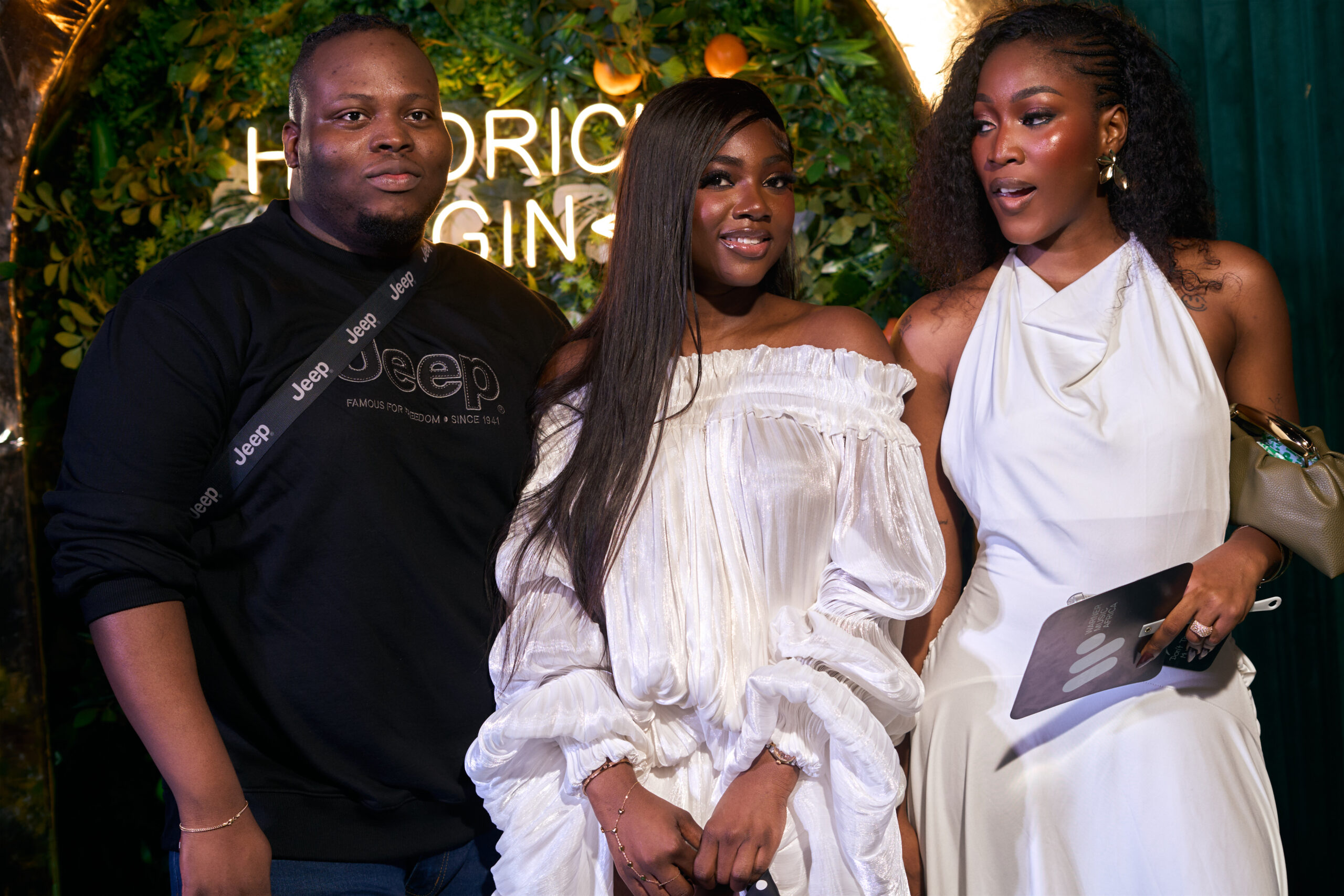
The crowd is cosmopolitan too. It is common to see a European, an American, or Asian, holding a bottle of Heineken and wriggling a waist to the rhythm. Do they dance because they recognise their cultures somewhere in the harmony of the hotchpotch Afropolitan music? Or do they dance because it is a natural aesthetic response to pleasant music?
The difficulty in answering either question exposes one’s inadequacies. One realizes that after grouping the Afropolitan crowd into an imaginary nominal data of male and female; of African, American, European and Asian; of Twitter divas, medical doctors, aspiring writers and poets there’s no discernible progress in the discovery of the average Afropolitan goer. Because it is a foray into the realm of big data, a problem better left for IBM computers.
It is easy however, to say what the average Afropolitan Vibes goer may not do. He or she does not heckle, did not censure Vector tha Viper when he rapped, "shawty sweet so I rest on her like rozia/She loves it to death whenever I go there/Come, come, come, nne wazobia."
Before Seyi Shay sang 'Murda', a song on several top ten Naija hip-hop charts she admitted that initially she was scared to perform. She said ‘I’m not used to singing on this kind of stage.’ There was no space between the audience and the stage, no assurance of security.
"But you’re family," she continued.
It may have dawned on her that the average Afropolitan is not prone to violent crime—that he or she is more likely to steal your lover than rob you.
First published by This Day newspaper on occasion of the September 2014 edition of the Afropolitan Vibes concert series


Most popular

Top Naija songs of 2026
31 Mar 2026

Top Afrobeats songs of 2026
19 Mar 2026
Ghana: Mr Eazi and MOLIY’s ‘Comfort’ earns Urban Music Awards nomination
21 Oct 2026

Top amapiano songs of 2026
16 Feb 2026
Open call: CANEX Music Business Lab and Songwriting Camp
15 Oct 2026
Nigeria: CANEX WKND unveils 2026 programme
21 Oct 2026
Disclaimer: Music In Africa provides a platform for musicians and contributors to embed music and videos solely for promotional purposes. If any track or video embedded on this platform violates any copyrights please inform us immediately and we will take it down. Please read our Terms of Use for more.

Subscribe to our monthly Newsletter
Follow us on social media


Please log in to post a comment.