



























































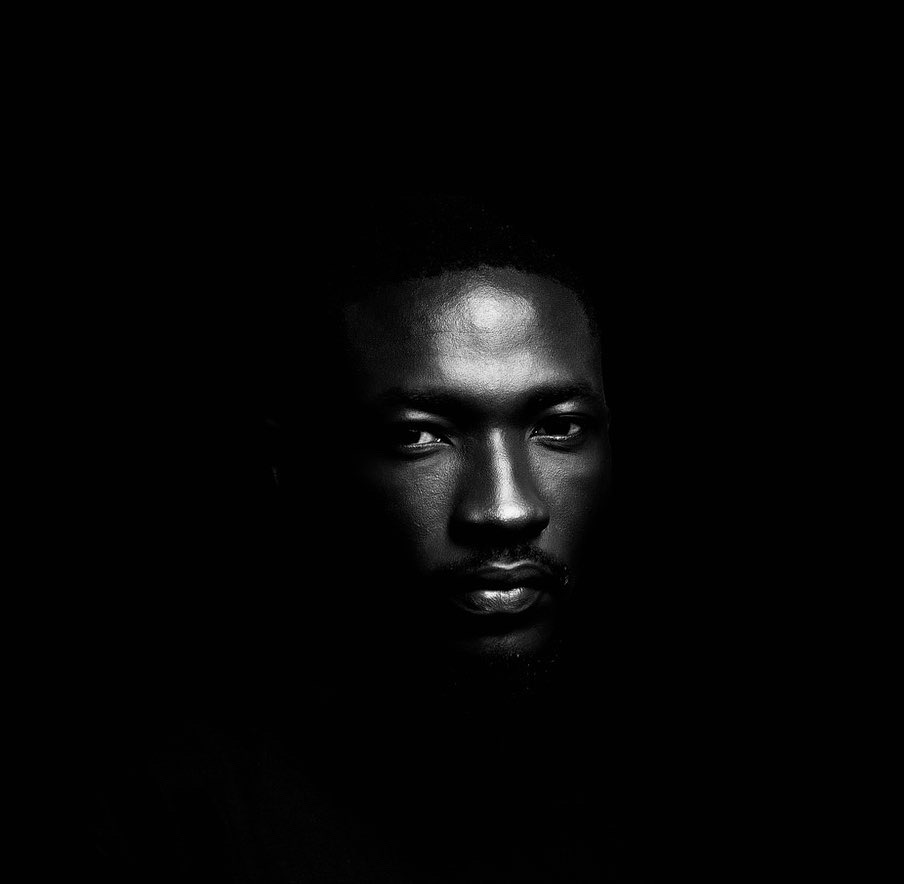


I don’t know from which country Nigerian singer Victony is joining me on this call, and I don’t ask. I’m just happy he’s shown up at all – first with his video on to reveal what looks like a red beanie over a part of his face before opting to turn his camera off. He sounds reticent. Maybe he’s just fatigued. He recently released a new album, and I am fully aware of the demanding schedule that typically follows.
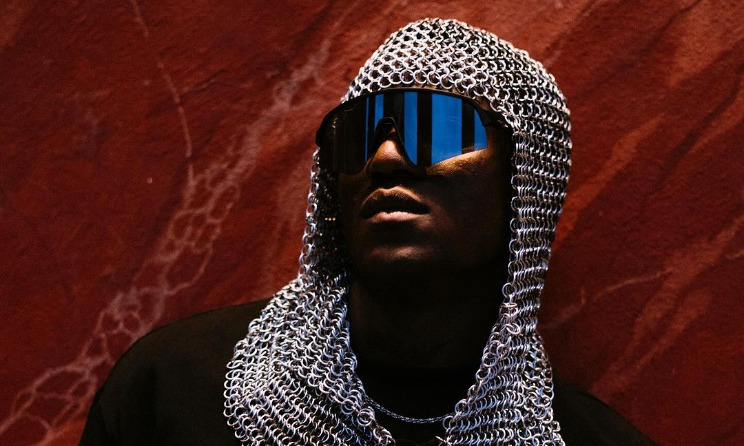
The project, titled Stubborn, is his first full-length effort, following two EPs: 2020’s Saturn and 2022’s Outlaw. At 14 songs, Stubborn listens as a sensuous haze of ambition and experimentation, hybridising everything from Afrobeats to amapiano, R&B to funk, and even hints of Afro-Cuban jazz. Because of how innovatively he goes about the LP, it will no doubt inspire structural reforms within Afrobeats, which has seen a global boom but is now also facing calls for sonic rejuvenation. More about the album a little later, but first, let’s discuss difference: why is the man so keen on sounding different, even if he operates within a genre where innovation isn’t typically stressed?
Victony’s responses are slow and deliberate, almost like he’s constructing his thoughts in real-time. His sentences are peppered with “like” – a linguistic placeholder of choice for young people of his generation – and often conclude with “right?” – as if he is throwing you an invitation into his intellection.
“That’s everything I’m about, right? I’m just being like your authentic self, you know, in the best way possible. I’m telling my own story because I have to sound like only I can – craft it in a way that is particular to me.”
So far, this creative creed – to put the “v” in variation – has secured Victony, who began his professional music career in 2016, massive success: over 1.5 billion streams and collaborations with industry heavyweights like Burna Boy and Rema.
As for the specific ingredients that constitute his difference, it’s a mix of everything. “You know, I’m very good at experimenting, so all these come together. My hunger for something new while being myself, while being authentic contributes largely to this difference that you’re talking about.”
In the early days of his career, Victony was inspired by various artists who weren’t necessarily Afrobeats musicians. He started as a rapper, before transitioning to singing and embracing the West African pop sound in 2020. Combined with influences like R&B, this provided a strong foundation for the fluidity of his fusions.
Does he miss rap?
No, not really. With his approach to pop, Victony feels like he has found a middle ground where he can blend rap elements into his work, maintaining a fresh artistic identity without feeling the need to exclusively rap. One thing he will not compromise on, however, is his writing, which he traces to his rap foundations. “If you can’t write, you can’t rap. Even as a singer, when I think of ways to blend it with the melody I’m using, rapper technicalities and skills come into play. So, no, I don’t miss it – I feel like I still have it.”
It’s no wonder he’s known for crafting some of the cleverest lines in Afrobeats, particularly when it comes to playful references to a woman’s derriere. It’s intriguing how he can be so creative with a single body part.
The joke gets him to laugh for the first time. The introverted Victony is finally loosening up. Engage an Afrobeats artist in conversation about himself and you’ve got his undivided attention.
Not only is he pushing the boundaries of Afrobeats with bold experimentation in uncharted territory, but he is also broadening its lexicon. Afrobeats love songs typically feature names like ‘Abena’ and ‘Folake’, along with references to Beyoncé and Jay-Z, and terms like “odo” (love in Twi) and “shito” (pepper in Ga but carrying a sultry innuendo when used in Afrobearts songs). Thinking about “stubborn” now holds a new meaning because of Victony.
Speaking about the LP’s title track on the eve of the album’s arrival, Victony said: “Stubborn’ inspired everything. When we were done with the session, I kept playing it. It became my favourite song at the time. I thought a collab would be interesting because it’s a new sound. I felt like it’d be interesting to have someone on it, and obviously, the melodies and the character and the song were such a perfect match for [fellow Nigerian singer] Asake. I told him: ‘This is just me reflecting on life and just being grateful, but reaffirming that I’m still on course, I’m still about what I’m about. I’ve never changed. I’m not changing for anybody, this is me, this is Victony, right?’ We had that conversation, and he was tapped in and he did his thing.”
Today, he explains further: “When I say stubborn, people often look at this from a negative standpoint. You know, they think it’s about gangsterism or, you know, just not conforming to societal standards or just being against the law, but that’s not what it is, right? I say stubborn because I’m still that kid from way back who believed in something and saw it to the end. I’m just telling people that this is me. This is, this is all I’ve been through. These are circumstances or situations that didn’t change me, right? I kept the dream alive, right?”
Why does anybody need stubbornness in their toolbox, I ask.
His answer is this: One needs stubbornness because life constantly throws new challenges that can either influence you adversely or make you stronger. The choice, then, is yours: will you let circumstances change who you are and what you believe in, or will you take lessons from the situation and stay on the right path? What helps answer that question is having stubbornness in your toolbox. If one is a stubborn person, he knows how to answer that question when the time comes.
When I listen to his projects, particularly his last EP Outlaw and this new LP, I am particularly struck by the opening tracks, which listen like a beautiful haze. I inquire what goes into composition of intros specifically, before we expand to the rest of his bodies of work.
To be honest, intros are the toughest to select for his collections, he tells me. Whenever Victony wants to pick an intro, he and his team make sure it sets the mood and gives listeners a sense of the album. He wants listeners to feel like they know what to expect. This makes it tough to select from several songs. Up until two weeks before he turned in the album, he was still going back and forth between what made the project.
“I wanted to make sure that the first song sets the tone right for what we want people to feel,” he explains.
Does he think it has anything to do with his acquaintance with the culture of rap? Typically, with rap albums, one of the first things to look out for is the intro, which isn’t as common with pop. Would he say that his dedication to creating great intros has any ties to his start in rap, I ask?
“Yes, you could say that,” he says.
One of the yardsticks Victony uses for his album, even though they are sonically different and in two different realms, is Kendrick Lamar’s 2012 album good kid, m.A.A.d city. Victony reflects that after all these years, that album can still be listened to at any time, and everyone who heard it when it first came out probably has specific memories associated with that period. Those memories live on with the sound, and whenever the album is played, it either dates back to a special event in their lives or sounds new again.
When I listen to the intros on both of Victony’s recent collections, it’s evident that they share a common thread: they are ambient and theatrical, and I ask the singer if, at this point in his career, this quality happens naturally or if it is something he consciously designs.
"I think it’s organic,” he begins. “At this stage, the music I’ve put out so far has been about creating freely. I didn’t go into the studio with a specific agenda; I didn’t tell the producer, ‘This is what I want us to make.’ Every song on the album was crafted with an open mind, letting the music guide us. Although I do have projects where I aim for a particular sound, I haven’t started releasing those yet. I feel like I’m still in the introductory phase of my career, showing people a substantial portion of what I’m capable of. At this point, it’s more about being organic because these are just songs I was excited to make due to my love for music. It’s a good feeling to create every day and produce the best songs I can. It’s quite fascinating that you describe it as an introduction because there’s so much more to explore.”
There are already many prongs to his music and yet the man describes it as an introduction. Interesting.
I suspect that Victony either pioneered or significantly amplified the use of choral vocals in modern Afrobeats. Of course, it has now become a signature within the genre, but I don’t remember many artists emphasising choral sound design before him. Is this sonic styling something he stumbled upon?
“Because I like to experiment, if you play me a beat right now, I’ll think about what I can do with it,’ he responds. “I sometimes pick up habits from new recording sessions and carry them over to the next. The whole choral effects thing, I think, started with ‘Jolene’ [from Outlaw], but we found our own way of doing it. Then came Asake with his style. So, yeah, these are just things I’m exploring right now. You could say I started that, because I hear a lot of songs and see ‘Jolene’ as the ‘grandmother’ of these songs.”
How is it that he hasn’t considered this a key building block for his creations and an interesting contribution to pop from this region? I ask, feeling like I’m now bringing this to his attention.
“Yes, that’s true,” he laughs. “To be honest, I haven’t really thought about it.”
What about the notion that because of his unique musical curiosity, his work invariably impacts culture?
Again, he hesitates to take credit. When expressing something musically, Victony aims to do so in the freshest way possible to grab attention. Once he has the listener’s attention, he wants them to focus on his message without getting distracted by its delivery. The goal is to ensure that the sound is new and engaging.
While the themes he explores – such as resilience or a “grass to grace” story – may be familiar to many, Victony strives to present them in a new way. This involves innovative sound, production, engineering, vocal techniques, and recording styles. Together, these elements create a new experience that resonates with the culture in a meaningful way, he believes.
It is no wonder then that no matter how new a Victony release is, one feels like he has heard it before, and no matter how many times one has heard it, he feels like he has not heard it before.
On how he achieves this unique middle ground, Victony says sometimes he works on projects that are specific in focus, while other times he just creates and follows wherever the music leads him. At one point, he worked on a project centred around nostalgia, digging up sounds from the ’80s and ’90s – specifically Afrobeats sounds and the style of Afrobeats from that era – and reimagining them in a new way. Working on that project in 2021 helped infuse his music with a nostalgic feel. Additionally, his constant search for something new often allows his work a futuristic edge. “It’s like exploring the past and the future simultaneously,” he notes. “Your feelings about the project are valid; that’s one aspect of it.”
“When I think about going into sessions or meeting with producers, like collaborating with someone such as the US artist Teezo Touchdown, I know what his music sounds like and what my music sounds like. However, I’m not sure what a collaboration between Victony and Teezo Touchdown would result in. Still, I have a sense that it will work, so I’m willing to pursue it. The same applies to working with other producers, such as hip hop veteran Hit-Boy (who has worked with Jay-Z, Kanye West, Nas, Jennifer Lopez, and others). While I may not know the exact outcome, I remain optimistic and eager to explore the possibilities.
Victony does not recall exactly when he fully developed his unique falsetto voice; only that it now comes naturally. “I think I just sing what I hear in my head,” he explains. [On Stubborn], the one song I was particularly focused on for vocal production was ‘Pier 46’. I wanted it to be very emotional, to strike a chord and make people feel something. For everything else, I simply laid down the melody without overthinking how I wanted to project or how I wanted my voice to sound. I trust my voice to convey the right feeling. So, I wouldn’t say I’m consciously developing my voice; I just sing regularly, and my voice naturally takes shape. So, yeah.’”
Within Afrobeats, there’s a school of thought that says: “Let’s focus on the instrumentation and the melody,” while another argues that artists with great voices are not rewarded within Afrobeats. Will vocal dexterity be rewarded within Afrobeats? I ask Victony.
He pauses momentarily before responding. “Yeah, I think. Times are changing now. Because when you feel something in a song, when you’re like, ‘Oh, this song makes me emotional,’ people don’t always know why. But I feel like we’re at a stage where listeners are becoming more conscious and asking themselves questions like, ‘Why does this song make me feel this way?’ It’s the way the artist is singing, right? We’re getting to that phase where listeners are beginning to notice more than just the beats and the groove of the song. They are now listening to the lyrics, the melodies, the rhythm, the scheme, and how the artist is bouncing on the beats. They are rewarding this gradually, with tweets and comments. I see tweets about how, ‘Oh, the way Victony was floating on this song…’ Listeners are becoming unconsciously conscious about it. Eventually, they will recognise what separates one artist from another and what each artist is doing differently. People will start getting rewarded for things like vocal dexterity.”
I tell him I feel like there aren’t many people within Afrobeats who are celebrated for their voices. We celebrate people for their consistency, we celebrate people for their stagecraft, but hardly their vocal genius. That is partly why I ask the above question. Does Victony feel lonely in his vocal brilliance?
“To be honest, there are a few of us, right?”
I ask for names. He obliges: Tems, Omah Lay, Ayra Starr, Oxlade, many of whom he believes were inspired by Afropop vet Wande Coal. “Everybody knows that when you’re talking about voices, you’re talking about Wande Coal.”
Next, I ask if he, as someone neck-deep in Afrobeats, is truly aware of what the genre is right now. Statistics abound, but in summary, it is the fastest-growing and coolest genre globally these days.
“Yes!” The response flies back instantly. Details follow: “Afrobeats is not just a genre; it’s a lifestyle. It is an identity for Africans, especially West Africans. It’s a force we use to push ourselves into the global space. It feels like a lifestyle, which is why there are more festivals, parties, and gatherings. Afrobeats is not just about the music; people want to come out, dance, feel good, and experience the setting. Girls want to feel sexy to it, make videos, and create reels. It keeps the clubs going. It’s a whole movement.”
I ask if an African artist or an Afrobeats artist could have ever been prepared for what Afrobeats is doing right now.
“Yes. Yes.”
He acknowledges that he doesn’t know how the previous generation viewed the genre, whether they ever envisioned it becoming this influential. However, of his own generation of new school artists, he is especially confident, insisting that they were prepared for the current explosion because they saw its potential early on. He adds that finding one’s niche in the rapidly growing Afrobeats scene is crucial and can only be achieved by daring to innovate…doing what others aren’t doing.
Of all the great things happening within the genre, there’s no question that the audacity of the new generation has been crucial in advancing it. Yet, as my concluding question, I ask what must change within Afrobeats.
“Unity” is his answer, his voice at once cautious and mildly gloomy. “There’s no unity in the genre. As artists, we need to come together and start figuring out a lot together. If not, I don’t know what the future holds for us.”


Most popular

Top amapiano songs of 2026
16 Feb 2026

Top Afrobeats songs of 2026
19 Mar 2026

Top Naija songs of 2026
31 Mar 2026
Open call: 2026 Gender@Work music industry training in Johannesburg
09 Oct 2026
Open call: AFRIMA 2027 in Nigeria
12 Oct 2026
The big interview: Temwa Gondwe on CANEX WKND 2026 – part 1
19 Oct 2026
Disclaimer: Music In Africa provides a platform for musicians and contributors to embed music and videos solely for promotional purposes. If any track or video embedded on this platform violates any copyrights please inform us immediately and we will take it down. Please read our Terms of Use for more.

Subscribe to our monthly Newsletter
Follow us on social media


Please log in to post a comment.