


























































Just because one lives on the streets doesn’t mean one can’t have a talent for music - or a dream to one day succeed…
Every Monday, some of Johannesburg’s many homeless people gather at the Methodist Church in the relatively affluent suburb of Parktown North. They come here not for food or blankets, but rather to hone their rapping and singing skills, jamming to a selection of laptop beats. Driven by their love for music - particularly hip-hop, house and kwaito - these young men find a weekly refuge from their regular routine, a place where they are not looked down on, where they can have fun and dream of a better future. It’s run by people who understand that they didn’t choose to live on the streets but that life simply gave them a raw deal - and that one day soon, they’ll be able to get back on their feet and make a life for themselves, perhaps even through music.
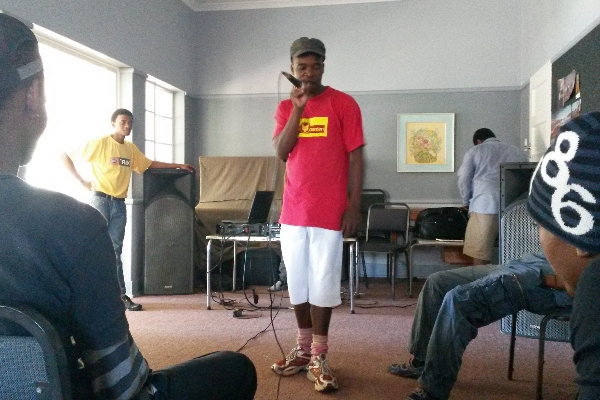
The weekly jam session is hosted by Develop South Africa, a local non-profit organization addressing issues around youth unemployment, a developmental challenge that exists in Rosebank and other parts of the northern suburbs of Johannesburg. Through local partnerships and participation, Develop SA designs, implements and maintains developmental programs in the form of workshops, projects and networks to strategically promote skills transfer and career guidance.
Founded and run by Admire Kamutimbe (24), Develop SA's aim is to nurture, uplift and showcase young talent. Active for the past two years, their focus is on community engagement and development, entrepreneurship and business skills, as well as supporting skills development in science, engineering and technology. Music is central to Develop SA's work.
Admire told Music In Africa about how the music sessions started: “When I was passing them in the park, I heard them singing, and I realized that a music network would attract them to come and explore their talents.”
The sessions have only been taking place for the past two months, but already they are making a difference. “When we started this music network, we had like 10 people coming through, and saying how they see life, where they want to be," explains Admire. "One thing that stands out with his music network is that guys can actually express themselves, how they live, their frustrations, their hopes. That helps, because most of the time they never have time to talk about it... I can see there is healing through music. It gives them confidence. They also express themselves through their music, so there’s a lot of healing.”
Admire realises there’s a long road ahead, but he’s determined to fulfil his promise to empower these homeless performers. “The starting point is to recognize the talent that we have, so we invite them to come and showcase," he says. "We play beats and they rap or sing. Some of them just say, ‘I do acapella’, so we stop the music and they sing. Now the project is growing. We’ve had people donating guitars and all sorts of different instruments. The end result will be to have some kind of open studio, where they can come and play guitars, drums, and work together in a collaborative manner, before we introduce them to established record labels and say, ‘You can trust these guys’.
“We need to connect these guys and make them realize their talents," continues Admire. "Then we need to share their talents with everyone in Africa, and all over the world. And then we need to monetize that. So it’s those three stages. We’re still on the first stage, where we are connecting, and now we need to share it, then monetize it. As an organisation, we need this to become sustainable. As we grow, we need to have our own recording studio. Another thing I want to do is to have professional videos for Youtube of these sessions that we do. I’m building towards that.”
They’re now working towards putting on a live show at the nearby Rosebank Mall. “We’re building towards an event that will happen in the first week of May in front of Rosebank Mall," says Admire. "There are many bands coming from townships to perform there but we also need to empower people who live in this area. If we don’t empower them, then it’s a challenge for the community because they will become violent, attack people, take drugs and all that bad stuff. They will commit crime because after they become influenced by drugs and alcohol, they can act in an uncontrollable way. So this project is really shaping them up, giving them a future, saying, ‘If you get it right, we have a platform that can empower you’. So at the end of the day, they don’t see any reason why they should be violent or commit crime. Most of them look up to each other in this programme. They recognize each other’s talent.
One of the regular participants in the music session is Lerato ‘Sghidi’ Mokoena (35), a talented MC and devoted kwaito fan. He told Music In Africa: “I’m a writer, I love poetry. I’ve been rapping for quite some time, for years. I’ve done a lot of demos, but I don’t have any now. I quit for some time because of some setbacks. But now, since I met Admire, he brought the idea back and I’m back on. The project has only been a few weeks since it started. Everyone here has different roots. I’m from the Free State. I’m living on the streets and in a park in Benmore. We’re actually learning from each other.
“This is a relevant platform that we all need," adds Sghidi. "We all realize that it is still fresh and it has a motive. It shows some progress. So we are pulling ourselves together. But when I look at it, there’s been a lot of success in the project already. It’s growing fast and people are really backing it up. We’re working to record some music, and then see if we can take it from there”
One beat-driven rhyme at a time, Develop SA is showing how music can not only provide an outlet for self-expression, it can also offer a source of hope and ultimately empowerment in the lives of those with nowhere to go but the streets. In doing so they are helping not only groom some talented individuals, but helping to combat crime, drug abuse and prejudice, all widespread problems in South African society.


Most popular

Top Naija songs of 2026
31 Mar 2026

Top Afrobeats songs of 2026
19 Mar 2026

Ghana: Mr Eazi and MOLIY’s ‘Comfort’ earns Urban Music Awards nomination
21 Oct 2026

Top amapiano songs of 2026
16 Feb 2026
Open call: CANEX Music Business Lab and Songwriting Camp
15 Oct 2026
Nigeria: CANEX WKND unveils 2026 programme
21 Oct 2026
Disclaimer: Music In Africa provides a platform for musicians and contributors to embed music and videos solely for promotional purposes. If any track or video embedded on this platform violates any copyrights please inform us immediately and we will take it down. Please read our Terms of Use for more.

Subscribe to our monthly Newsletter
Follow us on social media


Please log in to post a comment.